


Powertech Technology Inc (力成科技), the world’s largest memorychip testing and packaging service provider, yesterday said it plans to acquire the entire Philippine unit of ON Semiconductor Japan Holdings Ltd for US$45 million as part of efforts to navigate global supply chain realignment amid escalating geopolitical risks.
The transaction will be conducted by its subsidiary Greatek Electronics Inc (超豐), a provider of logic chip packaging and testing services. Powertech holds a 43 percent stake in Greatek.
“This move is a core component of the company’s mid-to-long-term growth strategy and directly aligns with major customers’ “Taiwan Plus One” approach to diversify their sourcing in recent years,” Greatek said in a company statement yesterday.
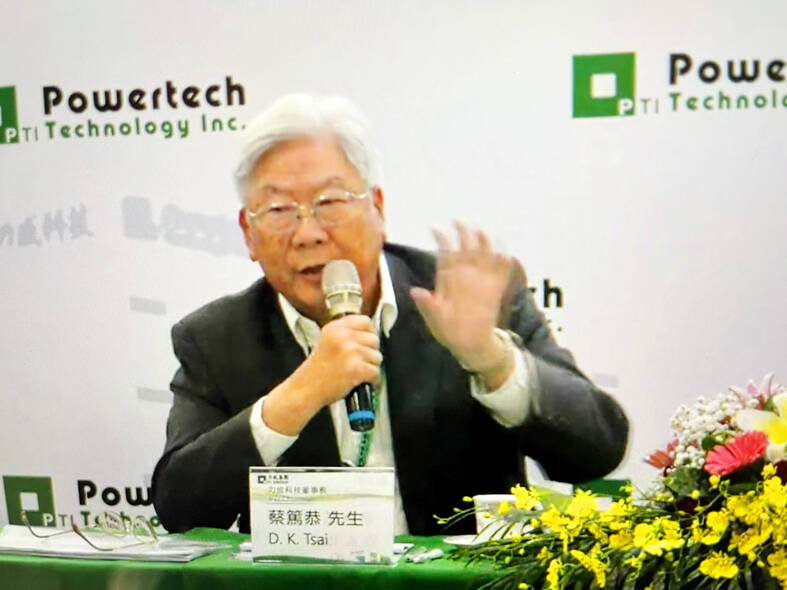
Photo: Grace Hung, Taipei Times
Building comprehensive chip packaging and testing capacity in Southeast Asia will help mitigate the concentration risk of relying on a single manufacturing site, the statement said. It would also help improve Greatek’s order flexibility and capacity allocation for customers, it said.
The new facility will also allow the company to provide real-time customer service, it said.
The target company, ON Semiconductor SSMP Philippines Corp, provides chip packaging and testing services using its own capacity. It has also built a technical team with local management experience, the statement said.
The deal is expected to close in the fourth quarter of this year, Greatek said. The acquisition is subject to regulatory approval from competition authorities, the statement said. ON Semiconductor SSMP Philippines Corp is to be renamed Greatek Electronics Philippines Corp upon completion of the transaction, it said.
Powertech said it has received invitations from multiple countries to build manufacturing facilities in recent years, but the company has taken a cautious approach to expanding overseas, given its limited financial capacity and engineering resources.
Powertech chairman Tsai Du-kung (蔡篤恭) made the remarks during an investors’ conference in April in response to a question about whether Powertech would consider expanding its global footprint to help customers deal with rising geopolitical tensions.
“Unless customers are committed to collaborating with us, in addition to [strong government] incentives, we will not easily activate overseas investment to build advanced chip packaging and testing capacity,” Tsai said in April.
Geographically, Singapore and Japan could be among the potential options, he said at the time.
Two years ago, Powertech was deeply concerned about the necessity of building capacity outside Taiwan as requested by customers, given high costs and operational risks, Tsai said.
Customers then realized that it would be a major challenge to move advanced chip packaging and testing technology and capacity to a foreign site, he said.
Since then, customers’ calls for offering alternative capacity outside Taiwan have softened, Tsai said.
Powertech stressed that Taiwan remains its priority for investment in advanced technologies. This year, the company plans to allocate NT$50 billion to new facilities and equipment.


The US Federal Communications Commission (FCC) on Friday said it would ban the import of more equipment from a group of Chinese manufacturers, the latest move by Washington to crack down on Chinese-made electronic gear. The move expands an FCC ban imposed in 2022 on new models of telecommunications and video surveillance equipment made by Huawei Technologies Co (華為), ZTE Corp (中興通訊), Hytera Communications Corp (海能達通信), Hikvision Digital Technology Co (海康威視) and Dahua Technology Co (大華科技), citing national security risks. The expanded ban includes old models, not just those designed starting in late 2022, of equipment used for “public safety, security of
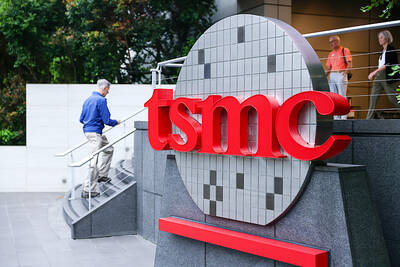
ARIZONA INVESTMENT: The Taiwanese semiconductor firm has gained approval for a US$20 billion capital injection into its its wholly owned US subsidiary The US is unlikely to match Taiwan Semiconductor Manufacturing Co’s (TSMC, 台積電) production capacity in Taiwan despite the chipmaker’s expansion in Arizona, Minister of Economic Affairs Kung Ming-hsin (龔明鑫) said yesterday. TSMC has already announced plans for a total of 16 fabrication plants and advanced chip-on-wafer-on-substrate packaging facilities in Taiwan, Kung said before a ministry meeting yesterday afternoon. “No matter how many fabs the US builds in the future, it won’t be that many,” Kung said. His remarks came after US President Donald Trump reportedly said on Wednesday that Taiwan was doubling the size of the chip plants under construction in Arizona and
UNSURPRISING LEADER: TSMC led in both net profit and revenue this year, followed by other big names in the Taiwanese sphere of tech as well as finance Taiwan’s 5,000 largest companies posted a record high in aggregate net profit last year, up more than 11 percent from a year earlier, with contract chipmaker Taiwan Semiconductor Manufacturing Co (TSMC, 台積電) holding on as the country’s most profitable company amid the artificial intelligence (AI) boom, credit information agency CRIF Taiwan (中華徵信所) said on Wednesday. Strong global demand for AI applications continued to benefit Taiwan’s top 5,000 enterprises last year, CRIF said in a report. Their combined net profit totaled NT$5.77 trillion (US$181.1 billion), up 11.01 percent from a year earlier, while aggregate revenue hit a record high of NT$48.50 trillion,
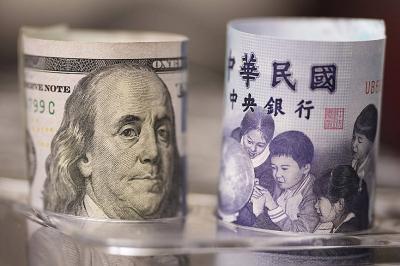
The New Taiwan dollar, which is on track for its first quarterly gain in a year, may face renewed pressure as the US currency strengthens and local companies boost dividend payouts to a record. Domestic firms are set to pay out more than NT$2.5 trillion (US$78.5 billion) in cash dividends this year, according to data from the Taiwan Stock Exchange, the largest amount ever in Bloomberg-compiled data going back to 1990. Foreign-exchange conversions by overseas investors repatriating the funds are expected to add to near-term volatility in the local currency. “The Taiwan dollar could hit a rough patch in the coming weeks,


 RSS
RSS