


The Bank of Japan (BOJ) yesterday hiked interest rates to a 31-year high as it battles inflation caused by the Middle East war — even after Washington and Tehran agreed a peace deal.
The central bank for the world’s fourth-largest economy raised its benchmark rate 25 basis points to 1.0 percent, the highest since 1995 and marking the first increase since December last year.
“While higher crude oil prices have been exerting downward pressure on economic activity, the economy has generally been supported by factors such as high levels of corporate profits, and an improvement in the employment and income situation,” the BOJ said.
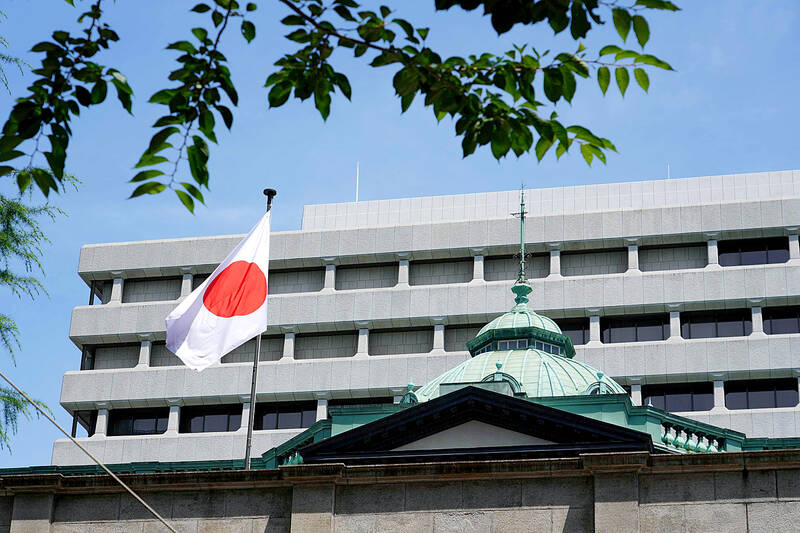
Photo: AFP
The consumer price index (CPI) has been below 2 percent thanks in part to government energy subsidies.
“However, the price pass-through stemming from the rise in crude oil prices has been progressing at a relatively fast pace in business-to-business transactions, which could spread to an increase in consumer prices across a wide range of items,” the central bank added. “Against this backdrop, taking into account that medium to long-term inflation expectations have also continued to rise, there is a risk of underlying CPI inflation deviating upward to a level above the price stability target of two percent.”
The BOJ said that it would “continue to raise the policy interest rate and adjust the degree of monetary accommodation.”
“In this regard, it will consider the timing and pace of adjustment, while closely monitoring the impact of the future course of the situation in the Middle East on Japan’s economic activity and prices,” it said.
BOJ Deputy Governor Shinichi Uchida later told reporters the central bank “will need to assess” how much inflation in the future “will be mitigated by the recent decline in crude oil prices.”
“There was no proposal of [hiking interest rate by] 50 basis points” during the two-day meeting that ended yesterday, said Uchida, who was filling in for Governor Kazuo Ueda, who is in hospital.
The BOJ also indicated that it would pause the tapering of its colossal program of government bond purchases after April next year, citing predictability of the bank’s bond purchases to improve bond market functioning and stability.
Japan relied on the Middle East for about 90 percent of its crude supplies before the war began on Feb. 28.
Its problems have been exacerbated by a falling yen, caused by the rise in oil prices and the gap between US and Japanese interest rates, which are among the lowest in the developed world.
The Japanese government spent about ¥11.7 trillion (US$72.97 billion) last month propping up the currency, which has been languishing at about ¥160 against the US dollar.
The yen briefly jumped against the greenback after the announcement yesterday, while the Nikkei 225 stock index rose above 70,000 points for the first time.
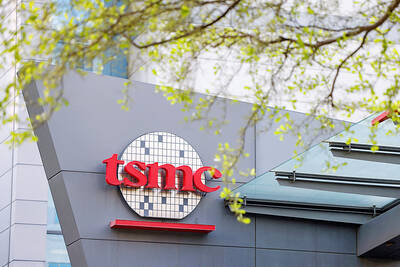
Taiwan Semiconductor Manufacturing Co (TSMC, 台積電) yesterday reported record revenue of NT$416.975 billion (US$13.17 billion) for last month, putting the world’s largest contract chipmaker on track to set a record for quarterly revenue. Last month’s figure surpassed March’s record NT$415.19 billion and represented increases of 1.5 percent from April and 30.1 percent from a year earlier. For the first five months of the year, TSMC generated NT$1.96 trillion in revenue, up 30 percent year-on-year, it said in a statement. TSMC has forecast second-quarter revenue of between US$39 billion and US$40.2 billion, representing sequential growth of about 10 percent and year-on-year growth of about

Infineon Technologies AG is preparing to open its largest single investment, a 5 billion euro (US$5.8 billion) semiconductor factory built with the help of EU subsidies, as the bloc seeks to boost chip production. The power chip fab, which is an extension of the German company’s Dresden campus, is scheduled to open on July 2, Infineon chief operating officer Alexander Gorski said this week at the site. The project is a major recipient of EU Chips Act funds, receiving about 1 billion euros in subsidies. The new plant represents a rare success for the bloc’s flagship semiconductor law, which was drawn up during
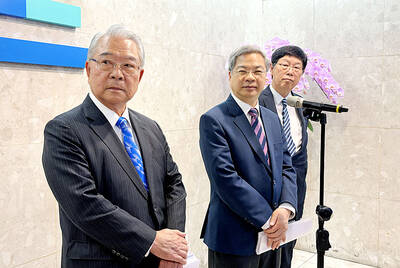
PATENT PROBE: US lawmakers called for a ban on imports of chips made by TSMC if they are found to infringe on US patents, with a preliminary ruling expected soon Minister of Economic Affairs Kung Ming-hsin (龔明鑫) yesterday expressed confidence in Taiwan Semiconductor Manufacturing Co’s (TSMC, 台積電) compliance with patent regulations after reports linked the company to a patent infringement lawsuit in the US. US Representative Ryan Zinke, and US senators Tim Sheehy, Roger Marshall and Bernie Moreno urged the US International Trade Commission in a May 22 letter to ban imports of chips made by TSMC if they are found to infringe on US patents, Axios reported on Wednesday. An administrative law judge is expected to issue a preliminary ruling this month, with the commission potentially making a final decision in
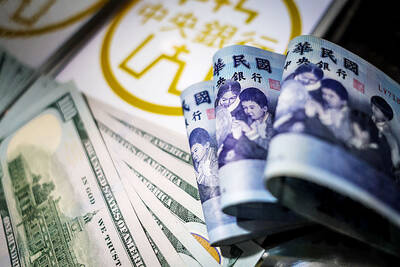
Taiwan remained the sixth-largest net creditor nation in the world last year, despite a fall of more than 10 percent in its net international investment position (NIIP) over the year, the central bank said yesterday. The NIIP is the difference between a country’s external financial assets and its external financial liabilities. Taiwan’s external financial assets hit US$3.27 trillion at the end of last year, up US$275.75 billion or 9.2 percent from a year earlier, the central bank said in its annual NIIP report. The growth largely reflected an increase in holdings of overseas marketable securities by residents in Taiwan, as well as a


 RSS
RSS