


Taiwan Power Co (Taipower, 台電) yesterday said it would strive to meet electricity demand amid speculation that Taiwan Semiconductor Manufacturing Co (TSMC, 台積電) might build “Angstrom-era” facilities at the Longtan (龍潭) campus of the Hsinchu Science Park (新竹科學園區).
Taipower would make every effort to meet the electricity needs of the technology sector at Longtan, while advancing power generation development and grid deployment, company chairman Tseng Wen-sheng (曾文生) said at a forum in Taipei.
The Hsinchu Science Park Bureau on Monday said that TSMC is seeking government approval for an advanced wafer fab at the park’s Longtan campus.
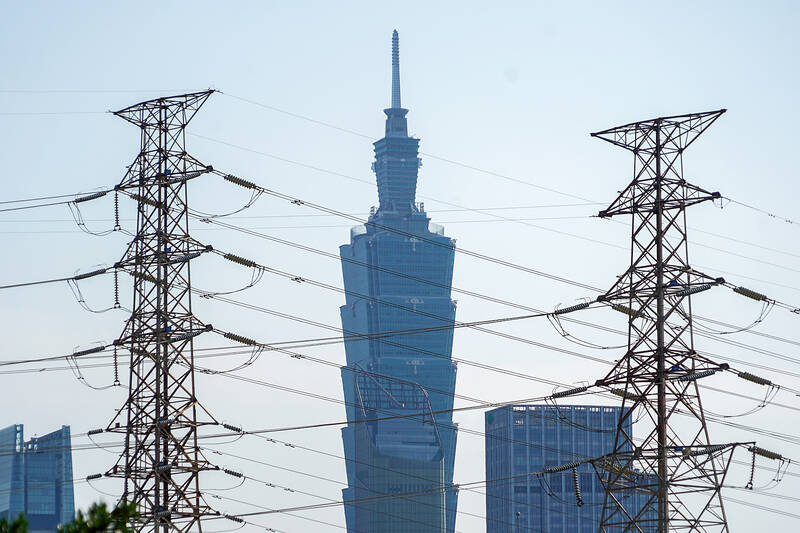
Photo: CNA
If the company is planning to build an Angstrom-era facility as expected, that means it is seeking to improve the precision of chipmaking to less than 2 nanometer scale.
Development plans for science parks are typically coordinated with Taipower in advance, allowing the company to plan power facilities and grid infrastructure based on expected demand, while also working with central and local governments, Tseng said.
Large-scale power plant projects typically take six to eight years to complete, far longer than the one to two-year expansion cycles seen in the artificial intelligence (AI) and semiconductor industries, Taipower vice president Cheng Ching-hung (鄭慶鴻) said.
Therefore, planning and construction of power plant projects must begin in advance, otherwise reserve capacity could be reduced by about 1 percentage point — equivalent to about 400,000 kilowatts, Cheng said.
The current wave of AI development is expected to drive unprecedented growth in electricity demand, with annual increases over the next five years estimated at 2.5 times that of the past decade, posing a major challenge to Taiwan’s power system and prompting Taipower to step up investment, he said.
Meanwhile, Tseng said that the company is undertaking environmental impact assessments and independent safety inspections for the restart of the Guosheng Nuclear Power Plant in New Taipei City’s Wanli District (萬里) and the Ma-anshan Nuclear Power Plant in Pingtung County’s Hengchun Township (恆春).
Independent safety checks at the Ma-anshan Nuclear Power Plant are expected to begin later this month, he said.
However, a main challenge for the Guosheng Nuclear Power Plant is the large volume of spent fuel rods still stored in the reactor core, which must be removed before further safety inspections can proceed, he added.
As for the procurement of nuclear fuel, it also requires close coordination with original suppliers, as they cannot be purchased on the spot market, unlike coal or natural gas, Tseng said.
In addition, fuel loading and transportation require regulatory approval first, with the process proceeding in accordance with safety requirements and regulations, he said.
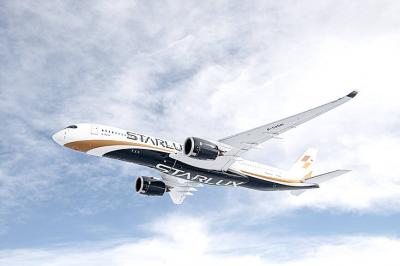
Starlux Airlines Co (星宇航空) today unveiled a long-haul network expansion plan at a shareholders’ meeting in Taipei, including direct flights to Barcelona, Spain, and Zurich, Switzerland, as well as a service connecting Taipei, Sydney and New Zealand. Starlux is to become the first Taiwanese carrier to offer non-stop services to the two European cities, while the inaugural oceanic route is expected to expand transit opportunities within the Australia-New Zealand market, Starlux said. Flight services to Chicago, Dallas, Washington and New York are under evaluation, the airline added. Prior to the shareholders’ meeting, the airline earlier this year announced that it would be
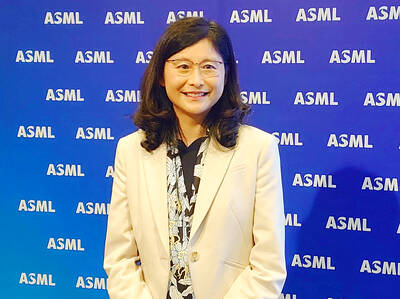
Netherlands-based semiconductor equipment supplier ASML Holding NV yesterday said that it is planning to hire an additional 1,000 people in Taiwan this year in response to growing demand from clients. ASML had previously planned to recruit 600 people this year, but that the plan has been adjusted upward, ASML vice president and ASML Taiwan general manager Grace Wang (汪佳慧) told reporters. ASML has a workforce of more than 4,500 in Taiwan, accounting for about 10 percent of its global total, Wang said. This year’s recruitment campaign would focus on adding people in the customer support, manufacturing and supply chain domains to assist ASML
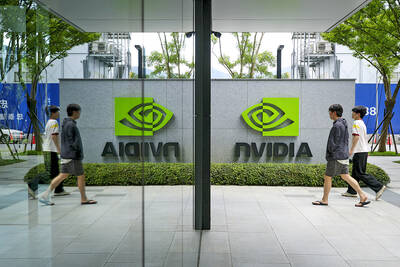
UNDER MICROSCOPE: Taiwan detained three people who allegedly conspired to buy servers in Taiwan and export them using fraudulent documentation, prosecutors said Nvidia Corp chief executive officer Jensen Huang (黃仁勳) on Saturday urged Super Micro Computer Inc to tighten up on compliance after Taiwan detained three people this week for allegedly making fraudulent declarations about artificial intelligence (AI) servers made by its US partner. The development marked the nation’s first crackdown on semiconductor smuggling, which grew after the US slapped restrictions on exports of high-end chips such as Nvidia AI accelerators to China. Nvidia is “rigorous” in explaining regulations to all of its partners, Huang told reporters after arriving in Taipei. “Ultimately Super Micro has to run their own company,” he said in response to
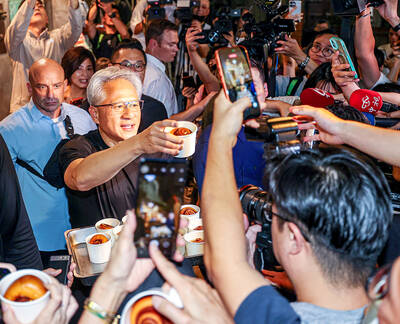
Nvidia Corp yesterday announced that CEO Jensen Huang (黃仁勳) would attend an employee meeting in Taipei tomorrow to celebrate the launch of the company’s Taiwan headquarters project. Huang would attend a gathering at the site of Nvidia’s planned headquarters in Beitou Shilin Technology Park (北投士林科技園區), the company said in a statement. After arriving in Taiwan on Saturday last week, Huang told reporters that he plans to meet with Quanta Computer Inc (廣達) chairman Barry Lam (林百里) and Taiwan Semiconductor Manufacturing Co (TSMC, 台積電) chairman C.C. Wei (魏哲家), and would attend the groundbreaking ceremony for Nvidia’s Taiwan headquarters tomorrow. Nvidia has not yet applied


 RSS
RSS