


State-run CPC Corp, Taiwan (CPC, 台灣中油) has activated its fourth naphtha cracker to boost ethylene supply, aiming to ease concerns over plastic material shortages amid tensions in the Middle East, the Ministry of Economic Affairs said yesterday.
The move is expected to add 19,000 tonnes of supply this month and 30,000 tonnes next month, Deputy Minister of Economic Affairs Ho Chin-tsang (何晉滄) said at a meeting of the legislature’s Economics Committee in Taipei.
CPC on Tuesday held talks with major polyethylene producers, including Formosa Plastics Corp (台塑), Asia Polymer Corp (亞聚) and USI Corp (台聚), and pledged to supply ethylene feedstock while allocating capacity to downstream manufacturers, Ho said.
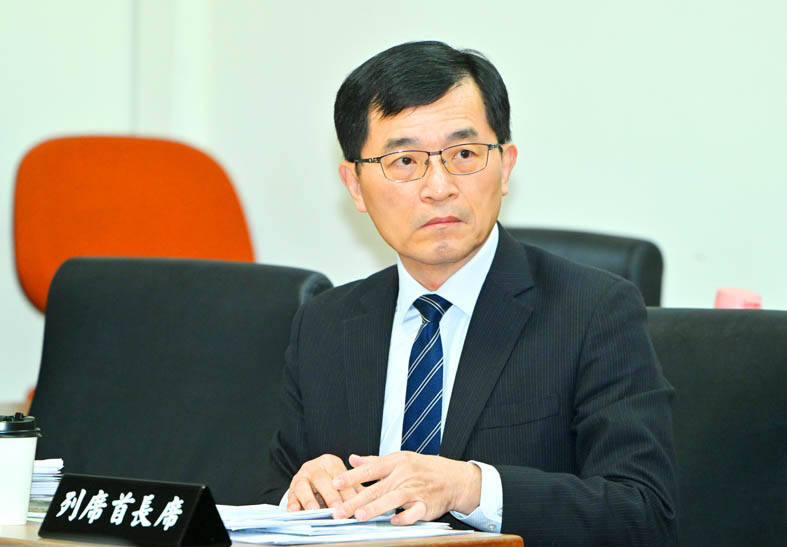
Photo: Tien Yu-hua, Taipei Times
Tensions in the Middle East have disrupted global petrochemical supply chains, pushing up prices and tightening supply.
The ministry is coordinating with 20 manufacturers to ensure small and medium-sized enterprises have access to plastic materials, he said.
If shortages emerge, the government would reallocate supplies and aim to normalize supply within three days, he added.
International energy prices have remained elevated since the war in the Middle East began on Feb. 28, with the extra oil and gas costs for CPC likely reaching US$6.5 billion if the regional conflict extends into June or July, Ho said.
Each liquefied natural gas cargo costs NT$1 billion to NT$1.4 billion (US$31.3 million to US$43.82 million) more, as Taiwan has expanded procurement from its usual 10 monthly shipments from the Middle East to about 30 cargoes from multiple sources, Department of State-Owned Enterprise Management Director-General Hu Wen-chung (胡文中) told reporters after the legislative meeting.
To mitigate rising costs, the ministry has sent a NT$170 billion CPC capital injection proposal to the Executive Yuan for next year, which is expected to be submitted to the legislature for review before August, Ho said.
CPC has also outlined a broader NT$350 billion capital injection plan over four years, he added.
To reflect rising energy costs, the company on Tuesday announced a 41.58 percent increase in natural gas prices for domestic power generators this month, the largest single-month increase on record.
Taiwan Power Co (台電) president Wang Yao-ting (王耀庭) said the price hikes would raise its monthly power generation costs by about NT$10 billion, or roughly NT$90 billion annually.
The ministry would conduct a comprehensive review of CPC’s fuel pricing formula to reflect its procurement costs, Ho said.
CPC calculates its weekly fuel prices based on a weighted oil price formula that comprises 70 percent Dubai crude and 30 percent Brent.
It sources about 60 percent of its crude oil imports from the US and less than 40 percent from the Middle East, the ministry said.
The ministry would review the formula’s applicability and consult relevant stakeholders over the next six months, Ho said.
CPC president Chang Min (張敏) said domestic fuel prices follow global trends, but remain below international levels despite a roughly 70 percent rise in Brent crude, indicating part of the cost has been absorbed by CPC.
CPC would soon commission third-party research institutions to reassess the formula, Chang said
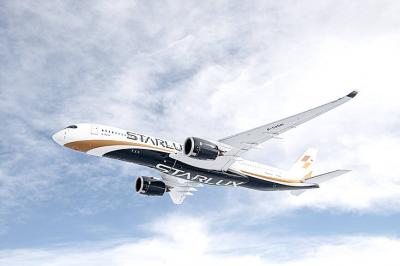
Starlux Airlines Co (星宇航空) today unveiled a long-haul network expansion plan at a shareholders’ meeting in Taipei, including direct flights to Barcelona, Spain, and Zurich, Switzerland, as well as a service connecting Taipei, Sydney and New Zealand. Starlux is to become the first Taiwanese carrier to offer non-stop services to the two European cities, while the inaugural oceanic route is expected to expand transit opportunities within the Australia-New Zealand market, Starlux said. Flight services to Chicago, Dallas, Washington and New York are under evaluation, the airline added. Prior to the shareholders’ meeting, the airline earlier this year announced that it would be
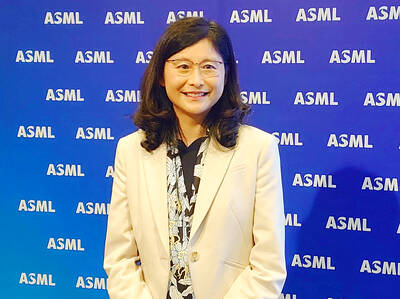
Netherlands-based semiconductor equipment supplier ASML Holding NV yesterday said that it is planning to hire an additional 1,000 people in Taiwan this year in response to growing demand from clients. ASML had previously planned to recruit 600 people this year, but that the plan has been adjusted upward, ASML vice president and ASML Taiwan general manager Grace Wang (汪佳慧) told reporters. ASML has a workforce of more than 4,500 in Taiwan, accounting for about 10 percent of its global total, Wang said. This year’s recruitment campaign would focus on adding people in the customer support, manufacturing and supply chain domains to assist ASML
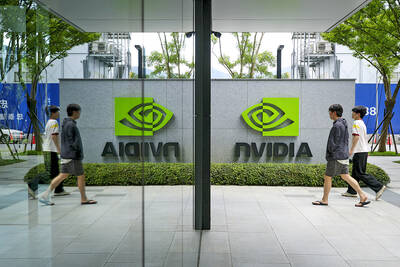
UNDER MICROSCOPE: Taiwan detained three people who allegedly conspired to buy servers in Taiwan and export them using fraudulent documentation, prosecutors said Nvidia Corp chief executive officer Jensen Huang (黃仁勳) on Saturday urged Super Micro Computer Inc to tighten up on compliance after Taiwan detained three people this week for allegedly making fraudulent declarations about artificial intelligence (AI) servers made by its US partner. The development marked the nation’s first crackdown on semiconductor smuggling, which grew after the US slapped restrictions on exports of high-end chips such as Nvidia AI accelerators to China. Nvidia is “rigorous” in explaining regulations to all of its partners, Huang told reporters after arriving in Taipei. “Ultimately Super Micro has to run their own company,” he said in response to

Nvidia Corp yesterday announced that CEO Jensen Huang (黃仁勳) would attend an employee meeting in Taipei tomorrow to celebrate the launch of the company’s Taiwan headquarters project. Huang would attend a gathering at the site of Nvidia’s planned headquarters in Beitou Shilin Technology Park (北投士林科技園區), the company said in a statement. After arriving in Taiwan on Saturday last week, Huang told reporters that he plans to meet with Quanta Computer Inc (廣達) chairman Barry Lam (林百里) and Taiwan Semiconductor Manufacturing Co (TSMC, 台積電) chairman C.C. Wei (魏哲家), and would attend the groundbreaking ceremony for Nvidia’s Taiwan headquarters tomorrow. Nvidia has not yet applied


 RSS
RSS