


Grab Holdings Ltd, a leading super app in Southeast Asia, today said that it has agreed to acquire Delivery Hero's Foodpanda delivery business in Taiwan for US$600 million in cash.
In a statement, Grab said the acquisition deal is subject to regulatory approval and scheduled to be completed in the second half of this year.

Photo: CNA
The deal would help Singapore-headquartered Grab extend its reach to a ninth market — its first outside Southeast Asia, the company said.
"Our longstanding expertise in managing complex delivery logistics for dense and high-traffic cities is well-suited for Taiwan's bustling cities," Grab CEO and cofounder Anthony Tan (陳炳耀) said in the statement.
"Taiwan's population of approximately 23 million also has a high demand for mobile-first services, similar to the Southeast Asian consumers who Grab serves every day," Tan said. "We see a significant opportunity to grow the food and groceries delivery scene here."
Grab reiterated its adjusted earnings before interest, taxes, depreciation and amortization (EBITDA) guidance of US$700 million to US$720 million for this year.
The company said the proposed transaction is expected to contribute at least US$60 million in incremental adjusted EBITDA in 2028.
EBITDA is used as an indicator of the overall profitability of a company.
In December 2024, the Fair Trade Commission voted to block delivery platform Uber Eats' proposed acquisition of the Foodpanda business in the country on the grounds that it would restrict competition.
Taiwan Semiconductor Manufacturing Co (TSMC, 台積電) yesterday reported record revenue of NT$416.975 billion (US$13.17 billion) for last month, putting the world’s largest contract chipmaker on track to set a record for quarterly revenue. Last month’s figure surpassed March’s record NT$415.19 billion and represented increases of 1.5 percent from April and 30.1 percent from a year earlier. For the first five months of the year, TSMC generated NT$1.96 trillion in revenue, up 30 percent year-on-year, it said in a statement. TSMC has forecast second-quarter revenue of between US$39 billion and US$40.2 billion, representing sequential growth of about 10 percent and year-on-year growth of about

Infineon Technologies AG is preparing to open its largest single investment, a 5 billion euro (US$5.8 billion) semiconductor factory built with the help of EU subsidies, as the bloc seeks to boost chip production. The power chip fab, which is an extension of the German company’s Dresden campus, is scheduled to open on July 2, Infineon chief operating officer Alexander Gorski said this week at the site. The project is a major recipient of EU Chips Act funds, receiving about 1 billion euros in subsidies. The new plant represents a rare success for the bloc’s flagship semiconductor law, which was drawn up during
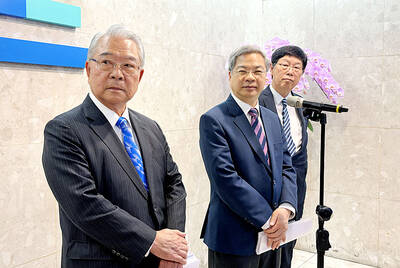
PATENT PROBE: US lawmakers called for a ban on imports of chips made by TSMC if they are found to infringe on US patents, with a preliminary ruling expected soon Minister of Economic Affairs Kung Ming-hsin (龔明鑫) yesterday expressed confidence in Taiwan Semiconductor Manufacturing Co’s (TSMC, 台積電) compliance with patent regulations after reports linked the company to a patent infringement lawsuit in the US. US Representative Ryan Zinke, and US senators Tim Sheehy, Roger Marshall and Bernie Moreno urged the US International Trade Commission in a May 22 letter to ban imports of chips made by TSMC if they are found to infringe on US patents, Axios reported on Wednesday. An administrative law judge is expected to issue a preliminary ruling this month, with the commission potentially making a final decision in

Taiwan remained the sixth-largest net creditor nation in the world last year, despite a fall of more than 10 percent in its net international investment position (NIIP) over the year, the central bank said yesterday. The NIIP is the difference between a country’s external financial assets and its external financial liabilities. Taiwan’s external financial assets hit US$3.27 trillion at the end of last year, up US$275.75 billion or 9.2 percent from a year earlier, the central bank said in its annual NIIP report. The growth largely reflected an increase in holdings of overseas marketable securities by residents in Taiwan, as well as a


 RSS
RSS