


The central bank has reclaimed unsold commemorative Lunar New Year zodiac coins from past years to prevent arbitrage as global silver prices surged sharply, a bank official said yesterday.
The coins were taken back from Chunghwa Post Co (中華郵政), which had been selling leftover zodiac coins from previous years, the official said.
Initial sales of the coins are handled by the Bank of Taiwan (臺灣銀行). Each coin contains one troy ounce of silver.
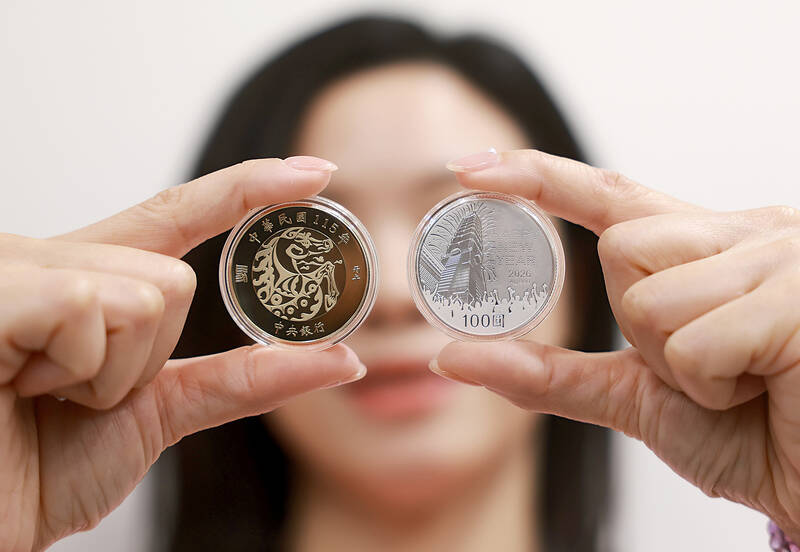
Photo: CNA
The central bank noticed a spike in purchases of older zodiac coins in the middle of last month as silver prices climbed, the official said.
Silver prices rose about 140 percent year-on-year last year, jumping from about US$30 per ounce in 2024 to as high as US$120 this month before easing to about US$87.
The central bank said it acted to prevent people from buying older coins at fixed prices and reselling them for profit based on higher silver values.
As the coins are intended as commemorative items, the bank did not want them used for speculation, the official said.
Rising silver prices also pushed the price of this year’s zodiac coin set to a record NT$2,450 (US$77.41) to reflect higher production costs.
Over the past decade, the coin sets typically sold for NT$1,600 to NT$1,900 each, with the previous high of NT$2,000 recorded in 2013.
The reclaimed coins have been transferred to the central bank’s Central Engraving and Printing Plant and are to be reused as materials for future coin production, the official said.
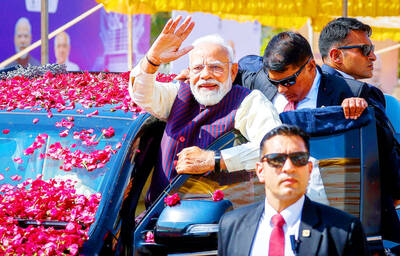
NEW IDENTITY: Known for its software, India has expanded into hardware, with its semiconductor industry growing from US$38bn in 2023 to US$45bn to US$50bn India on Saturday inaugurated its first semiconductor assembly and test facility, a milestone in the government’s push to reduce dependence on foreign chipmakers and stake a claim in a sector dominated by China. Indian Prime Minister Narendra Modi opened US firm Micron Technology Inc’s semiconductor assembly, test and packaging unit in his home state of Gujarat, hailing the “dawn of a new era” for India’s technology ambitions. “When young Indians look back in the future, they will see this decade as the turning point in our tech future,” Modi told the event, which was broadcast on his YouTube channel. The plant would convert

Nanya Technology Corp (南亞科技) yesterday said the DRAM supply crunch could extend through 2028, as the artificial intelligence (AI) boom has led the world’s major memory makers to dramatically reduce production of standard DRAM and allocate a significant portion of their capacity for high-bandwidth memory (HBM) chips. The most severe supply constraints would stretch to the first half of next year due to “very limited” increases in new DRAM capacity worldwide, Nanya Technology president Lee Pei-ing (李培瑛) told a news briefing. The company plans to increase monthly 12-inch wafer capacity to 20,000 in the first half of 2028 after a
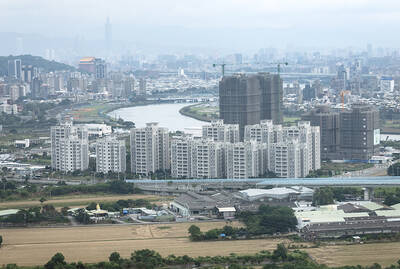
Property transactions in the nation’s six special municipalities plunged last month, as a lengthy Lunar New Year holiday combined with ongoing credit tightening dampened housing market activity, data compiled by local land administration offices released on Monday showed. The six cities recorded a total of 10,480 property transfers last month, down 42.5 percent from January and marking the second-lowest monthly level on record, the data showed. “The sharp drop largely reflected seasonal factors and tighter credit conditions,” Evertrust Rehouse Co (永慶房屋) deputy research manager Chen Chin-ping (陳金萍) said. The nine-day Lunar New Year holiday fell in February this year, reducing
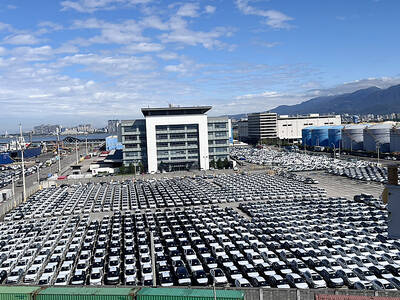
New vehicle sales in Taiwan plunged about 37 percent sequentially last month as the long Lunar New Year holiday and 228 Peace Memorial Day holiday cut short the number of working days, along with the lingering uncertainty over import tax cuts on US vehicles, market researcher U-Car said in a report yesterday. New car sales last month totaled 22,043, slumping from 35,073 units in January and down 19.89 percent from 37,515 in February last year, U-Car data showed. Sales of imported luxury cars, led by Mercedes-Benz, plummeted about 45 percent to 3,109 units last month from 5,663 units in the previous month,


 RSS
RSS