


US President Donald Trump on Thursday threatened to impose a 50 percent tariff on aircraft from Canada sold in the US and decertify all new planes made in the country until Ottawa agreed to approve some jets made by Gulfstream, a unit of General Dynamics Corp.
Canada had “wrongfully, illegally, and steadfastly refused to certify the Gulfstream 500, 600, 700, and 800 Jets,” Trump wrote on social media.
In response, the US would decertify “Bombardier Global Expresses, and all Aircraft made in Canada, until such time as Gulfstream, a Great American Company, is fully certified,” he said.
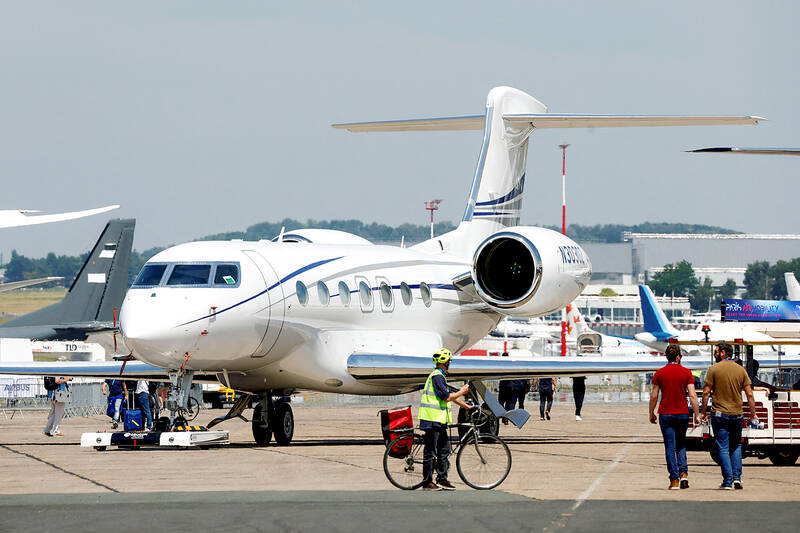
Photo: Reuters
Canada was effectively prohibiting the sale of Gulfstream products through the same certification process, he said.
“If, for any reason, this situation is not immediately corrected, I am going to charge Canada a 50 percent Tariff on any and all Aircraft sold into the United States of America,” he said.
A White House official said that the decertification announcement would only affect new planes — sparing jets already in operation.
Still, it was unclear how the US would decertify the aircraft, as such a measure typically relates to safety issues.
“I don’t know what this is or where it’s coming from, but it’s beyond a bad idea for the president to get in the way of safety and certification,” said Richard Aboulafia, an aviation analyst and managing director at AeroDynamic Advisory. “And does he have any authority to do this?”
Trump has taken particular aim at Bombardier Inc’s Global Express, but it is the CRJ family of regional jets introduced by the manufacturer that is widely used by US carriers.
American Airlines Group Inc counted about 200 of the aircraft in its regional fleet last year and Delta Air Lines Inc’s regional partners had almost 180 CRJs in fleet last year.
Bombardier said in a statement that it has taken note of Trump’s post and is in contact with the Canadian government.
“We hope this is quickly resolved to avoid a significant impact to air traffic and the flying public,” it said.
Canadian government officials did not immediately respond to requests for comment.
A spokesperson for the US Federal Aviation Administration (FAA), the agency responsible for certifying aircraft in the US, referred a request for comment to the White House.
A spokesperson for the Regional Airline Association said that the group was not aware of any of its members’ aircraft having been grounded and referred any questions to the FAA.
Delta declined to comment while it sought to better understand the announcement.
SkyWest Inc, the largest operator of Canadian-made jets in the US, said it was not aware of imminent regulatory action.
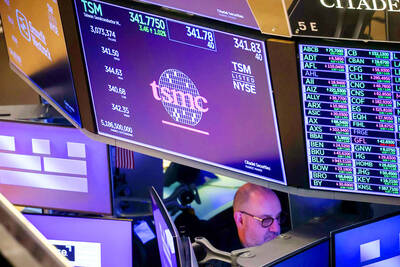
STRONG INTEREST: Analysts have pointed to optimism in TSMC’s growth prospects in the artificial intelligence era as the cause of the rising number of shareholders The number of people holding shares of chipmaker Taiwan Semiconductor Manufacturing Co (TSMC, 台積電) hit a new high last week despite a decline in its stock price, the Taiwan Depository and Clearing Corp (TDCC, 台灣集保) said. The number of TSMC shareholders rose to 2.46 million as of Friday, up 75,536 from a week earlier, TDCC data showed. The stock price fell 1.34 percent during the same week to close at NT$1,840 (US$57.55). The decline in TSMC’s share price resulted from volatility in global tech stocks, driven by rising international crude oil prices as the war against Iran continues. Dealers said
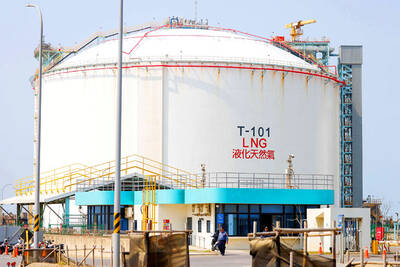
Taiwan’s natural gas supply remains stable through the end of May, despite rising concerns about potential disruptions to Qatari liquefied natural gas (LNG) supplies due to escalating conflicts in the Middle East, the Ministry of Economic Affairs said yesterday. The ministry in a statement said that Taiwan has completed preparations for natural gas supply and shipping schedules through the end of May. It has also made plans to increase natural gas imports from regions outside the Middle East in June to ensure a stable supply, it added. Taiwan sources natural gas from 14 countries and is not solely dependent on the Middle East,
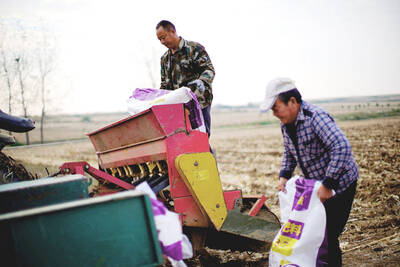
China is clamping down on fertilizer exports to protect its domestic market, industry sources said, putting an additional strain on global markets that were already grappling with shortages caused by the US-Israeli war on Iran. China is among the largest fertilizer exporters — shipping more than US$13 billion of it last year — and it has a history of controlling exports to keep prices low for farmers. Shipments through the war-blocked Strait of Hormuz account for about one-third of the sea-borne supply. This month, Beijing banned exports of nitrogen-potassium fertilizer blends and certain phosphate varieties, sources said. The ban, which has not
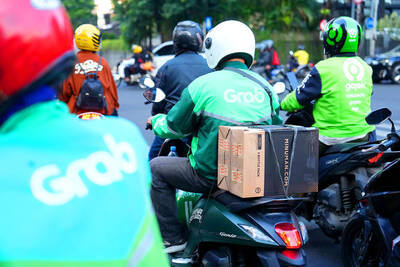
Grab Holdings Ltd agreed to buy Delivery Hero SE’s Foodpanda operations in Taiwan for US$600 million, a deal that marks its first foray outside of its Southeast Asian base. The cash acquisition will allow Grab to expand into 21 cities across Taiwan, the Singapore-based ride-hailing and delivery company said in a statement yesterday. Grab expects the transaction to be completed in the second half, subject to regulatory approvals. The purchase will give Grab a presence on the island of about 23 million people, helping it to expand beyond its intensely competitive home market. Grab has seen growth slow dramatically as it takes


 RSS
RSS