


While the TAIEX has repeatedly hit record highs in recent sessions, two board directors at the central bank called on policymakers to pay heed to the effects of capital movements of foreign institutional investors (FINIs) on Taiwan’s financial and foreign exchange markets, the bank’s quarterly board meeting minutes released yesterday showed.
The share prices of large-cap blue-chip stocks continue to rise, the market value of FINI holdings is set to increase further, one director said.
Consequently, even a partial selloff by FINIs could intensify downward pressures on the New Taiwan dollar exchange rate, the director said.

Photo: CNA
The trajectory of the NT dollar exchange rate would depend not only on the movement of the US dollar exchange rate, but on the activities of FINIs, the second director added.
Another board director said that Taiwan’s capital market has expanded rapidly for more than a year, characterized by rising stock market capitalization and significant growth in exchange-traded fund assets.
Coupled with the frequent foreign capital flows, these developments could exacerbate volatility in domestic financial and foreign exchange markets and warrant close attention, the director warned.
Given the lingering uncertainties surrounding the economic and financial outlook, heightened volatility is likely to persist and it is important to monitor market developments, such as shifts in yen interest rates and the resultant impact on global liquidity conditions, as well as developments in the artificial intelligence (AI) sector and the odds of an AI bubble, another board member said.
At the bank’s quarterly board meeting last month, all board directors agreed to keep the policy rates unchanged, with the discount rate, the rate on refinancing of secured loans and the rate on temporary accommodations remaining at 2 percent, 2.375 percent and 4.25 percent respectively.
Regarding the housing market, the bank maintained its selective credit control measures in response to real-estate market dynamics.
Several board directors said that the measures have yielded preliminary results, while others believe the control measures should stay in place as housing prices remain elevated.
Some board directors voiced concern over the trajectory of the housing debt-servicing ratio (DSR), according to the minutes.
One director said that elevated housing prices have caused the housing DSR to exceed the affordability threshold of 30 percent.
As there is a correlation between the housing DSR and the delinquency rate of housing loans, the director said it would have direct implications on financial stability.
Another director said that relying solely on a borrower’s income is insufficient to determine default risk, as many might receive financial assistance from their parents.
The housing DSR remains one of the indicators for default risk, they said.
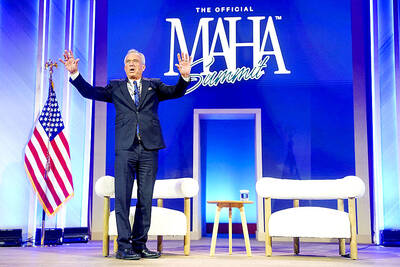
Sweeping policy changes under US Secretary of Health and Human Services Robert F. Kennedy Jr are having a chilling effect on vaccine makers as anti-vaccine rhetoric has turned into concrete changes in inoculation schedules and recommendations, investors and executives said. The administration of US President Donald Trump has in the past year upended vaccine recommendations, with the country last month ending its longstanding guidance that all children receive inoculations against flu, hepatitis A and other diseases. The unprecedented changes have led to diminished vaccine usage, hurt the investment case for some biotechs, and created a drag that would likely dent revenues and

Macronix International Co (旺宏), the world’s biggest NOR flash memory supplier, yesterday said it would spend NT$22 billion (US$699.1 million) on capacity expansion this year to increase its production of mid-to-low-density memory chips as the world’s major memorychip suppliers are phasing out the market. The company said its planned capital expenditures are about 11 times higher than the NT$1.8 billion it spent on new facilities and equipment last year. A majority of this year’s outlay would be allocated to step up capacity of multi-level cell (MLC) NAND flash memory chips, which are used in embedded multimedia cards (eMMC), a managed

CULPRITS: Factors that affected the slip included falling global crude oil prices, wait-and-see consumer attitudes due to US tariffs and a different Lunar New Year holiday schedule Taiwan’s retail sales ended a nine-year growth streak last year, slipping 0.2 percent from a year earlier as uncertainty over US tariff policies affected demand for durable goods, data released on Friday by the Ministry of Economic Affairs showed. Last year’s retail sales totaled NT$4.84 trillion (US$153.27 billion), down about NT$9.5 billion, or 0.2 percent, from 2024. Despite the decline, the figure was still the second-highest annual sales total on record. Ministry statistics department deputy head Chen Yu-fang (陳玉芳) said sales of cars, motorcycles and related products, which accounted for 17.4 percent of total retail rales last year, fell NT$68.1 billion, or

In the wake of strong global demand for AI applications, Taiwan’s export-oriented economy accelerated with the composite index of economic indicators flashing the first “red” light in December for one year, indicating the economy is in booming mode, the National Development Council (NDC) said yesterday. Moreover, the index of leading indicators, which gauges the potential state of the economy over the next six months, also moved higher in December amid growing optimism over the outlook, the NDC said. In December, the index of economic indicators rose one point from a month earlier to 38, at the lower end of the “red” light.


 RSS
RSS