


Meta Platforms Inc has agreed to acquire Singapore-based start-up Manus, adding a popular artificial intelligence (AI) agent to its effort to build a business around its massive AI investment.
The deal values Manus at more than US$2 billion, people familiar with the matter said.
It was struck in about 10 days, the people said, asking not to be named, as the details are not public.

Photo: Bloomberg
Meta intends to continue operating and selling the Manus service while also integrating it into its products, the company said in a statement.
Backed by some of China’s biggest names such as Tencent Holdings Ltd (騰訊), ZhenFund (真格基金) and HSG Laser Co (宏山激光), Manus shot to prominence early this year not long after DeepSeek’s (深度求索) debut.
Meta chief executive officer Mark Zuckerberg has made AI his company’s top priority, and is spending billions to hire researchers, build data centers and develop new models.
Manus had an annual revenue run rate of US$125 million earlier this year from selling its AI agent to businesses via subscriptions, which could give Meta a more immediate return on some of its AI spending.
The Manus AI agent can complete a handful of general tasks, such as screening resumes, creating trip itineraries and analyzing stocks in response to basic instructions.
The parent company behind Manus, Butterfly Effect Pte Ltd — which was founded in China before moving to Singapore — raised money earlier this year at close to a US$500 million valuation in an investment round led by US venture capital firm Benchmark.
AI agents are tools that do not need human supervision to perform specific digital tasks. Enterprise software companies such as Salesforce Inc and ServiceNow Inc have heavily promoted their versions of agents as the most effective way for businesses to use the emerging technology, rather than generative AI features such as chatbots, which require user prompts and interaction.
Meta already has an AI chatbot, Meta AI, which is available through the company’s social media and messaging platforms — Facebook, Instagram and WhatsApp — in addition to its AI glasses.
The US company is acquiring the technology and leadership group from Manus, although its statement did not detail where the new team would sit within the organization.
The company’s chief AI officer Alexandr Wang (汪滔) joined Meta this summer as part of a high-profile investment in his start-up, Scale AI.
Following the announcement, Wang posted on social media welcoming the Manus team to Meta, and in his own post Manus cofounder and chief executive officer Xiao Hong (肖弘) said that the deal would help his company expand the reach of its agents.
“The era of AI that doesn’t just talk, but acts, creates, and delivers, is only beginning,” he wrote. “And now, we get to build it at a scale we never could have imagined.”
Meta’s aggressive spending to compete in the AI race is matched by rivals such as OpenAI, Alphabet Inc’s Google and Microsoft Corp. Zuckerberg has pledged to spend US$600 billion on US infrastructure projects over the next three years, many of them expected to be AI-related. The company has hired an expensive team of researchers to develop a new state-of-the-art AI model it plans to debut in the spring, and has faced some skepticism from investors who worry that the heavy spending would not result in meaningful revenue anytime soon.
Benchmark was criticized earlier this year by lawmakers and other venture investors for backing an AI company with ties to China.
“Who thinks it is a good idea for American investors to subsidize our biggest adversary in AI, only to have the CCP [Chinese Communist Party] use that technology to challenge us economically and militarily? Not me,” US Senator John Cornyn wrote in a post on social media in May.
Benchmark did not immediately respond to a request for comment on the Meta deal.
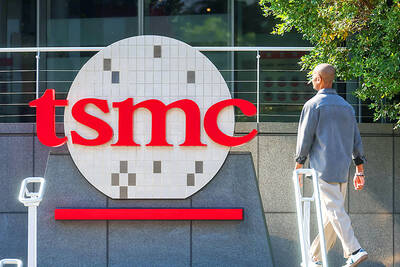
Shares of contract chipmaker Taiwan Semiconductor Manufacturing Co (TSMC, 台積電) came under pressure yesterday after a report that Apple Inc is looking to shift some orders from the Taiwanese company to Intel Corp. TSMC shares fell NT$55, or 2.4 percent, to close at NT$2,235 on the local main board, Taiwan Stock Exchange data showed. Despite the losses, TSMC is expected to continue to benefit from sound fundamentals, as it maintains a lead over its peers in high-end process development, analysts said. “The selling was a knee-jerk reaction to an Intel-Apple report over the weekend,” Mega International Investment Services Corp (兆豐國際投顧) analyst Alex Huang
Taiwan Semiconductor Manufacturing Co (TSMC, 台積電) is expected to remain Apple Inc’s primary chip manufacturing partner despite reports that Apple could shift some orders to Intel Corp, industry experts said yesterday. The comments came after The Wall Street Journal reported on Friday that Apple and Intel had reached a preliminary agreement following more than a year of negotiations for Intel to manufacture some chips for Apple devices. Taiwan Institute of Economic Research (台灣經濟研究院) economist Arisa Liu (劉佩真) said TSMC’s advanced packaging technologies, including integrated fan-out and chip-on-wafer-on-substrate, remain critical to the performance of Apple’s A-series and M-series chips. She said Intel and Samsung
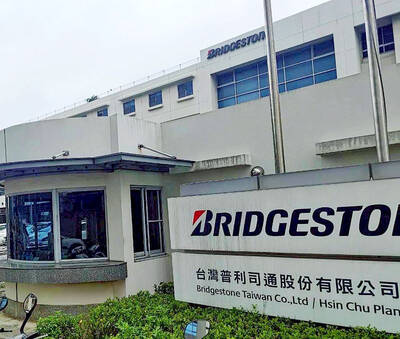
TRANSITION: With the closure, the company would reorganize its Taiwanese unit to a sales and service-focused model, Bridgestone said Bridgestone Corp yesterday announced it would cease manufacturing operations at its tire plant in Hsinchu County’s Hukou Township (湖口), affecting more than 500 workers. Bridgestone Taiwan Co (台灣普利司通) said in a statement that the decision was based on the Tokyo-based tire maker’s adjustments to its global operational strategy and long-term market development considerations. The Taiwanese unit would be reorganized as part of the closure, effective yesterday, and all related production activities would be concluded, the statement said. Under the plan, Bridgestone would continue to deepen its presence in the Taiwanese market, while transitioning to a sales and service-focused business model, it added. The Hsinchu
Taiwan Semiconductor Manufacturing Co (TSMC, 台積電) has approved a capital budget of US$31.28 billion for production expansion to meet long-term development needs during the artificial intelligence (AI) boom. The company’s board meeting yesterday approved the capital appropriation plan for purposes such as the installation of advanced technology capacity and fab construction, the world’s largest contract chipmaker said in a statement. At an earnings conference last month, TSMC forecast that its capital expenditure for this year would be at the higher end of the US$52 billion to US$56 billion range it forecast in January in response to robust demand for 5G, AI and


 RSS
RSS