


Taiwan’s business sentiment strengthened across major sectors last month, signaling a steady improvement in corporate confidence as demand tied to artificial intelligence (AI) and public investment helped offset lingering global uncertainties, the Taiwan Institute of Economic Research (TIER, 台經院) said yesterday.
The manufacturing business climate index rose to 94.42, up 2.39 points from October and marking a fifth straight monthly increase, TIER said, citing a monthly survey.
Overall manufacturing conditions improved as demand for AI, high-performance computing and cloud services continued to underpin orders, said Gordon Sun (孫明德), director of TIER’s Economic Forecasting Center.

Photo courtesy of the Taiwan Institute of Economic Research
He cautioned that non-AI industries remain under pressure from weak global demand and intense competition from overseas.
Manufacturers have gradually shaken off tariff-related disruptions and policy uncertainty this quarter, Sun said, adding that optimism for next year is building.
A strong start to the first quarter is possible if external tailwinds materialize, including an end to the Russia-Ukraine war, tighter capacity controls in China and continued easing of US monetary policy.
Looser US policy would help stabilize financial markets and support consumption, while a resolution to the conflict in Ukraine could free up fiscal resources in Europe, restore supplies of Ukrainian raw materials and help normalize Russian oil prices, the economist said.
China’s efforts to curb excess capacity amid rising anti-dumping pressure could lift prices for cement, steel and other materials, benefiting Taiwan’s petrochemical and steel producers, Sun added.
The services sector showed improvement, with its confidence index climbing 3.09 points to 91.18, marking a second consecutive monthly increase, TIER said.
While brokerages were affected by a pullback in the local stock market, trading volumes rebounded and recent changes to Taiwan’s Innovation Board supported underwriting and advisory businesses, it said.
Wholesalers benefited from stronger restocking activity by downstream clients, a weaker New Taiwan dollar and improving overseas demand, TIER said.
Confidence among construction firms remained firmly in expansion territory, with the construction climate index rising 1.12 points to 101.66, extending a
six-month uptrend.
TIER said greater public works-related spending, aimed at meeting a 95 percent year-end execution target, underpinned the gains.
Major transportation projects scheduled to break ground next year — along with continued investment by high-tech manufacturers building new facilities — would help fuel demand for construction and electromechanical engineering services, it said.
In the property market, the fourth quarter is typically a peak buying season, but transactions are likely to remain constrained by tight lending conditions after the central bank recently made clear it does not plan to relax credit controls any time soon, TIER said.
Shares of contract chipmaker Taiwan Semiconductor Manufacturing Co (TSMC, 台積電) came under pressure yesterday after a report that Apple Inc is looking to shift some orders from the Taiwanese company to Intel Corp. TSMC shares fell NT$55, or 2.4 percent, to close at NT$2,235 on the local main board, Taiwan Stock Exchange data showed. Despite the losses, TSMC is expected to continue to benefit from sound fundamentals, as it maintains a lead over its peers in high-end process development, analysts said. “The selling was a knee-jerk reaction to an Intel-Apple report over the weekend,” Mega International Investment Services Corp (兆豐國際投顧) analyst Alex Huang
Taiwan Semiconductor Manufacturing Co (TSMC, 台積電) is expected to remain Apple Inc’s primary chip manufacturing partner despite reports that Apple could shift some orders to Intel Corp, industry experts said yesterday. The comments came after The Wall Street Journal reported on Friday that Apple and Intel had reached a preliminary agreement following more than a year of negotiations for Intel to manufacture some chips for Apple devices. Taiwan Institute of Economic Research (台灣經濟研究院) economist Arisa Liu (劉佩真) said TSMC’s advanced packaging technologies, including integrated fan-out and chip-on-wafer-on-substrate, remain critical to the performance of Apple’s A-series and M-series chips. She said Intel and Samsung
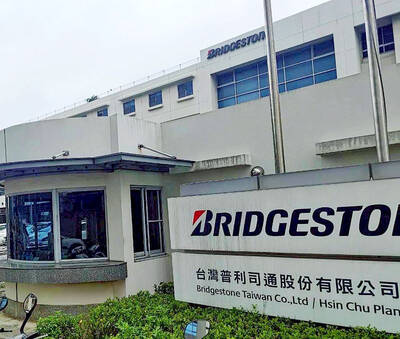
TRANSITION: With the closure, the company would reorganize its Taiwanese unit to a sales and service-focused model, Bridgestone said Bridgestone Corp yesterday announced it would cease manufacturing operations at its tire plant in Hsinchu County’s Hukou Township (湖口), affecting more than 500 workers. Bridgestone Taiwan Co (台灣普利司通) said in a statement that the decision was based on the Tokyo-based tire maker’s adjustments to its global operational strategy and long-term market development considerations. The Taiwanese unit would be reorganized as part of the closure, effective yesterday, and all related production activities would be concluded, the statement said. Under the plan, Bridgestone would continue to deepen its presence in the Taiwanese market, while transitioning to a sales and service-focused business model, it added. The Hsinchu
Taiwan Semiconductor Manufacturing Co (TSMC, 台積電) has approved a capital budget of US$31.28 billion for production expansion to meet long-term development needs during the artificial intelligence (AI) boom. The company’s board meeting yesterday approved the capital appropriation plan for purposes such as the installation of advanced technology capacity and fab construction, the world’s largest contract chipmaker said in a statement. At an earnings conference last month, TSMC forecast that its capital expenditure for this year would be at the higher end of the US$52 billion to US$56 billion range it forecast in January in response to robust demand for 5G, AI and


 RSS
RSS