

Taiwan’s initial public offerings (IPO) activity is expected to remain strong next year following a stellar showing this year, as artificial intelligence (AI) and the technology supply chain continue to support Taiwanese stocks, Ernst & Young (EY) Taiwan said yesterday.
“Despite the uncertainties in the global political and economic landscape, Taiwan’s economy continues to demonstrate strong resilience. With the increasing demand for smart applications and related technologies, coupled with Taiwan’s chip technology advantage, the prospects for Taiwan’s IPO market next year remain promising,” EY Taiwan assurance services leader James Huang (黃建澤) said in a statement.
There were 70 IPO deals on the Taiwan Stock Exchange and Taipei Exchange markets this year, up from 65 last year, EY Taiwan said.
Photo: Claire Cheng, Taipei Times
Together, this year’s IPO’s raised NT$105.07 billion (US$3.33 billion), an increase of NT$47.5 billion, or 82.51 percent, from NT$57.57 billion last year, it said.
Proceeds from IPOs have broken records for two consecutive years, with this year’s result signaling a continued recovery in the nation’s capital markets from 2023, it said.
Most IPO deals this year were in the semiconductor sector, followed by the biotechnology, medical and electronics sectors, EY Taiwan said.
There were 31 IPOs on the Taiwan Stock Exchange this year, down from 35 last year, raising a combined NT$84.55 billion, up 98 percent year-on-year, data provided by the consultancy firm showed.
Taichung-based Hon Precision Industry Inc (鴻勁精密), a supplier of chip test handlers used in advanced chip-on-wafer-on-substrate packaging equipment, had the largest IPO at NT$34.47 billion, accounting for 40.77 percent of the overall amount on the Taiwan Stock Exchange, EY Taiwan said.
Hsinchu County-based Heron Neutron Medical Corp (禾榮科技), which develops accelerator-based neutron source technology and clinical applications for boron neutron capture therapy technology, was second, raising NT$10.85 billion, or a 12.84 percent share, it added.
On the Taipei Exchange, the over-the-counter market gained 39 new listings this year, up by nine compared with last year, the data showed.
The listings raised a combined NT$20.52 billion, an increase of NT$5.66 billion, or 38.12 percent, from the previous year, the data showed.
Taoyuan-based semiconductor special chemicals supplier Advanced Echem Materials Co (新應材) topped other new listings on the Taipei Exchange by raising NT$5.73 billion, followed by Hsinchu City-based AblePrint Technology Co (印能科技), which specializes in key equipment used in advanced chip packaging technology, with NT$3.08 billion in IPO proceeds, the data showed.
Globally, IPO deals reached 1,293 this year, up 4.27 percent year-on-year, and raised a combined US$171.8 billion, a 39 percent increase from last year, an indication of a recovery in investor confidence, EY Taiwan said.
Europe, the Middle East, India and Africa together saw the highest number of new listings this year, accounting for 42 of the total, it said.
The Asia-Pacific region made up 43 percent of the total funds raised, making it the largest source of funding globally due to the strong IPO activity in Hong Kong and a surge in Chinese companies listing in Hong Kong, it added.
FOUNDRY DATA: Demand pushed production on some TSMC lines to full utilization, while Samsung’s market share of 5.9 percent dropped, TrendForce said Taiwan Semiconductor Manufacturing Co’s (TSMC, 台積電) foundry market share edged up to 72.5 percent in the second quarter from 72.3 percent in the previous quarter, propelled by robust artificial intelligence (AI) and smartphone chip revenue, data compiled by market researcher TrendForce Corp (集邦科技) showed yesterday. TSMC’s revenue last quarter grew 12 percent sequentially to US$40.2 billion, outpacing the 11.5 percent average growth among the world’s top 10 foundry companies, the researcher said. Combined revenue of the top 10 is expected to grow further this quarter from US$53.49 billion last quarter, supported by strong demand and price hikes, it said. The increased demand has

Global notebook computer shipments are expected to fall 8 percent year-on-year to 167.9 million units this year, dragged by weak demand, high component prices and supply constraints, the Market Intelligence and Consulting Institute (MIC) said on Tuesday. Next year, shipments are expected to decline by a further 4.7 percent to 160 million units as higher retail prices weigh on consumption, MIC deputy director-general Edward Lin (林柏齊) told a news conference in Taipei. The downtrend is expected to extend into 2028, with replacement demand unlikely to recover before supplies of key components rebound and costs decline, Lin said. Surging demand for artificial intelligence (AI)
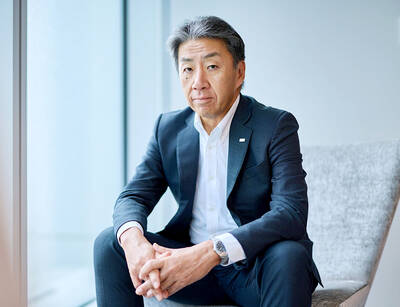
Kioxia Holdings Corp’s top executive brushed aside the likelihood of deeper ties with rival and stakeholder SK Hynix Inc, while pledging to keep surging memory prices at bay to avoid denting long-term artificial intelligence (AI) demand. Makers of memory chips are embarking on costly production capacity increases to meet soaring orders from AI service providers that are fueling double or even triple-digit price rises. Investors including the chairman of SK Hynix’s parent, SK Inc, have said manufacturing partnerships might help lower the risk of huge capital commitments needed. However, oft-floated closer ties with SK Hynix would run into antitrust hurdles and be

EQUAL SHARE: A row over Micron’s payouts coincides with a global debate about who deserves a cut of the sudden wealth generated by the artificial intelligence boom Micron Technology Inc is to provide its engineers in Taiwan a cash bonus of NT$1 million (US$31,600) plus equity rewards, as the company’s local unions are demanding an additional payout to reflect their contribution to the chipmaker’s blowout profits. The Idaho-based chipmaker said in a statement yesterday that its entry-level, Taiwan-based engineers’ average compensation would reach NT$3.4 million for the past fiscal year after the cash and equities awards. All employees in Taiwan would receive equities as part of the annual merit grants, the company added. Before the announcement, Micron’s unions asked for a one-time cash payout equal to about seven years


 RSS
RSS