


Shares in Taiwan took a hit yesterday as investor sentiment was spooked by the US bombing of three nuclear sites in Iran over the weekend, raising concerns about escalating political tensions in the Middle East.
The TAIEX closed down 313.72 points, or 1.42 percent, at 21,732.02, with foreign institutional investors offloading a net NT$15.21 billion (US$511.5 million) in shares on the main board, Taiwan Stock Exchange data showed.
“The US strike complicated the conflicts in the Middle East, and the TAIEX simply reacted to growing geopolitical unease today,” Concord Securities Co (康和證券) analyst Kerry Huang (黃志祺) said.
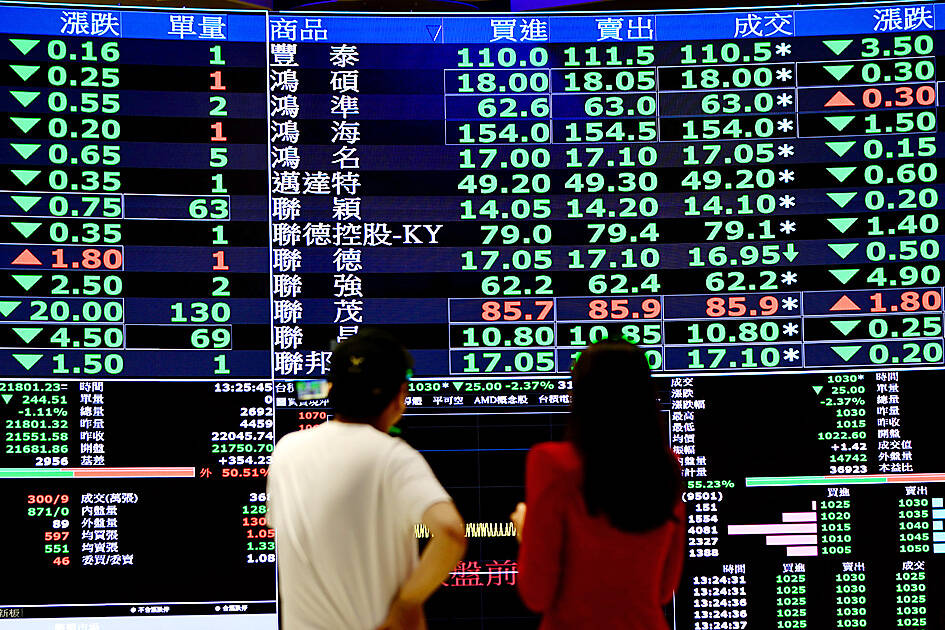
Photo: RITCHIE B. TONGO, EPA-EFE
“With US President Donald Trump floating the idea of regime change in Iran, there are growing fears that Washington will send ground forces to oust the current Iranian leadership, which would further exacerbate the situation,” Huang said.
Contract chipmaker Taiwan Semiconductor Manufacturing Co (TSMC, 台積電), the most heavily weighted stock in the TAIEX, shed 3.32 percent to end at NT$1,020, contributing about 280 points to the index’s fall.
“TSMC shares underperformed and served as a driver to the TAIEX’s losses as Washington is reportedly considering an end of waivers that allow the chipmaker and others to send American technology to China,” Huang said.
Petrochemical stocks saw gains following a spike in international crude oil prices, with Formosa Petrochemical Corp (台塑石化) rising 3.9 percent, Formosa Plastics Corp (台灣塑膠) gaining 1.61 percent and Nan Ya Plastics Corp (南亞塑膠) up 0.37 percent.
“Investors should monitor to see if Iran will follow through with shutting down the Strait of Hormuz, as reported,” Huang said.
If Hormuz, a critical passage for oil shipments, is closed, crude oil prices are likely to rise higher, adding pressure to inflation, he added.
International crude oil prices initially surged more than 2 percent, but later retreated, losing about 0.4 percent in Asian trading, as investors awaited Iran’s response to US strikes on its nuclear facilities.
Asian stock markets mostly retreated, while European bourses saw modest gains, and US stock futures edged higher.
The US dollar strengthened against other currencies, but analysts questioned how sustainable this would be.
“Everything hinges on Iran’s response — whether it’s a symbolic jab or a haymaker that knocks the Strait of Hormuz offline,” SPI Asset Management managing partner Stephen Innes said.
Iran, a major oil producer, sits on the Strait of Hormuz, through which a significant portion of the world’s crude oil passes.
While closing the waterway would be technically challenging, it could severely disrupt oil transit, causing oil prices to surge, insurance rates to spike and making shippers reluctant to operate without US Navy escorts.
Additional reporting by AP and AFP
DIVIDED VIEWS: Although the Fed agreed on holding rates steady, some officials see no rate cuts for this year, while 10 policymakers foresee two or more cuts There are a lot of unknowns about the outlook for the economy and interest rates, but US Federal Reserve Chair Jerome Powell signaled at least one thing seems certain: Higher prices are coming. Fed policymakers voted unanimously to hold interest rates steady at a range of 4.25 percent to 4.50 percent for a fourth straight meeting on Wednesday, as they await clarity on whether tariffs would leave a one-time or more lasting mark on inflation. Powell said it is still unclear how much of the bill would fall on the shoulders of consumers, but he expects to learn more about tariffs

NOT JUSTIFIED: The bank’s governor said there would only be a rate cut if inflation falls below 1.5% and economic conditions deteriorate, which have not been detected The central bank yesterday kept its key interest rates unchanged for a fifth consecutive quarter, aligning with market expectations, while slightly lowering its inflation outlook amid signs of cooling price pressures. The move came after the US Federal Reserve held rates steady overnight, despite pressure from US President Donald Trump to cut borrowing costs. Central bank board members unanimously voted to maintain the discount rate at 2 percent, the secured loan rate at 2.375 percent and the overnight lending rate at 4.25 percent. “We consider the policy decision appropriate, although it suggests tightening leaning after factoring in slackening inflation and stable GDP growth,”
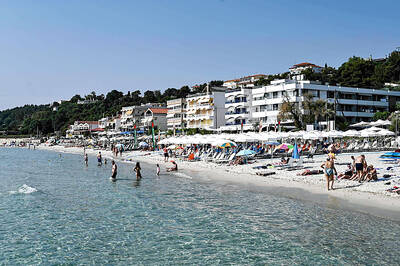
Greek tourism student Katerina quit within a month of starting work at a five-star hotel in Halkidiki, one of the country’s top destinations, because she said conditions were so dire. Beyond the bad pay, the 22-year-old said that her working and living conditions were “miserable and unacceptable.” Millions holiday in Greece every year, but its vital tourism industry is finding it harder and harder to recruit Greeks to look after them. “I was asked to work in any department of the hotel where there was a need, from service to cleaning,” said Katerina, a tourism and marketing student, who would
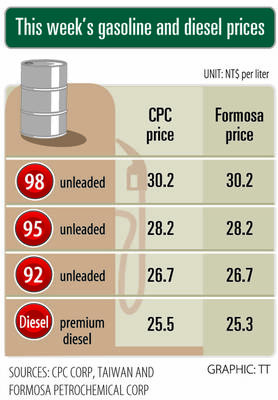
i Gasoline and diesel prices at fuel stations are this week to rise NT$0.1 per liter, as tensions in the Middle East pushed crude oil prices higher last week, CPC Corp, Taiwan (台灣中油) and Formosa Petrochemical Corp (台塑石化) said yesterday. International crude oil prices last week rose for the third consecutive week due to an escalating conflict between Israel and Iran, as the market is concerned that the situation in the Middle East might affect crude oil supply, CPC and Formosa said in separate statements. Front-month Brent crude oil futures — the international oil benchmark — rose 3.75 percent to settle at US$77.01


 RSS
RSS