


State-run Mega Financial Holding Co (兆豐金控) yesterday said its four US branches position the company to capitalize on opportunities linked to Taiwanese technology firms’ investments in the US.
“The group’s main profit driver, Mega International Commercial Bank (兆豐銀行), is in the best position to seize upon business opportunities arising from US-bound investments from local electronics firms,” Mega Financial president Hsiao Yu-mei (蕭玉美) told at an online earnings conference.
The lender, which specializes in international financing, would serve local customers by leveraging its long-established branches in New York, Los Angeles, Chicago and California’s Silicon Valley, Hsiao said, after Taiwan Semiconductor Manufacturing Co (TSMC, 台積電) last week announced plans to invest an additional US$100 billion in the US.
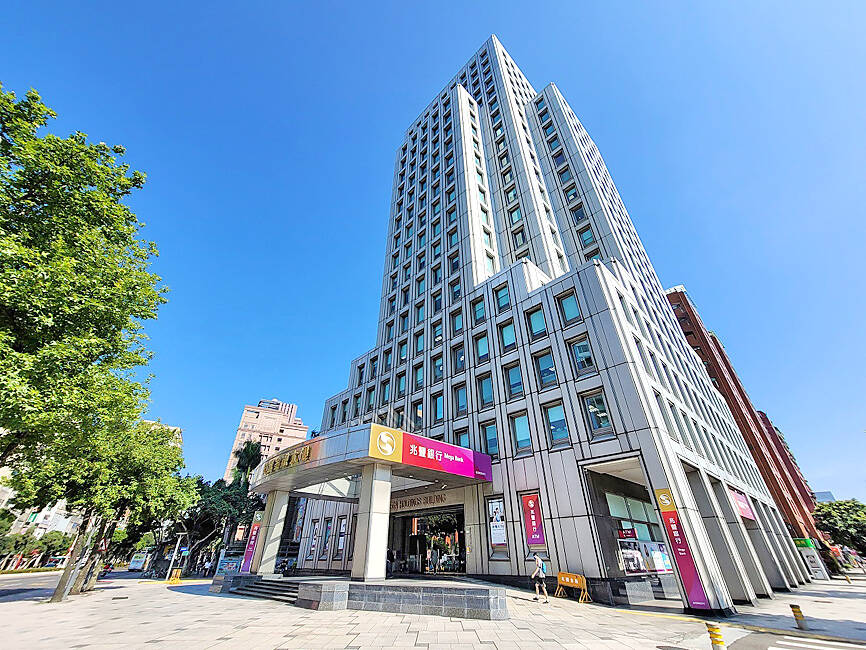
Photo courtesy of Mega Financial Holding Co
Local firms in TSMC’s supply chain are expected to follow suit to better serve their customers’ operations in the US.
Mega Bank can provide a full range of overseas financial services, Hsiao said.
The company said it is eyeing loan growth aligning with Taiwan’s expected GDP growth of 2.5 to 3.42 percent.
Toward that goal, the lender would tap corporate lending opportunities, green energy financing projects and syndicated loan services, it said, adding that the bank also plans to bolster its foreign currency operations.
At the same time, Mega Bank would deepen inclusive financing by offering loans to urban renewal projects, while enhancing digital services for small and medium-sized enterprises, it said.
The bank would also capitalize on green energy financing, and extend loans to micro businesses and young entrepreneurs, it said.
With an ongoing slowdown in its mortgage operations following central bank credit controls, Mega Bank would shift its focus to other consumer banking needs secured by real estate, it said.
Although the housing market is cooling, steady employment and rising wages would keep consumer spending and credit demand resilient, Mega Financial said.
Mega Bank’s net interest margin would improve if US dollar loan demand picks up — which could happen if the US Federal Reserve lowers interest rates by 25 to 50 basis points later this year as expected, the company said.
Taiwan’s central bank is likely to keep interest rates unchanged in light of stable economic growth and benign inflation below 2 percent, the company said.
Mega Bank reported strong loan growth last year, driven by the housing market and Taiwan’s stable economy.
Mortgage lending increased 11 percent from a year earlier, faster than overall loan growth of 7.9 percent, it said.
Hsiao said Mega Financial would discuss its dividend policy next month on how to use its net income of NT$34.77 billion (US$1.05 billion) from last year, which was up 4.6 percent year-on-year. Earnings per share came in at NT$2.35.
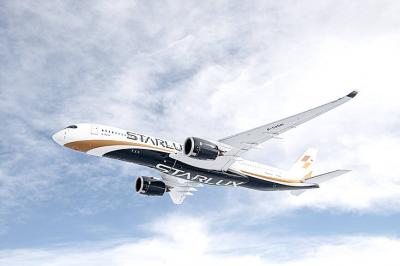
Starlux Airlines Co (星宇航空) today unveiled a long-haul network expansion plan at a shareholders’ meeting in Taipei, including direct flights to Barcelona, Spain, and Zurich, Switzerland, as well as a service connecting Taipei, Sydney and New Zealand. Starlux is to become the first Taiwanese carrier to offer non-stop services to the two European cities, while the inaugural oceanic route is expected to expand transit opportunities within the Australia-New Zealand market, Starlux said. Flight services to Chicago, Dallas, Washington and New York are under evaluation, the airline added. Prior to the shareholders’ meeting, the airline earlier this year announced that it would be
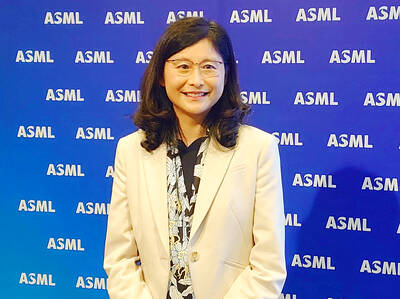
Netherlands-based semiconductor equipment supplier ASML Holding NV yesterday said that it is planning to hire an additional 1,000 people in Taiwan this year in response to growing demand from clients. ASML had previously planned to recruit 600 people this year, but that the plan has been adjusted upward, ASML vice president and ASML Taiwan general manager Grace Wang (汪佳慧) told reporters. ASML has a workforce of more than 4,500 in Taiwan, accounting for about 10 percent of its global total, Wang said. This year’s recruitment campaign would focus on adding people in the customer support, manufacturing and supply chain domains to assist ASML
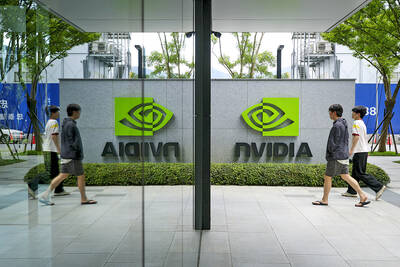
UNDER MICROSCOPE: Taiwan detained three people who allegedly conspired to buy servers in Taiwan and export them using fraudulent documentation, prosecutors said Nvidia Corp chief executive officer Jensen Huang (黃仁勳) on Saturday urged Super Micro Computer Inc to tighten up on compliance after Taiwan detained three people this week for allegedly making fraudulent declarations about artificial intelligence (AI) servers made by its US partner. The development marked the nation’s first crackdown on semiconductor smuggling, which grew after the US slapped restrictions on exports of high-end chips such as Nvidia AI accelerators to China. Nvidia is “rigorous” in explaining regulations to all of its partners, Huang told reporters after arriving in Taipei. “Ultimately Super Micro has to run their own company,” he said in response to

Nvidia Corp yesterday announced that CEO Jensen Huang (黃仁勳) would attend an employee meeting in Taipei tomorrow to celebrate the launch of the company’s Taiwan headquarters project. Huang would attend a gathering at the site of Nvidia’s planned headquarters in Beitou Shilin Technology Park (北投士林科技園區), the company said in a statement. After arriving in Taiwan on Saturday last week, Huang told reporters that he plans to meet with Quanta Computer Inc (廣達) chairman Barry Lam (林百里) and Taiwan Semiconductor Manufacturing Co (TSMC, 台積電) chairman C.C. Wei (魏哲家), and would attend the groundbreaking ceremony for Nvidia’s Taiwan headquarters tomorrow. Nvidia has not yet applied


 RSS
RSS