


Investors are bracing for a looming hit to US corporate profits and pressure on inflation after US President Donald Trump on Saturday signed an executive order imposing tariffs on its largest trading partners, with markets seen as not having fully factored in risks from higher levies on imports.
The US president’s executive order imposes a 25 percent tariff on goods entering the country from Mexico and Canada, and 10 percent on imports from China, with what the White House described as “tentative plans” for those to come into effect tomorrow.
Trump on Friday said nothing could be done by the three countries to forestall the tariffs, although he did raise the prospect of exempting oil from Canada. The tariffs include a 10 percent levy on all Canadian energy supplies imported by the US.
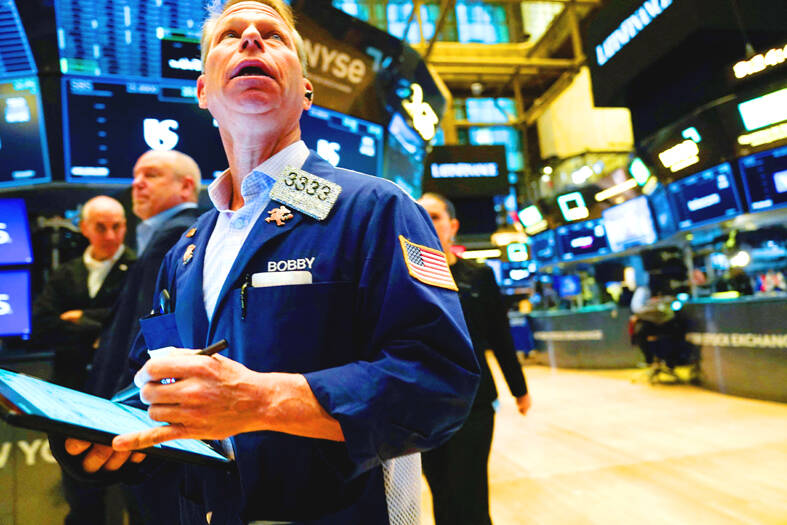
Photo: AFP
“I do think the markets are going to react to this,” Siebert Financial Corp chief investment officer Mark Malek said. “Until now the market has really been on Trump’s side, but that could change and the market could challenge him for the first time.”
Barclays PLC strategists previously estimated that the tariffs could create a 2.8 percent drag on S&P 500 company earnings, including the projected fallout from retaliatory measures from the targeted countries.
The executive order includes a provision for Trump to increase the size and scope of the tariffs if countries affected seek to retaliate.
Chinese stocks listed in Hong Kong would also come under renewed pressure when they resume trading today following a three-session break, after fears of rising levies had already helped push the MSCI China Index into a bear market last month. The NASDAQ Golden Dragon Index fell 3.5 percent on Friday, its worst day in seven weeks.
Goldman Sachs Group Inc economists have estimated that across-the-board tariffs on Canada and Mexico would imply a 0.7 percent increase in core inflation and a 0.4 percent hit to GDP.
The potential to drive up consumer prices is a particularly sensitive area for investors, who are worried about a revival in inflation causing the US Federal Reserve to stop cutting interest rates. The US central bank last week paused its rate-cutting cycle, while Fed Chair Jerome Powell said officials were “waiting to see what policies are enacted” with the new president.
The new tariffs might curtail China’s products exports, dragging on the country’s already struggling economy. Online merchants such as Alibaba Group Holding Ltd (阿里巴巴) and Asia’s broader chip industry are more vulnerable than others.
“China’s nascent recovery signs could be disrupted,” Saxo Markets chief investment strategist Charu Chanana said.
The Chinese government “will have to strike a balance between responding to domestic and external headwinds,” she added.
Other Asian economies might also be vulnerable, as they account for a significant portion of the increase in US imports in recent years. An exodus of foreign investors from the region’s equities since Trump’s election win could accelerate.
Investors widely expect some kind of selloff in stocks and other higher-risk assets when markets reopen today.
Cetera Financial Group Inc chief investment officer Gene Goldman said the combination of high valuations, the impact of tariffs on inflation and the effects on Fed policy would contribute to declines.
With the S&P 500 near all-time highs, the index could move 3 percent to 5 percent in either direction in the short term, Evercore ISI Group strategists said in a note.
Semiconductor makers with sales to China, including Taiwan Semiconductor Manufacturing Co (台積電) and Samsung Electronics Co, would be in focus, as Trump said he would tax chips — repeating that vow after his meeting on Friday with Nvidia Corp CEO Jensen Huang (黃仁勳).
Morgan Stanley strategists, including Daniel Blake, reiterated caution on semiconductors, hardware, China, Taiwan and South Korea in a note on Saturday, citing broader risks from approaching tariffs and potential investigations into China.
“Taiwan and Korea are most exposed in terms of total revenue share from exports to the US. While they are not facing the first phase of tariff announcements, we note the momentum towards both a universal tariff and tariffs on essential goods, including semiconductors,” they said.
Additional reporting by Bloomberg
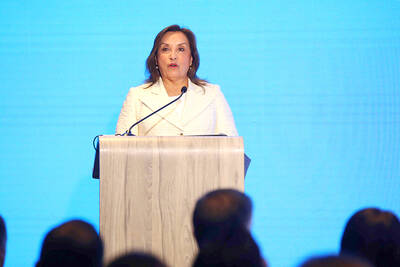
With an approval rating of just two percent, Peruvian President Dina Boluarte might be the world’s most unpopular leader, according to pollsters. Protests greeted her rise to power 29 months ago, and have marked her entire term — joined by assorted scandals, investigations, controversies and a surge in gang violence. The 63-year-old is the target of a dozen probes, including for her alleged failure to declare gifts of luxury jewels and watches, a scandal inevitably dubbed “Rolexgate.” She is also under the microscope for a two-week undeclared absence for nose surgery — which she insists was medical, not cosmetic — and is
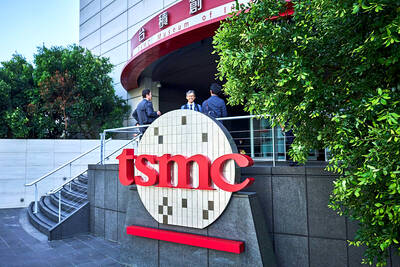
GROWING CONCERN: Some senior Trump administration officials opposed the UAE expansion over fears that another TSMC project could jeopardize its US investment Taiwan Semiconductor Manufacturing Co (TSMC, 台積電) is evaluating building an advanced production facility in the United Arab Emirates (UAE) and has discussed the possibility with officials in US President Donald Trump’s administration, people familiar with the matter said, in a potentially major bet on the Middle East that would only come to fruition with Washington’s approval. The company has had multiple meetings in the past few months with US Special Envoy to the Middle East Steve Witkoff and officials from MGX, an influential investment vehicle overseen by the UAE president’s brother, the people said. The conversations are a continuation of talks that

CAUTIOUS RECOVERY: While the manufacturing sector returned to growth amid the US-China trade truce, firms remain wary as uncertainty clouds the outlook, the CIER said The local manufacturing sector returned to expansion last month, as the official purchasing managers’ index (PMI) rose 2.1 points to 51.0, driven by a temporary easing in US-China trade tensions, the Chung-Hua Institution for Economic Research (CIER, 中華經濟研究院) said yesterday. The PMI gauges the health of the manufacturing industry, with readings above 50 indicating expansion and those below 50 signaling contraction. “Firms are not as pessimistic as they were in April, but they remain far from optimistic,” CIER president Lien Hsien-ming (連賢明) said at a news conference. The full impact of US tariff decisions is unlikely to become clear until later this month

Nintendo Co hopes to match the runaway success of the Switch when its leveled-up new console hits shelves on Thursday, with strong early sales expected despite the gadget’s high price. Featuring a bigger screen and more processing power, the Switch 2 is an upgrade to its predecessor, which has sold 152 million units since launching in 2017 — making it the third-best-selling video game console of all time. However, despite buzz among fans and robust demand for pre-orders, headwinds for Nintendo include uncertainty over US trade tariffs and whether enough people are willing to shell out. The Switch 2 “is priced relatively high”


 RSS
RSS