


Nintendo Co hopes to match the runaway success of the Switch when its leveled-up new console hits shelves on Thursday, with strong early sales expected despite the gadget’s high price.
Featuring a bigger screen and more processing power, the Switch 2 is an upgrade to its predecessor, which has sold 152 million units since launching in 2017 — making it the third-best-selling video game console of all time.
However, despite buzz among fans and robust demand for pre-orders, headwinds for Nintendo include uncertainty over US trade tariffs and whether enough people are willing to shell out.
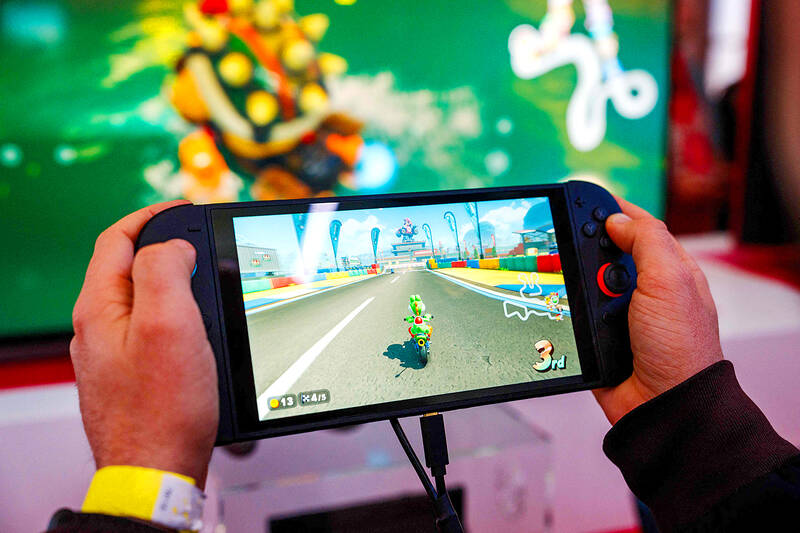
Photo: AFP
The Switch 2 “is priced relatively high” compared with the original device, Nintendo president Shuntaro Furukawa told a financial results briefing last month.
“So even if there is momentum around the launch, we know it will not be easy to keep that momentum going over the long term,” he said.
Sales of the Switch, which can connect to a TV or be played on the go, were boosted by the popularity of games such as Animal Crossing: New Horizons as a COVID-19 pandemic lockdown pastime.
The Japanese company forecasts it would shift 15 million Switch 2 consoles in the financial year, about equal to the original in the same period after its release.
The new device costs US$449.99 in the US, more than one-third more than the Switch. A Japan-only version is cheaper, at ¥49,980 (US$346.41).
New Switch 2 games such as Donkey Kong Bonanza and Mario Kart World — which allows players to go exploring off-grid — are also more expensive than existing Switch titles.
Most original Switch games can be played on the Switch 2, and some Switch blockbusters such as The Legend of Zelda: Breath of the Wild are to have enhanced editions released for the new incarnation.
“People were a bit shocked by the price of Mario Kart World, the first US$80 game that we’ve ever seen,” said Krysta Yang of the Nintendo-focused Kit & Krysta podcast.
While the company is “going to have to do some work” to convince more casual gamers that it is worth upgrading, Nintendo fans are “super excited,” she said.
The Switch 2 is to have eight times the memory of the first Switch, and its controllers, which attach with magnets, can also be used like a desktop computer mouse.
Although the new console is not radically different, “a lot of people [are] saying: ‘This is what I wanted, I wanted a more powerful Switch — don’t mess with a good thing,’” said Yang, a former Nintendo employee.
New functions allowing users to chat as they play online and temporarily share games with friends could also be a big draw, MST Financial Services Pty Ltd senior research analyst David Gibson said.
“It’s a way to appeal to an audience which has got used much more to the idea of streaming games and watching games, as well as playing games,” he said, predicting that the Switch 2 would break records in terms of early sales.
Success is crucial for Nintendo.
While the Super Mario maker is diversifying into theme parks and hit movies, about 90 percent of its revenue still comes from the console business, analysts said.
Nintendo delayed pre-orders for the Switch 2 in the US by two weeks as it assessed the effects of US President Donald Trump’s global assault on free trade.
Its pre-orders have since sold out in the US market and elsewhere, with the company boasting of particularly high demand in Japan.
Furukawa last month said that Nintendo’s financial projections are based on the assumption of US tariffs of 10 percent on products produced in Japan, Vietnam and Cambodia, and 145 percent on China.
“Hardware for North America is mainly produced in Vietnam,” he added.
Trump’s hefty so-called “reciprocal” tariff of 46 percent on goods from Vietnam is on pause, while those on China have been slashed.
Tariff uncertainty could push consumers to buy a Switch 2 sooner, because they are worried that the price could go up, Yang said.
Charlotte Massicault, director of multimedia and gaming at the French retail giant Fnac Darty, said that pre-sale demand has been “well above what we imagined.”
“For us, this will be a record in terms of first-day sales for a games console,” she said.
The new Switch is “less of a family-focused product, and more of a ‘gamer’ product” compared with the Switch, she said.
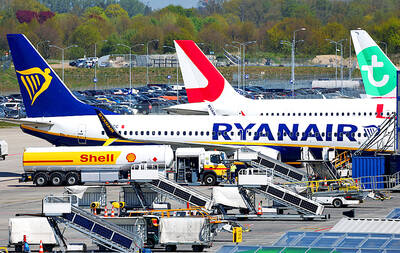
Ryanair, Transavia, Volotea and other low-cost airlines are feeling the financial pain from high jet fuel prices as a result of the Middle East war and are cutting flights. The closure of the Strait of Hormuz has taken a huge chunk of oil supplies off the market, sending the price of jet fuel soaring and triggering fears of shortages that could force airlines to cancel flights. Airlines are not waiting for a lack of supplies to react. “Travel alert: Airlines are cutting thousands of flights right now,” Travel Therapy host Karen Schaler said in an Instagram reel this past weekend.
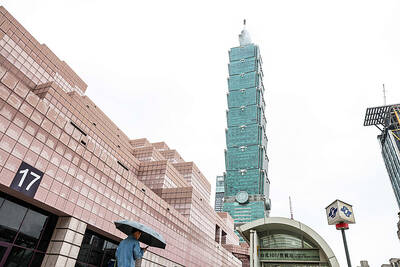
MANAGING RISKS: Taiwan has secured LNG sufficient to cover 95 percent of electricity demand for next month, UBS said, describing the government’s approach as proactive UBS Group AG has raised its forecast for Taiwan’s economic growth this year to 8 percent, up from 6.9 percent previously, and said expansion could reach as high as 8.6 percent if external energy shocks are avoided. The upgrade reflects a stronger-than-expected first-quarter performance and sustained momentum in artificial intelligence (AI)-driven exports, which UBS said are providing a firm foundation for growth despite geopolitical and energy risks. Taiwan’s GDP expanded 13.69 percent year-on-year in the first quarter, the fastest growth since the second quarter of 1987, the Directorate-General of Budget, Accounting and Statistics (DGBAS) reported on Thursday. On a seasonally
The Fair Trade Commission’s (FTC) ongoing review of Grab Holdings Ltd’s US$600 million acquisition of Foodpanda Taiwan’s operations, announced on March 23, has taken on fresh urgency as industry experts warn that the transaction could embed significant Chinese cybersecurity vulnerabilities into Taiwan’s digital infrastructure through Grab’s deep ties to autonomous-driving firm WeRide (文遠知行). Less than 16 months after the FTC blocked Uber Eats’ direct attempt to acquire Foodpanda Taiwan — citing potential combined market shares of 80 to 90 percent — the emergence of Grab as the buyer has prompted questions about whether the same competitive harm is simply being rerouted
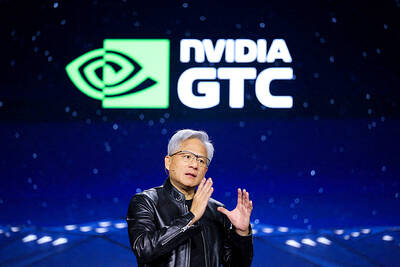
The list of Asian stocks that benefit from business partnership with Nvidia Corp is getting longer, as the region further integrates into the artificial intelligence (AI) chip giant’s business ecosystem. Just in the past week, South Korea’s LG Electronics Inc, Taiwan’s Nanya Technology Corp (南亞科技), as well as China’s Huizhou Desay SV Automotive Co (德賽西威) and Pateo Connect Technology Shanghai Corp (博泰車聯) have become the latest to rally on news of tie-ups, supply-chain participation or product collaboration with the US chip designer. Asian suppliers account for about 90 percent of Nvidia’s production costs, up from about 65 percent last year, data compiled


 RSS
RSS