


H&B Realty Co (住商不動產) and Chinatrust Real Estate Co (中信房屋) yesterday reported steep declines in their house transactions last month, as the central bank’s latest credit control measures drove prospective buyers to the sidelines.
H&B observed a 26.4 percent retreat in its house deals nationwide last month from August, saying the fall widened to 28.6 percent compared with the same period last year.
H&B research manager Jessica Hsu (徐佳馨) attributed the poor showing squarely to the central bank’s latest credit controls under which home buyers would need to put up down payments of 50 percent to 70 percent if they already own real estate, even partial ownership of real estate gained from inheritance.
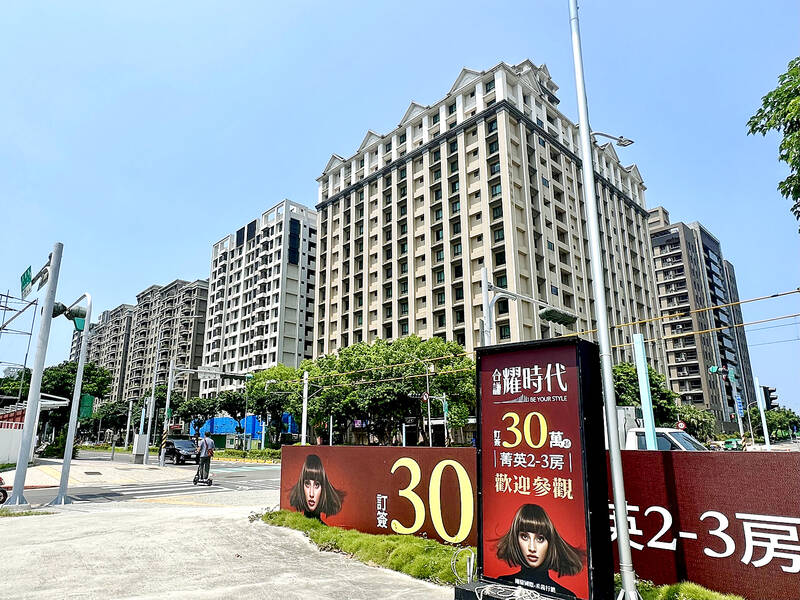
Photo: Hsu Yi-ping, Taipei Times
While tightened lending terms won’t affect first homes for self-occupancy, their review process has grown stricter and longer, which is also unfavorable for the market, Hsu said.
Tightened reviews came due to government suspicions about dummy buyers and other misuses of preferential lending terms designed to help people buy their first home for self-occupancy.
House transactions in Taipei tumbled 31.9 percent month-on-month, shrinking 30.9 percent and 41.4 percent in New Taipei City and Taoyuan respectively, H&B said, adding that Taichung recorded a 24.6 percent decrease.
The situation is less abysmal in southern Taiwan, where house deals fell 9.1 percent in Tainan and 9.8 percent in Kaohsiung, H&B found.
Likewise, Chinatrust observed a 15.9 percent fall in its house deals across Taiwan last month from August. The decrease stood at 12.3 percent year-on-year, it said.
House deals reduced 18.3 percent in Taipei, dropped 15.7 percent in New Taipei City and shrank 10.7 percent in Taoyuan, the broker said. The slowdown was 16.7 percent in Taichung, 18.5 percent in Tainan and 18.2 percent in Kaohsiung, it added.
House-buying fever in the first half of this year started to cool in August when the central bank indicated it met with local banks and cooperatives for talks about their mortgage operations.
The monetary policymaker repeatedly voiced concerns over a potential overconcentration of real estate lending, which it warned could squeeze loans for other sectors and pose a threat to the financial system’s health and stability, in the event of house price corrections.
Conservative sentiment grew more evident last month and might not dissolve any time soon, as many local lenders are approaching their house loan limit, Chinatrust said.
As before, investors would first feel the pinch and flee the market, leaving people with real demand to underpin deals, it said.
The situation would deteriorate, as the central bank said it would keep a tight rein for at least a year, though it could consider making exceptions for “innocent” buyers, if necessary, both H&B and Chinatrust said.
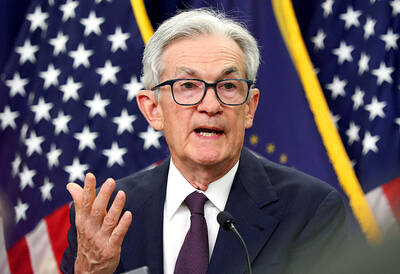
DIVIDED VIEWS: Although the Fed agreed on holding rates steady, some officials see no rate cuts for this year, while 10 policymakers foresee two or more cuts There are a lot of unknowns about the outlook for the economy and interest rates, but US Federal Reserve Chair Jerome Powell signaled at least one thing seems certain: Higher prices are coming. Fed policymakers voted unanimously to hold interest rates steady at a range of 4.25 percent to 4.50 percent for a fourth straight meeting on Wednesday, as they await clarity on whether tariffs would leave a one-time or more lasting mark on inflation. Powell said it is still unclear how much of the bill would fall on the shoulders of consumers, but he expects to learn more about tariffs

NOT JUSTIFIED: The bank’s governor said there would only be a rate cut if inflation falls below 1.5% and economic conditions deteriorate, which have not been detected The central bank yesterday kept its key interest rates unchanged for a fifth consecutive quarter, aligning with market expectations, while slightly lowering its inflation outlook amid signs of cooling price pressures. The move came after the US Federal Reserve held rates steady overnight, despite pressure from US President Donald Trump to cut borrowing costs. Central bank board members unanimously voted to maintain the discount rate at 2 percent, the secured loan rate at 2.375 percent and the overnight lending rate at 4.25 percent. “We consider the policy decision appropriate, although it suggests tightening leaning after factoring in slackening inflation and stable GDP growth,”
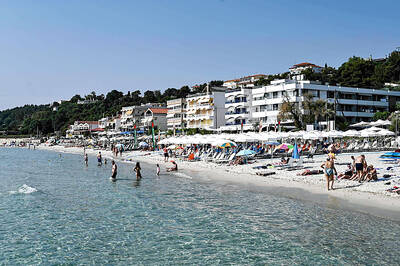
Greek tourism student Katerina quit within a month of starting work at a five-star hotel in Halkidiki, one of the country’s top destinations, because she said conditions were so dire. Beyond the bad pay, the 22-year-old said that her working and living conditions were “miserable and unacceptable.” Millions holiday in Greece every year, but its vital tourism industry is finding it harder and harder to recruit Greeks to look after them. “I was asked to work in any department of the hotel where there was a need, from service to cleaning,” said Katerina, a tourism and marketing student, who would
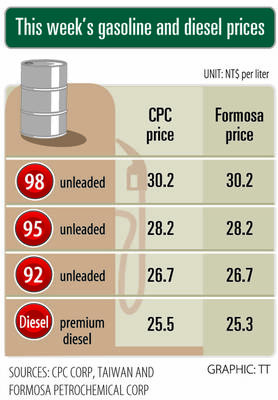
i Gasoline and diesel prices at fuel stations are this week to rise NT$0.1 per liter, as tensions in the Middle East pushed crude oil prices higher last week, CPC Corp, Taiwan (台灣中油) and Formosa Petrochemical Corp (台塑石化) said yesterday. International crude oil prices last week rose for the third consecutive week due to an escalating conflict between Israel and Iran, as the market is concerned that the situation in the Middle East might affect crude oil supply, CPC and Formosa said in separate statements. Front-month Brent crude oil futures — the international oil benchmark — rose 3.75 percent to settle at US$77.01


 RSS
RSS