


Microsoft Corp on Tuesday reported strong quarterly earnings but saw its shares slip on figures showing its crucial cloud computing unit did not grow as strongly as expected.
Microsoft said it made a profit of US$22 billion on US$64.7 billion in revenue in the recently ended quarter, up from the same period a year earlier.
Cloud unit revenue of US$36.8 billion, however, disappointed investors and shares slid nearly three percent in after-market trades.

Photo: Gonzalo Fuentes, Reuters
Money brought in from cloud computing has driven blockbuster earnings quarter after quarter, and a hint that stellar growth may be slowing was enough to give investors pause.
Microsoft is among the major contenders in the race to build out artificial intelligence (AI) systems, pouring billions of dollars into the technology in the hope it will pay off.
The company is keen to monetize generative AI, having moved the fastest to implement it across all its products, and pouring US$13 billion into OpenAI, the start-up stalwart behind ChatGPT.
CFRA Research viewed the earnings results as "largely in line" across Microsoft's core businesses and believes that the company is "incrementally improving" the money it makes from AI, according to senior equity analyst Angelo Zino.
"Still, we acknowledge that the better-than-expected cloud results from Alphabet Inc last week had investors looking for more," Zino said.
Google-parent Alphabet reported profit and revenue that beat expectations as its AI-amped cloud and search ads businesses thrived.
The AI frenzy has helped Microsoft's cloud computing business grow in the double digits, which analysts said could be hard to sustain.
Microsoft's big stake in OpenAI along with its own Copilot AI help it maintain a leadership position in AI, according to Emarketer senior analyst Gadjo Sevilla.
Revenue from Microsoft's AI-infused "Intelligent Cloud" unit was US$28.5 billion, a 19-percent increase from the same quarter a year earlier, according to the earnings figures.
Microsoft CEO Satya Nadella said on an earnings call that use of its AI offerings is ramping up, from workplace software to Bing search and Copilot AI relied on by developers.
"I'm energized about the opportunities ahead," Nadella said. "We are investing for the long term in our fundamentals, in our innovation and in our people."
Microsoft's Azure platform drove a strong increase in revenue from server products and cloud services, according to the company.
Nadella said the company is "focused on meeting the mission-critical needs of our customers across our at-scale platforms today, while also ensuring we lead the AI era."
Microsoft reported a net income of US$88.1 billion for its fiscal year on revenue of US$245.1 billion, up 22 percent and 16 percent respectively.
Money taken in by Microsoft's Xbox video game unit leaped 61 percent, boosted by the acquisition of Activision Blizzard Inc, according to earnings figures.
Microsoft said costs to attract visitors to its search and news services rose 19 percent, as it pressed to compete with Google.

Taichung reported the steepest fall in completed home prices among the six special municipalities in the first quarter of this year, data compiled by Taiwan Realty Co (台灣房屋) showed yesterday. From January through last month, the average transaction price for completed homes in Taichung fell 8 percent from a year earlier to NT$299,000 (US$9,483) per ping (3.3m²), said Taiwan Realty, which compiled the data based on the government’s price registration platform. The decline could be attributed to many home buyers choosing relatively affordable used homes to live in themselves, instead of newly built homes in the city’s prime property market, Taiwan Realty
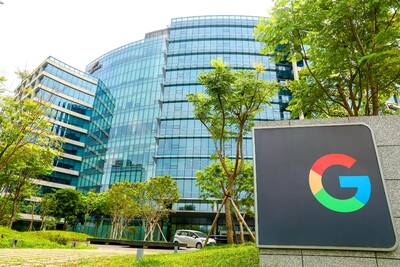
The government yesterday approved applications by Alphabet Inc’s Google to invest NT$27.08 billion (US$859.98 million) in Taiwan, the Ministry of Economic Affairs said in a statement. The Department of Investment Review approved two investments proposed by Google, with much of the funds to be used for data processing and electronic information supply services, as well as inventory procurement businesses in the semiconductor field, the ministry said. It marks the second consecutive year that Google has applied to increase its investment in Taiwan. Google plans to infuse NT$25.34 billion into Charter Investments Ltd (特許投資顧問) through its Singapore-based subsidiary Fructan Holdings Singapore Pte Ltd, and

Micron Technology Inc is a driving force pushing the US Congress to pass legislation that would put new export restrictions on equipment its Chinese competitors use to make their chips, according to people familiar with the matter. A US House of Representatives panel yesterday was to vote on the “MATCH Act,” a bill designed to close gaps in restrictions on chipmaking equipment. It would also pressure foreign companies that sell equipment to Chinese chipmaking facilities to align with export curbs on US companies like Lam Research Corp and Applied Materials Inc. The bill targets facilities operated by China’s ChangXin Memory Technologies Inc

Japan’s reliance on the Middle East for aluminum is forcing companies to cut back on production and scramble for alternative supply sources after key shipping routes were severed due to the Iran conflict. Among the most exposed are auto and parts makers such as Toyota Motor Corp and Denso Corp. Domestic automakers get about 70 percent of their aluminum imports from the Middle East, the nation’s top auto lobby said. The price of the lightweight alloy — used in everything from engine parts to wheels — has jumped about 13 percent since hostilities started in late February. “It’s only been a month, but it’s


 RSS
RSS