

Complicated permit procedures, and a lack of sound standards and best practices for stakeholder engagement perpetuate market risks and drag on Taiwan’s energy transition, the European Chamber of Commerce Taiwan (ECCT) said in a report yesterday.
Taiwan has made progress over the past decade in developing renewable energy projects and 2019 amendments to the Renewable Energy Development Act (再生能源發展條例) target 27 gigawatts of renewable energy capacity by next year, the Taiwan Renewable Energy Industry Challenges report said.
However, clear milestones to meet the goals have been missed and targets have been adjusted downward, the report said.
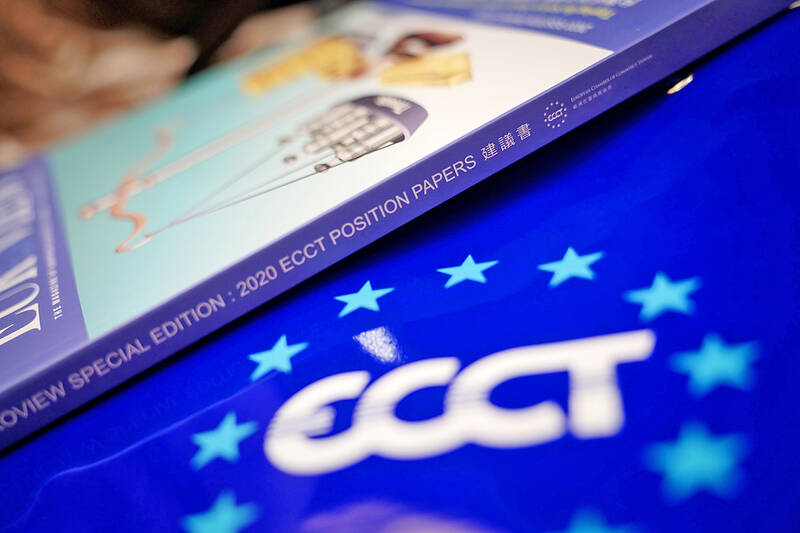
Photo: CNA
Industry leaders blame the setback mainly on a lack of robust standards and best practices for stakeholder engagement, as well as overly complicated permit procedures, among other challenges, it said.
Its conclusions were drawn after a thorough analysis of Taiwan’s market and its regulatory environment, it said.
The chamber said that it also identified challenges faced by industries, and examined international practices, standards and academic research to provide recommendations aimed at expediting green energy development in Taiwan.
More effective guidelines and resources for stakeholder engagement in Taiwan are required, which would include a clear definition of who is and who is not a stakeholder and a well-defined stakeholder engagement process, it said.
A robust and comprehensive stakeholder engagement process should be integral to planning, execution and operation of renewable energy projects, it added.
A lack of clarity, objectivity and efficiency at some points of the permit process has exposed projects to great risk, affected their ability to be completed on time and damaged the perception of the Taiwanese market in the eyes of international investors, it said.
Taiwan can refer to practices in places such as the UK, Denmark and Germany, which have clearer guidelines and streamlined permit processes for renewable energy projects, the chamber said.
“A successful green energy rollout is in the best interests of the general public, government and industry alike,” the report said.
Constructive dialogue among stakeholders from the government, political parties and the public is required, it said.
The private and public sectors should join efforts to address challenges and achieve the shared goal of expanding and expediting Taiwan’s renewable energy rollout so the nation can realize its energy and net zero goals, it said.
The chamber is the principal organization representing and promoting European business interests in Taiwan.
With more than US$70 billion in combined direct foreign investment, European businesses are collectively the largest group of foreign investors in Taiwan.
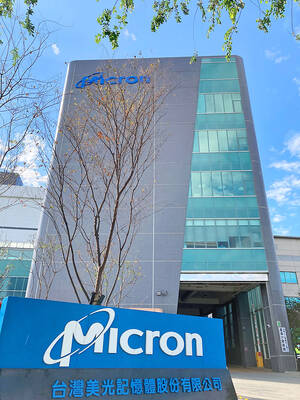
STOCK, CASH: Quarterly profit-sharing bonuses would supplement payments under the Incentive Pay Plan, offering ‘transparency’ and ‘predictability,’ an executive said Micron Memory Taiwan Co (台灣美光) yesterday unveiled a new profit-sharing program and structural wage hikes as part of its efforts to build a predictable and transparent compensation framework in response to feedback from unions. The memorychip maker, a subsidiary of US-based Micron Technology Inc, announced the major compensation structural overhaul during an online news conference following a milestone agreement with the union representing more than 10,000 workers at its Taichung facility. Under the new framework, quarterly profit-sharing bonuses would supplement payments under the Incentive Pay Plan (IPP), the company said. The IPP formula has also been substantially enhanced, it said. “Profit-sharing mechanisms are common

Luxury powerhouses including Hermes and Cartier are suffering steeper slumps in China, in a sign that a spending pullback by the country’s wealthy consumers is hitting even the most resilient brands. Sales at the brands in mainland China fell as much as double-digits in August and last month compared to the same period a year ago, two research firms surveyed by Bloomberg that track industry data said. The drop is significant as Hermes International SCA and Cie Financiere Richemont SA’s Cartier had been relatively unaffected in the country as a broader slowdown in luxury consumption took hold in June, the firms’

Micron Memory Taiwan and a union representing workers at its Taichung operations today said they had signed a labor-management agreement covering multiple issues, prompting both sides to withdraw from mediation scheduled for tomorrow. The joint statement did not disclose the terms of the agreement, saying the company and the union would separately communicate details to affected employees in the coming days. Idaho-based Micron, the world's third-largest memory chipmaker, employs about 15,000 people in Taiwan, a key manufacturing base where it produces DRAM and high-bandwidth memory chips used in artificial intelligence (AI) servers. Any disruption to Micron's Taiwan operations could affect already strained global
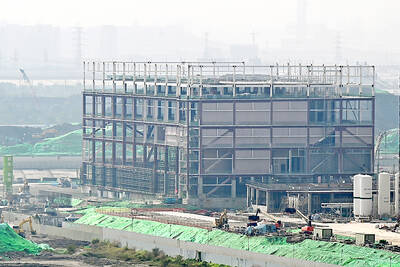
Taiwan Semiconductor Manufacturing Co (TSMC, 台積電) is suspending some construction work after an accident at one of its building sites in southern Taiwan led to the deaths of four workers. The incident took place on Tuesday during steel structure construction at TSMC’s Fab 22 in Kaohsiung, the company said. Workers fell from a height while performing steel structure hoisting and installation, a report from the Central News Agency said. A cause might be aged bolts, it said, citing a preliminary assessment by the Southern Taiwan Science Park Bureau. The bureau said that work would only resume after Shang Hao Machinery Co (上昊機械),


 RSS