

Chinese tech giant Huawei Technologies Co's (華為) first-quarter profit surged over fivefold year-on-year, a company filing showed yesterday, as the US-sanctioned firm continues a rebound and bit into competitor Apple Inc's sales in China.
Net profit in the January-to-March period amounted to US$2.7 billion, up 564 percent from the first quarter of last year, according to a filing by Huawei's holding company on an official Web site and confirmed by a representative of the Shenzhen-based firm.
Revenue during the period also rose 36.7 percent year-on-year to reach US$24.7 billion, the filing showed.

Photo: Reuters
Huawei did not break down profits by sector, as it is a private, unlisted company, and is therefore not subject to the same obligations as other major firms to publish detailed results.
The phenomenal growth in earnings underscored Huawei’s resurgence in spite of US sanctions. The company’s smartphone shipments surged 70 percent in the first quarter, Bloomberg News reported, citing market research firm Counterpoint.
As a stark contrast, Apple’s iPhone sales in China fell 19 percent during the March quarter, Counterpoint estimated.
The latest earnings report comes a month after Huawei said its profits more than doubled last year, a year in which the smartphone maker continued its efforts to diversify.
Revenue growth in the first quarter was achieved by "seizing opportunities in digitalization, intelligence, and decarbonization," a Huawei representative told AFP, adding: "the industry and global markets will remain rife with uncertainty for the rest of 2024".
"We are confident that we can meet our annual business targets and achieve sustainable growth," the representative added in a statement.
The firm unveiled the Mate 60 Pro last summer, a high-performance smartphone equipped with a chip that experts say would be impossible to produce without foreign technologies, questioning the effectiveness of US restrictions.
Earlier this month, Huawei unveiled its new Pura 70 smartphone series with a slightly enhanced chip, showcasing its capability to sustain production of advanced semiconductors and ramp up pressure on Apple on its home turf.
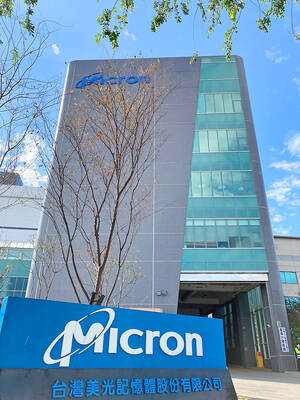
STOCK, CASH: Quarterly profit-sharing bonuses would supplement payments under the Incentive Pay Plan, offering ‘transparency’ and ‘predictability,’ an executive said Micron Memory Taiwan Co (台灣美光) yesterday unveiled a new profit-sharing program and structural wage hikes as part of its efforts to build a predictable and transparent compensation framework in response to feedback from unions. The memorychip maker, a subsidiary of US-based Micron Technology Inc, announced the major compensation structural overhaul during an online news conference following a milestone agreement with the union representing more than 10,000 workers at its Taichung facility. Under the new framework, quarterly profit-sharing bonuses would supplement payments under the Incentive Pay Plan (IPP), the company said. The IPP formula has also been substantially enhanced, it said. “Profit-sharing mechanisms are common
Micron Memory Taiwan and a union representing workers at its Taichung operations today said they had signed a labor-management agreement covering multiple issues, prompting both sides to withdraw from mediation scheduled for tomorrow. The joint statement did not disclose the terms of the agreement, saying the company and the union would separately communicate details to affected employees in the coming days. Idaho-based Micron, the world's third-largest memory chipmaker, employs about 15,000 people in Taiwan, a key manufacturing base where it produces DRAM and high-bandwidth memory chips used in artificial intelligence (AI) servers. Any disruption to Micron's Taiwan operations could affect already strained global
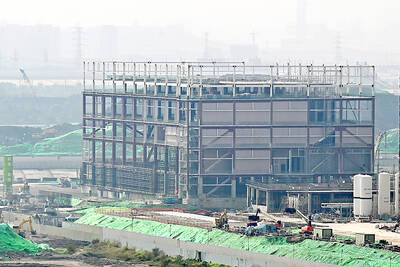
Taiwan Semiconductor Manufacturing Co (TSMC, 台積電) is suspending some construction work after an accident at one of its building sites in southern Taiwan led to the deaths of four workers. The incident took place on Tuesday during steel structure construction at TSMC’s Fab 22 in Kaohsiung, the company said. Workers fell from a height while performing steel structure hoisting and installation, a report from the Central News Agency said. A cause might be aged bolts, it said, citing a preliminary assessment by the Southern Taiwan Science Park Bureau. The bureau said that work would only resume after Shang Hao Machinery Co (上昊機械),
AGREEMENT REACHED: The joint statement did not disclose the details of the deal, which comes a day before the Taoyuan union is to hold a strike Micron Memory Taiwan Co (台灣美光) and a union representing workers at its Taichung operations yesterday said that they had signed a labor-management agreement covering multiple issues, prompting both sides to withdraw from mediation scheduled for today. The joint statement did not disclose the terms of the agreement, saying the company and the union would separately communicate details to affected employees in the coming days. Idaho-based Micron, the world’s third-largest memory maker, employs about 15,000 people in Taiwan, a key manufacturing base where it produces DRAM and high-bandwidth memory chips used in artificial intelligence (AI) servers. Any disruption to Micron’s Taiwan operations could affect


 RSS
RSS