


The Japanese government-backed research group developing semiconductors is to partner with US start-up Tenstorrent Inc on the design of its first advanced artificial intelligence (AI) chip.
Tenstorrent, led by Tesla Inc and Apple Inc veteran Jim Keller, would license its design for part of Japan’s AI accelerator and also codesign the overall chip, the US company said yesterday at a joint event in Tokyo.
Working with the open-source RISC-V standard, Tenstorrent aims to provide customers with an alternative to the leaders Nvidia Corp and Arm Holdings PLC, who have their own so-called instruction sets to communicate between hardware and software.
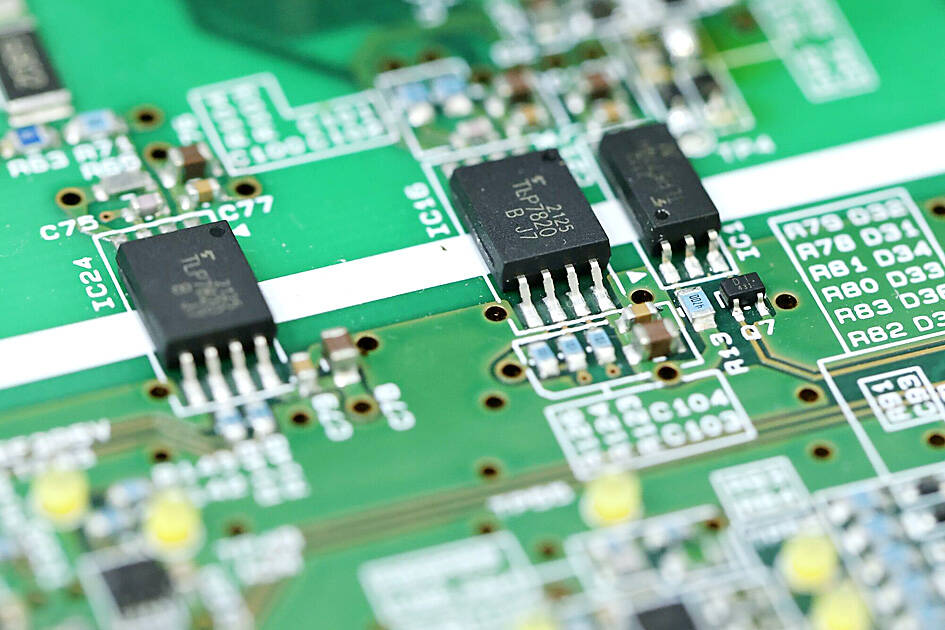
Photo: Bloomberg
The government is funding a range of projects from research to advanced chip manufacturing, making an ambitious US$67 billion bid to reclaim a central role in the semiconductor industry.
The Tenstorrent agreement has the potential to advance those efforts, with the goal of producing the jointly designed AI chips at the government-backed start-up Rapidus Corp.
“Concerns around AI using up all the electricity in the world make technology to decrease power consumption important,” Rapidus chief executive officer Atsuyoshi Koike said at the event alongside Tenstorrent CEO Keller. “With Tenstorrent, we hope to launch AI accelerators at the fastest time-to-market rate.”
The 18-month-old company is aiming to begin chip production in 2027 in competition with leaders Taiwan Semiconductor Manufacturing Co (台積電) and Samsung Electronics Co.
However, Rapidus would need customers for its facility and Keller’s team sees Japan working to ensure both supply and demand.
“What Japan is doing is they recognize that you can’t just build a fab and hope,” Tenstorrent chief customer officer David Bennett said in an interview. “So they’re taking large investments to make sure that they’re filling this fab. So what you see today is really the first one.”
Bennett said that Tenstorrent has “line of sight to hundreds of millions of dollars of business in Japan” and is working closely with the Japanese government and corporations.
His firm has 400 employees across the US, Canada, Serbia, India, South Korea and Japan.
Beside Keller, Tenstorrent has Keith Witek, who spent 13 years at Advanced Micro Devices Inc, as its chief operating officer and Lien Wei-han (練維漢) as its chief chip architect. Lien led Apple’s work on advancing its in-house chip design, which has grown from powering the iPhone to also running its iPads and even desktop Mac computers.
In Japan, the company is to work on AI chip designs with the government research group, known as Leading-edge Semiconductor Technology Center (LSTC).
The center would pursue and promote AI tech dedicated to “edge inference processing applications, including generative AI, through international collaboration,” LSTC chairman Tetsuro Higashi said in the announcement.
Separately, Japanese Prime Minister Fumio Kishida yesterday met with Meta Platforms Inc CEO Mark Zuckerberg to exchange views on AI, Fuji Television reported.
Japan’s government and corporate sector are racing to catch up in AI development. Last year, Kishida met with OpenAI CEO Sam Altman and Nvidia CEO Jensen Huang (黃仁勳) to discuss AI regulation and infrastructure.
Additional reporting by Reuters
Shares of contract chipmaker Taiwan Semiconductor Manufacturing Co (TSMC, 台積電) came under pressure yesterday after a report that Apple Inc is looking to shift some orders from the Taiwanese company to Intel Corp. TSMC shares fell NT$55, or 2.4 percent, to close at NT$2,235 on the local main board, Taiwan Stock Exchange data showed. Despite the losses, TSMC is expected to continue to benefit from sound fundamentals, as it maintains a lead over its peers in high-end process development, analysts said. “The selling was a knee-jerk reaction to an Intel-Apple report over the weekend,” Mega International Investment Services Corp (兆豐國際投顧) analyst Alex Huang
Taiwan Semiconductor Manufacturing Co (TSMC, 台積電) is expected to remain Apple Inc’s primary chip manufacturing partner despite reports that Apple could shift some orders to Intel Corp, industry experts said yesterday. The comments came after The Wall Street Journal reported on Friday that Apple and Intel had reached a preliminary agreement following more than a year of negotiations for Intel to manufacture some chips for Apple devices. Taiwan Institute of Economic Research (台灣經濟研究院) economist Arisa Liu (劉佩真) said TSMC’s advanced packaging technologies, including integrated fan-out and chip-on-wafer-on-substrate, remain critical to the performance of Apple’s A-series and M-series chips. She said Intel and Samsung
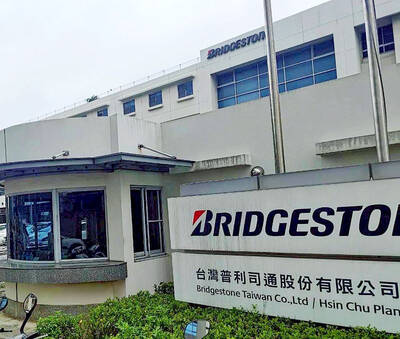
TRANSITION: With the closure, the company would reorganize its Taiwanese unit to a sales and service-focused model, Bridgestone said Bridgestone Corp yesterday announced it would cease manufacturing operations at its tire plant in Hsinchu County’s Hukou Township (湖口), affecting more than 500 workers. Bridgestone Taiwan Co (台灣普利司通) said in a statement that the decision was based on the Tokyo-based tire maker’s adjustments to its global operational strategy and long-term market development considerations. The Taiwanese unit would be reorganized as part of the closure, effective yesterday, and all related production activities would be concluded, the statement said. Under the plan, Bridgestone would continue to deepen its presence in the Taiwanese market, while transitioning to a sales and service-focused business model, it added. The Hsinchu
Taiwan Semiconductor Manufacturing Co (TSMC, 台積電) has approved a capital budget of US$31.28 billion for production expansion to meet long-term development needs during the artificial intelligence (AI) boom. The company’s board meeting yesterday approved the capital appropriation plan for purposes such as the installation of advanced technology capacity and fab construction, the world’s largest contract chipmaker said in a statement. At an earnings conference last month, TSMC forecast that its capital expenditure for this year would be at the higher end of the US$52 billion to US$56 billion range it forecast in January in response to robust demand for 5G, AI and


 RSS
RSS