


Walt Disney Co and Reliance Industries Ltd have signed a binding pact to merge their media operations in India, people familiar with the matter said, as the US entertainment giant recasts its strategy amid intense competition in the world’s most-populous country.
The media unit of Reliance, controlled by billionaire Mukesh Ambani, and its affiliates are expected to own at least 61 percent in the merged entity, with Disney holding the rest, the people said.
The latest milestone and other details are likely to be announced early this week, the people said.
Photo: Reuters
The stake split between the partners might change, depending on how Disney’s other local assets are factored in by the time the deal is closed, the people said.
Disney owns a minority stake in broadcast service provider, Tata Play Ltd, which Reliance might consider acquiring, local news reports said.
Disney has been grappling with challenges in India, such as retaining subscribers and securing coveted media assets, while Reliance has cornered a larger slice of the local media and entertainment businesses in recent years.
Together, they would make a formidable media behemoth in one of the world’s fastest-growing entertainment markets.
Ambani’s unit had outbid Disney in 2022 to win the streaming rights for the Indian Premier League (IPL) cricket tournament and in April last year bagged a multiyear pact to broadcast Warner Bros Discovery Inc’s HBO shows, which were earlier with Disney.
While Disney’s streaming service, Disney+ Hotstar, managed to draw record viewers for the Cricket World Cup in October and November last year, it showed the matches for free in the cricket-crazy nation — a move aimed at clawing back subscribers even if it meant sacrificing revenue.
Reliance had streamed IPL matches earlier last year without any charge, drawing viewers in hordes.
This transaction is part of the larger consolidation efforts in the Indian media and entertainment space. Sony Group Corp planned to merge its local unit with Zee Entertainment Enterprises Ltd until differences cropped up on who would lead the newly merged media giant that ultimately gutted the deal last month.

DAMAGE REPORT: Global central banks are assessing war-driven inflation risks as the law of unintended consequences careens around the world, spiking oil prices Central banks from Washington to London and from Jakarta to Taipei are about to make their first assessments of economic damage after more than two weeks of conflict between the US and Iran. Decisions this week encompassing every member of the G7 and eight of the world’s 10 most-traded currency jurisdictions are likely to confirm to investors that the specter of a new inflation shock is already worrying enough to prompt heightened caution. The US Federal Reserve is widely expected to do exactly what everyone anticipated weeks ahead of its March 17-18 policy gathering: hold rates steady. The narrative surrounding that
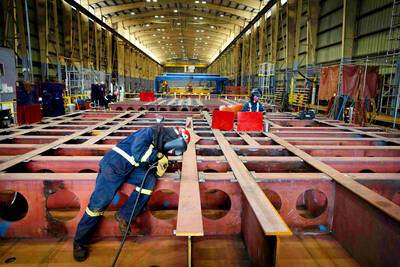
At a massive shipyard in North Vancouver, Canadian workers grind metal beams for a powerful new icebreaker crucial to cementing the country’s presence in the increasingly contested arctic. Icebreakers are specialized, expensive vessels able to navigate in the frozen far north. And “this is the crown jewel,” said Eddie Schehr, vice president of production at the Seaspan shipyard. For Canadian Prime Minister Mark Carney, who heads to Norway next Friday to observe arctic defense drills involving troops from 14 NATO states, Canada’s extreme north has emerged as a strategic priority. “Canada is and forever will be an Arctic nation,” he said ahead of
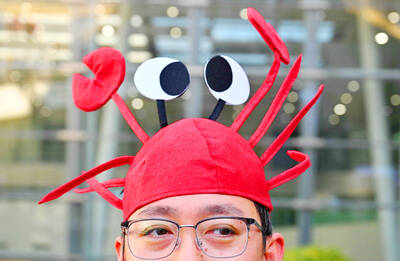
Chinese entrepreneur Frank Gao used to spend long hours running his social media accounts but now outsources the chore to artificial intelligence (AI) agent tool OpenClaw, which is taking China by storm despite official warnings over cybersecurity. OpenClaw, created in November by an Austrian coder, differs from bots such as ChatGPT because it can execute real-life tasks such as sending e-mails, organizing files or even booking flight tickets. “Since January, I’ve spent hours on the lobster every day,” Gao said in an interview, referring to OpenClaw’s red crustacean mascot. “We’re family.” After downloading OpenClaw, users connect it to artificial intelligence models of their
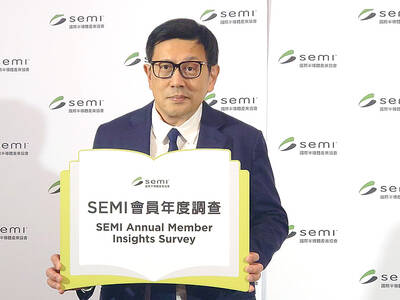
PRICE HIKES: The war in the Middle East would not significantly disrupt supply in the short term, but semiconductor companies are facing price surges for materials Taiwan’s semiconductor companies are not facing imminent supply disruptions of essential chemicals or raw materials due to the war in the Middle East, but surges in material costs loom large, industry association SEMI Taiwan said yesterday. The association’s comments came amid growing concerns that supplies of helium and other key raw materials used in semiconductor production could become a choke point after Qatar shut down its liquefied natural gas (LNG) production and helium output earlier this month due to the conflict. Qatar is the second-largest LNG supplier in the world and accounts for about 33 percent of global helium output. Helium is


 RSS
RSS