


State-run Mega International Commercial Bank (兆豐銀行) last quarter won a competition among the 40 lenders in Taiwan — all of which benefited from interest rate hikes — based on measuring profit contributions per employee, a recent report by the central bank found.
Individual staffers at Mega Bank generated NT$6.97 million (US$225,420) between January and March, overtaking Shanghai Commercial and Savings Bank (上海商業儲蓄銀行), which finished in second place with NT$6.5 million per staffer, according to the report that ranked the lenders’ pre-tax profitability divided by their number of employees.
It is relatively difficult for large banks to rank high since they hire more workers than their small and medium peers — excluding Export-Import Bank of the Republic of China (中國輸出入銀) and Agricultural Bank of Taiwan (全國農業金庫) because of their special operations — the central bank said.
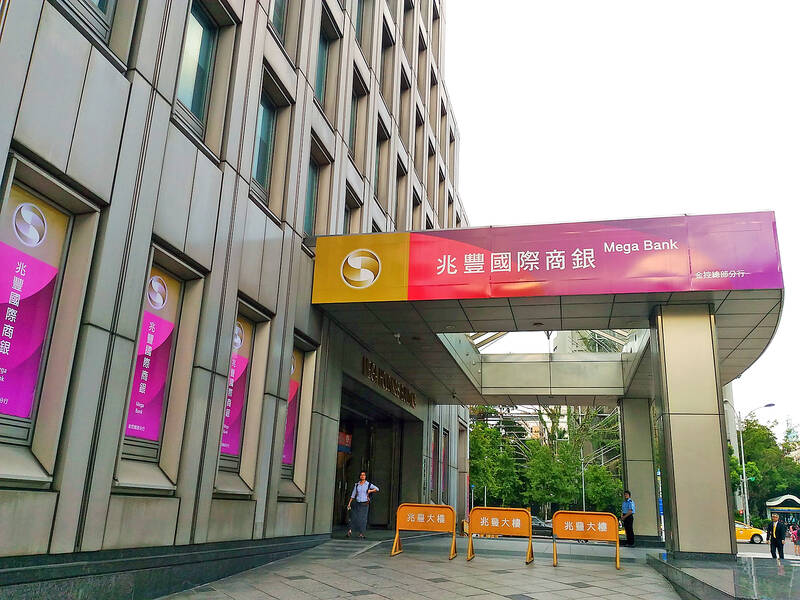
Photo: Lee Chin-hui, Taipei Times
With a focus on international trade financing, Mega Bank reaped a windfall from interest rate hikes at home and abroad, it pointed out.
HSBC Taiwan ranked third with NT$5.54 million per employee, a rare achievement for banks with foreign parents, the central bank said.
Taipei Fubon Commercial Bank (台北富邦銀行) and King’s Town Bank (京城銀行) secured the fourth and fifth rankings with NT$4.36 million and NT$4.3 million per worker respectively, it said.
Cathay United Bank (國泰世華銀行), CTBC Bank (中國信託銀行), Bank of Taiwan (臺灣銀行), First Commercial Bank (第一銀行) and E.Sun Commercial Bank (玉山銀行) made up the rest of the top 10 ranking with pre-tax profits of NT$3.16 million to NT$4.08 million per employee, it said. Web-only O-Bank (王道銀行) fell from the top 10 list this time.
Together, the 40 banks posted NT$127.09 billion in pre-tax income, soaring 40 percent from the same time last year, it said, as interest rate hikes widened their profit margin, while financial markets were less hostile.
The central bank hiked interest rates five times between March last year and March this year, driving up borrowing costs by 0.75 percentage points. The US Federal Reserve made steeper tightening moves, and the interest rate gaps allowed domestic lenders to make generous gains in currency swap operations.
Still, nine lenders recorded decreased earnings, even though the majority 31 registered profit growth, the report found.
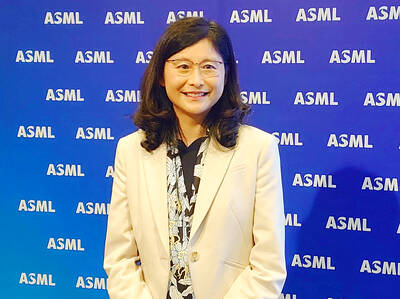
Netherlands-based semiconductor equipment supplier ASML Holding NV yesterday said that it is planning to hire an additional 1,000 people in Taiwan this year in response to growing demand from clients. ASML had previously planned to recruit 600 people this year, but that the plan has been adjusted upward, ASML vice president and ASML Taiwan general manager Grace Wang (汪佳慧) told reporters. ASML has a workforce of more than 4,500 in Taiwan, accounting for about 10 percent of its global total, Wang said. This year’s recruitment campaign would focus on adding people in the customer support, manufacturing and supply chain domains to assist ASML
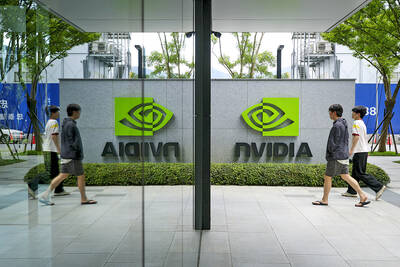
UNDER MICROSCOPE: Taiwan detained three people who allegedly conspired to buy servers in Taiwan and export them using fraudulent documentation, prosecutors said Nvidia Corp chief executive officer Jensen Huang (黃仁勳) on Saturday urged Super Micro Computer Inc to tighten up on compliance after Taiwan detained three people this week for allegedly making fraudulent declarations about artificial intelligence (AI) servers made by its US partner. The development marked the nation’s first crackdown on semiconductor smuggling, which grew after the US slapped restrictions on exports of high-end chips such as Nvidia AI accelerators to China. Nvidia is “rigorous” in explaining regulations to all of its partners, Huang told reporters after arriving in Taipei. “Ultimately Super Micro has to run their own company,” he said in response to

Nvidia Corp yesterday announced that CEO Jensen Huang (黃仁勳) would attend an employee meeting in Taipei tomorrow to celebrate the launch of the company’s Taiwan headquarters project. Huang would attend a gathering at the site of Nvidia’s planned headquarters in Beitou Shilin Technology Park (北投士林科技園區), the company said in a statement. After arriving in Taiwan on Saturday last week, Huang told reporters that he plans to meet with Quanta Computer Inc (廣達) chairman Barry Lam (林百里) and Taiwan Semiconductor Manufacturing Co (TSMC, 台積電) chairman C.C. Wei (魏哲家), and would attend the groundbreaking ceremony for Nvidia’s Taiwan headquarters tomorrow. Nvidia has not yet applied

Huawei Technologies Co (華為) said it has come up with a new pathway to shorten its gap with industry leader Taiwan Semiconductor Manufacturing Co (TSMC, 台積電), potentially achieving a breakthrough in making advanced semiconductors without cutting-edge equipment. Right now there is about a five-year gap between what TSMC is capable of and what Huawei, together with its manufacturing partner Semiconductor Manufacturing International Corp (中芯), can produce. Huawei is to start making 1.4-nanometer chips by 2031 with its own “LogicFolding” technology, Huawei semiconductor chief He Tingbo (何庭波) said in a rare public appearance during a chip conference yesterday, while TSMC has


 RSS
RSS