


Cathay United Bank (國泰世華銀行) boasts a customer base of 6.3 million digital users and, in the spirit of “digital empowerment,” took its digital strength to a new level by launching a new digital consumer banking brand “CUBE” in October last year.
Its core service, CUBE App, offers one-stop management of banking assets, investment positions, insurance products and other convenient services, such as mobile withdrawals, mobile number and account binding, and video customer service. The comprehensive functions and ongoing optimization of CUBE App drive customer satisfaction to new highs.
With years of experience in digital transformation, Cathay United Bank won the Best App for Customer Experience at the Retail Banker International Asia Trailblazer Awards for its CUBE App, and the Best Training and Development Course for its one-stop digital learning platform, which exemplifies the bank’s commitment to “sustainable empowerment.”
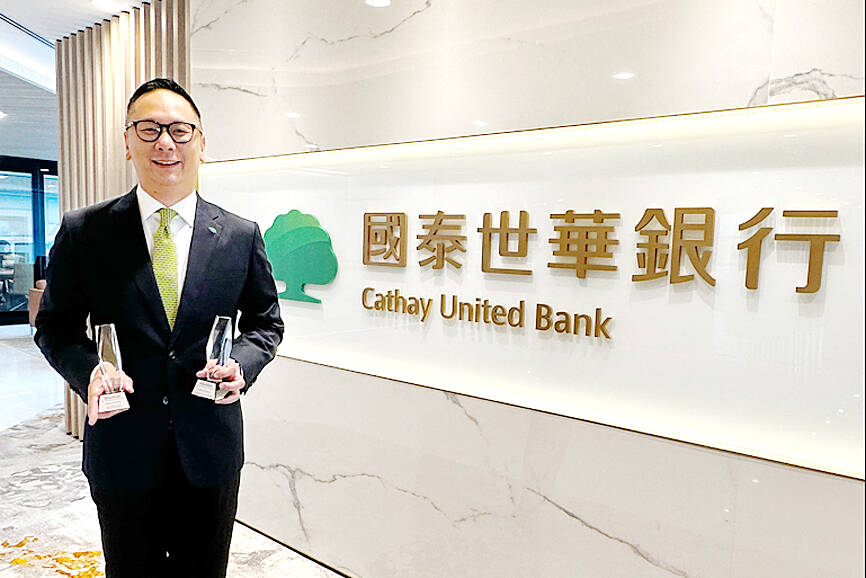
Photo courtesy of Cathay United Bank
CUBE App is the first in the industry to adopt “direct facial recognition” technology, and has exceeded 26 million logins. The app detects multipoint facial landmarks of the customer in real time and compares them to the customer’s biometric record retained by the bank, thereby drastically enhancing the security level of online transactions.
With facial recognition technology, customers can complete transactions in a simple and secure environment, without having to use passwords or SMS verification codes.
CUBE App also comes with a design of a revolutionary video customer support that provides services that need to be conducted over-the-counter, such as account opening, applying for online banking passwords and setting up pre-designated accounts. This function was also the key to winning the award.
As the era of talent retention emerges, the bank is bracing its organizations for the transformation by empowering its employees with the necessary knowledge and skills.
To that end, Cathay United Bank uses an innovative learning model that builds a “digital learning formula” incorporated with the “one-stop shopping” concept to fulfill its commitment to sustainable empowerment.
The bank also offers diversified learning channels: Analysis of user behavior provides personalized recommendations for employees, making learning easy, fun and relevant. This feature led to bank winning the Best Training and Development Course award.
Looking forward, Cathay United Bank will continue to uphold the spirit of “One Team, One Bank,” achieve its goals through cross-unit collaboration and put up a united front when serving customers. The bank strives to satisfy all customer demands with its comprehensive, one-stop financial services and leverage digital transformation to make customers’ lives easier.

ENERGY ISSUES: The TSIA urged the government to increase natural gas and helium reserves to reduce the impact of the Middle East war on semiconductor supply stability Chip testing and packaging service provider ASE Technology Holding Co (日月光投控) yesterday said it planned to invest more than NT$100 billion (US$3.15 billion) in building a new advanced chip testing facility in Kaohsiung to keep up with customer demand driven by the artificial intelligence (AI) boom. That would be included in the company’s capital expenditure budget next year, ASE said. There is also room to raise this year’s capital spending budget from a record-high US$7 billion estimated three months ago, it added. ASE would have six factories under construction this year, another record-breaking number, ASE chief operating officer Tien Wu

The EU and US are nearing an agreement to coordinate on producing and securing critical minerals, part of a push to break reliance on Chinese supplies. The potential deal would create incentives, such as minimum prices, that could advantage non-Chinese suppliers, according to a draft of an “action plan” seen by Bloomberg. The EU and US would also cooperate on standards, investments and joint projects, as well as coordinate on any supply disruptions by countries like China. The two sides are additionally seeking other “like-minded partners” to join a multicountry accord to help create these new critical mineral supply chains, which feed into

For weeks now, the global tech industry has been waiting for a major artificial intelligence (AI) launch from DeepSeek (深度求索), seen as a benchmark for China’s progress in the fast-moving field. More than a year has passed since the start-up put Chinese AI on the map in early last year with a low-cost chatbot that performed at a similar level to US rivals. However, despite reports and rumors about its imminent release, DeepSeek’s next-generation “V4” model is nowhere in sight. Speculation is also swirling over the geopolitical implications of which computer chips were chosen to train and power the new

TECH WINNERS: Taiwan and South Korea reported robust trade, which suggests that they have critical advantages in the rapidly expanding AI supply chain, an official said Exports last month surged to a new high, as booming demand tied to artificial intelligence (AI) infrastructure fueled shipments of advanced technology components, underscoring the nation’s pivotal role in the global semiconductor supply chain. Outbound shipments climbed to US$80.18 billion, the highest ever for a single month, rising 61.8 percent from a year earlier and marking the 29th consecutive month of growth, the Ministry of Finance said yesterday. “The surge was driven primarily by global investment in AI infrastructure,” Department of Statistics Director-General Beatrice Tsai (蔡美娜) said. The mass production of next-generation AI computing systems has accelerated procurement across the semiconductor supply


 RSS
RSS