


Innolux Corp (群創) is deepening its partnership with the US-based Corning Inc in the production of cockpit displays through a subsidiary, as it pushes ahead with transformation efforts to fuel growth.
Singapore-based CarUX Technology Pte Ltd (群豐駿科技), a vehicle display maker fully owned by Innolux, would incorporate Corning’s cold-bending technology into its large curved vehicle displays, Innolux said in a statement yesterday.
CarUX and Corning are expanding their collaboration from automotive glass substrates to glass substrate protection solutions, as they seek to build supply chain ecosystems to generate greater industrial synergies, CarUX said in the statement.

Photo: Chen Mei-ying, Taipei Times
With Corning’s ColdForm technology, a glass cover can be seamlessly fitted on a vehicle display, providing more innovative and diversified displays, the statement said.
The cover also creates a safer driving environment, it said.
CarUX counts General Motors Co among its major customers.
The automaker in March honored CarUX with the Override Award in recognition of its strategy for large information displays, Innolux said.
CarUX established local units in Tainan and Hsinchu in January.
Innolux last month said that it is branching out to displays with better profit margins and durability, and is seeking less volatile markets.
Innolux is targeting vehicle displays, especially those used in autonomous vehicles, head-up displays, cluster displays and center information displays (CIDs), it said.
With the size of vehicle displays increasing, CarUX focuses on supplying 20-inch or larger CIDs with higher price margins than TVs or computer displays, Innolux told investors last month.
Innolux said it aims to boost revenue contribution from vehicle displays to 50 percent of overall revenue, from about 12 percent in the second quarter.
Vehicle displays made up less than 7 percent of the company’s overall revenue two years ago.
The segment caters to a niche sector that offers a buffer against slumps in the TV and PC display markets, it said.
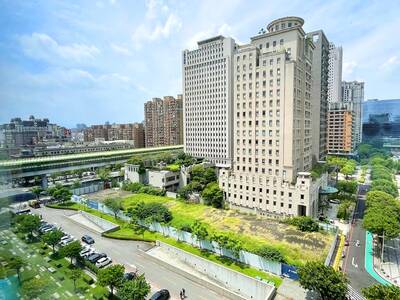
Taichung reported the steepest fall in completed home prices among the six special municipalities in the first quarter of this year, data compiled by Taiwan Realty Co (台灣房屋) showed yesterday. From January through last month, the average transaction price for completed homes in Taichung fell 8 percent from a year earlier to NT$299,000 (US$9,483) per ping (3.3m²), said Taiwan Realty, which compiled the data based on the government’s price registration platform. The decline could be attributed to many home buyers choosing relatively affordable used homes to live in themselves, instead of newly built homes in the city’s prime property market, Taiwan Realty
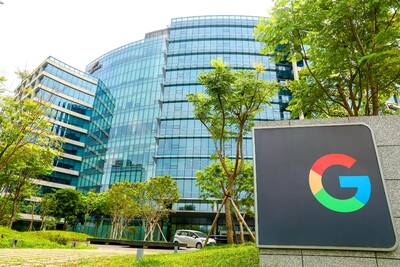
The government yesterday approved applications by Alphabet Inc’s Google to invest NT$27.08 billion (US$859.98 million) in Taiwan, the Ministry of Economic Affairs said in a statement. The Department of Investment Review approved two investments proposed by Google, with much of the funds to be used for data processing and electronic information supply services, as well as inventory procurement businesses in the semiconductor field, the ministry said. It marks the second consecutive year that Google has applied to increase its investment in Taiwan. Google plans to infuse NT$25.34 billion into Charter Investments Ltd (特許投資顧問) through its Singapore-based subsidiary Fructan Holdings Singapore Pte Ltd, and

JET JUICE: The war on Iran’s secondary effects have seen fuel prices skyrocket, knocking flight schedules down to earth in return as airlines struggle with costs Airline passengers should brace for more irritation in the next few months as carriers worldwide cancel flights and ground planes to cope with stratospheric increases in jet-fuel prices. Dutch flag carrier KLM is the latest company to cut its schedule, saying on Thursday that it would scrap 80 return flights at Amsterdam’s Schiphol Airport in the coming month. That puts it in the same league as United Airlines Holdings Inc, Deutsche Lufthansa AG and Cathay Pacific Airways Ltd, which have all pruned itineraries to mitigate costs. Global capacity for next month has been reduced by about 3 percentage points, with all

The US said it plans to help build a first-of-its-kind industrial hub in the Philippines to boost production of inputs crucial to US supply chains. The 4,000-acre hub is intended to be “a purpose-built platform for allied manufacturing” and “an investment acceleration hub where the specific industrial activities are shaped by market demand,” the US Department of State said on Thursday. The project — touted as an “economic security zone” — would be within the Luzon Economic Corridor, a flagship economic project backed by the US and Japan on the main Philippine island. The project was also described as “the first artificial intelligence


 RSS
RSS