


Foreign investment in research and development (R&D) in Taiwan has exceeded NT$24 billion (US$784.6 million) so far this year, Premier Su Tseng-chang (蘇貞昌) said on Thursday.
The record-high figure represented an eight-fold increase from the same period in 2018, Executive Yuan spokesman Lo Ping- cheng (羅秉成) cited Su as saying after a meeting with the Ministry of Economic Affairs, which presented its report on attracting multinationals to set up R&D centers in Taiwan.
He did not specify the period covered by the R&D investments.

Photo: AFP
About 30 international firms maintain R&D centers in the country, including US chipmaker Micron Technology Inc, German tech giant Merck Group and NXP Semiconductors NV of the Netherlands, the ministry said.
Investments in R&D by foreign businesses in the semiconductor sector in Taiwan totaled NT$30 billion over the past five years, the ministry said in its report.
Moves in international supply chains following the US-China trade dispute, the COVID-19 pandemic and the Russian invasion of Ukraine have drastically disrupted the global supply chain, Su said.
Taiwan’s openness and rule of law, its strategic position in the Asia-Pacific region, advanced semiconductor industry, and government subsidies, tax incentives and supply of talent are what attracted foreign businesses to set up R&D centers in the nation, he added.
During the meeting, Lo said the premier also expressed excitement that more multinational firms have chosen to set up centers in southern Taiwan, such as Google with its data centers in Tainan and Yunlin County.
The investments by foreign firms help create high-quality employment opportunities across the nation, he said, and as more companies establish R&D centers in the country, businesses in related sectors would follow suit, thereby strengthening Taiwan’s supply-chain resilience.

SECOND-RATE: Models distilled from US products do not perform the same as the original and undo measures that ensure the systems are neutral, the US’ cable said The US Department of State has ordered a global push to bring attention to what it said are widespread efforts by Chinese companies, including artificial intelligence (AI) start-up DeepSeek (深度求索), to steal intellectual property from US AI labs, according to a diplomatic cable. The cable, dated Friday and sent to diplomatic and consular posts around the world, instructs diplomatic staff to speak to their foreign counterparts about “concerns over adversaries’ extraction and distillation of US AI models.” Distillation is the process of training smaller AI models using output from larger, more expensive ones to lower the costs of training a powerful new
Micron Technology Inc is a driving force pushing the US Congress to pass legislation that would put new export restrictions on equipment its Chinese competitors use to make their chips, according to people familiar with the matter. A US House of Representatives panel yesterday was to vote on the “MATCH Act,” a bill designed to close gaps in restrictions on chipmaking equipment. It would also pressure foreign companies that sell equipment to Chinese chipmaking facilities to align with export curbs on US companies like Lam Research Corp and Applied Materials Inc. The bill targets facilities operated by China’s ChangXin Memory Technologies Inc

Singapore-based ride-hailing and delivery giant Grab Holdings’ planned acquisition of Foodpanda’s Taiwan operations has yet to enter the formal review stage, as regulators await supplementary documents, the Fair Trade Commission (FTC) said yesterday. Acting FTC Chairman Chen Chih-min (陳志民) told the legislature’s Economics Committee that although Grab submitted its application on March 27, the case has not been officially accepted because required materials remain incomplete. Once the filing is finalized, the FTC would launch a formal probe into the deal, focusing on issues such as cross-shareholding and potential restrictions on market competition, Chen told lawmakers. Grab last month announced that it would acquire
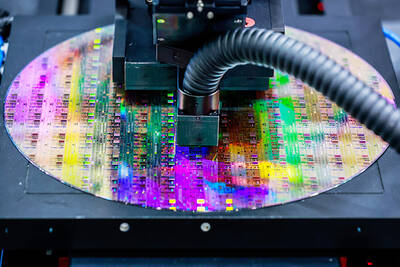
The artificial intelligence (AI) boom has triggered a seismic reshuffling of global equity markets, with Taiwan and South Korea muscling past European nations one by one. With its stock market now valued at nearly US$4.3 trillion, Taiwan surpassed the UK, Europe’s biggest market, earlier this month, data compiled by Bloomberg showed. South Korea is about US$140 billion away from doing the same. The tech-heavy Asian markets have shot past Germany and France in the past seven months. The shift is largely down to massive gains in shares of three companies that provide essential hardware for AI: Taiwan Semiconductor Manufacturing Co (TSMC, 台積電),


 RSS
RSS