


A 2018 advertising pact between Alphabet Inc’s Google and Meta Platforms Inc does not contravene antitrust law because it does not restrict Facebook from using rival ad exchanges, Google’s attorney told a federal judge.
Texas and a group of other US states sued Google over the agreement, nicknamed Jedi Blue, as well as other anticompetitive conduct that they said allowed the search giant to monopolize the market for the technology to buy, sell and service online advertising.
Google and Meta, which is not a defendant in the case, have defended the agreement and denied any wrongdoing.
Photo: Reuters
“The written agreement itself has nothing unlawful in it,” Eric Mahr, an attorney for Google, said on Wednesday at a hearing in a Manhattan federal court.
The deal expanded competition because it allows Facebook to bid on ads being sold through Google’s ad exchange on behalf of Web sites or mobile apps within its Facebook Audience Network, he said.
However, Ashley Keller, a lawyer representing Texas, said that Google entered into the deal to give Meta advantages on the exchange it runs to buy and sell advertising.
In exchange, the social media company abandoned plans to adopt a new type of technology that would have undercut Google’s online advertising monopoly, he said.
“They were smart enough not to write down their agreement that could result in criminal sanctions,” Keller said. “Nobody wants to go to jail and wear an orange jumpsuit.”
Google has asked Judge P. Kevin Castel to dismiss the antitrust suit, saying that all of the conduct that the states target is legal.
“Google does not have to design any of its products to take into account the interests of rivals,” Mahr told Castel on Wednesday, adding that the states “want to turn Google into an ad tech utility.”
However, Keller said that Google has consistently taken steps to make it harder for rivals to compete, such as manipulating auctions for online advertising to ensure Google’s products end up winning.
When those efforts did not succeed, Google would buy off the competition, as it did with Meta, he said.
The Google-Meta pact, first made public in the states’ suit, is now also under investigation by regulators in Europe and the UK.
“There are privileges that Google gives to its own buying tools,” Keller said. “It’s just naked anticompetitive behavior to make sure others can’t disrupt the monopoly.”
Castel, who asked dozens of questions about Google’s ad tech tools and the online advertising market during the two-hour hearing, said the arguments were “helpful,” but did not indicate how he might rule, or when.
Lawyers for the US Department of Justice — which sued Google in 2020 for allegedly monopolizing the search market and is separately probing the company’s ad tech business — attended Wednesday’s hearing.
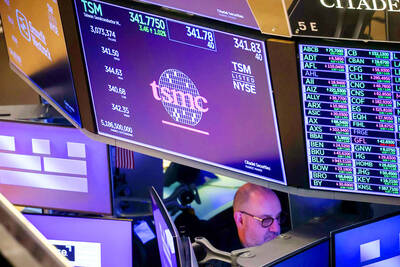
STRONG INTEREST: Analysts have pointed to optimism in TSMC’s growth prospects in the artificial intelligence era as the cause of the rising number of shareholders The number of people holding shares of chipmaker Taiwan Semiconductor Manufacturing Co (TSMC, 台積電) hit a new high last week despite a decline in its stock price, the Taiwan Depository and Clearing Corp (TDCC, 台灣集保) said. The number of TSMC shareholders rose to 2.46 million as of Friday, up 75,536 from a week earlier, TDCC data showed. The stock price fell 1.34 percent during the same week to close at NT$1,840 (US$57.55). The decline in TSMC’s share price resulted from volatility in global tech stocks, driven by rising international crude oil prices as the war against Iran continues. Dealers said
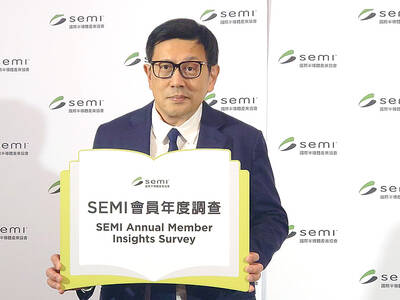
PRICE HIKES: The war in the Middle East would not significantly disrupt supply in the short term, but semiconductor companies are facing price surges for materials Taiwan’s semiconductor companies are not facing imminent supply disruptions of essential chemicals or raw materials due to the war in the Middle East, but surges in material costs loom large, industry association SEMI Taiwan said yesterday. The association’s comments came amid growing concerns that supplies of helium and other key raw materials used in semiconductor production could become a choke point after Qatar shut down its liquefied natural gas (LNG) production and helium output earlier this month due to the conflict. Qatar is the second-largest LNG supplier in the world and accounts for about 33 percent of global helium output. Helium is
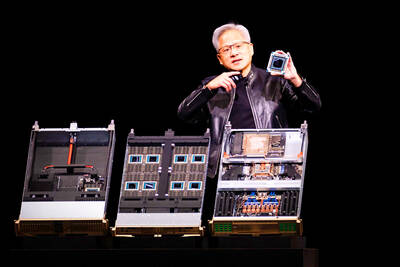
DOMESTIC COMPONENT: Huang identified several Taiwanese partners to be a key part of Nvidia’s Vera Rubin supply chain, including Asustek, Hon Hai and Wistron Nvidia Corp chief executive officer Jensen Huang (黃仁勳), addressing crowds at the company’s biggest annual event, unveiled a variety of new products while predicting that its flagship artificial intelligence (AI) processors would help generate US$1 trillion in sales through next year. During a two-and-a-half-hour keynote address, Huang announced plans to push deeper into central processing units (CPUs) — Intel Corp’s home turf — and introduced semiconductors made with technology acquired from start-up Groq Inc. The company even said it was developing chips for data centers in outer space. At the heart of Huang’s speech was the message that demand for computing power

China is clamping down on fertilizer exports to protect its domestic market, industry sources said, putting an additional strain on global markets that were already grappling with shortages caused by the US-Israeli war on Iran. China is among the largest fertilizer exporters — shipping more than US$13 billion of it last year — and it has a history of controlling exports to keep prices low for farmers. Shipments through the war-blocked Strait of Hormuz account for about one-third of the sea-borne supply. This month, Beijing banned exports of nitrogen-potassium fertilizer blends and certain phosphate varieties, sources said. The ban, which has not


 RSS
RSS