


BHP Group, the world’s biggest miner, yesterday reported its highest-ever full-year profit on record commodity prices and would push ahead with growth options on an improved demand outlook in China.
The producer would study plans to expand its top-earning iron ore unit to 330 million tonnes of production a year and is continuing to assess options to lift volumes in copper and nickel, Melbourne, Australia-based BHP said in a statement.
A giant new potash mine in Canada remains on track to begin output in 2026.
BHP chief executive officer Mike Henry said that China’s emergence from COVID-19 lockdowns would provide a “tailwind” to the global economy, in a counterpoint to jittery sentiment regarding China following a swath of surprisingly weak data.
“We think that over the next six-to-12 months, China, if anything, is going to provide some stability to global growth and will help offset some of the slowing that we see elsewhere,” Henry said.
China typically accounts for more than 60 percent of BHP’s revenue.
Rival miners have cautioned over a weaker outlook.
Rio Tinto Group last month reported a decline in first-half profit and halved its dividend.
Gold giant Newmont Mining Corp and copper producer First Quantum Minerals Ltd have also warned investors in the past few weeks about the likely effects of inflation.
Although BHP would face pressure from a slowdown in advanced economies, higher costs and tighter labor markets, there will be opportunities for low-cost miners as inflation also drives prices higher, the company said.
Production costs across major assets rose 13 percent on COVID-19-related issues and higher prices of diesel and electricity.
BHP is aiming to seize on any pressure on competitors to add metals tied to clean energy and electric vehicle supply chains, including copper and nickel.
Copper miner OZ Minerals Ltd — which rejected a BHP takeover approach — was “nice to have, not a must have,” Henry told reporters.
BHP would continue to produce high-quality metallurgical coal, but plans for new coal mines in Queensland, Australia, are on hold after the state government increased royalty taxes, Henry said.
Green steel technology, including using hydrogen rather than metallurgical coal, was still “decades” away from becoming commercial, he said.
Total underlying earnings were US$23.8 billion in the year to June 30, beating an average analyst forecast of US$21.6 billion, and the highest since the company was created in a 2001 merger.
The producer said it would pay a record final dividend of US$3.25 a share.

Taichung reported the steepest fall in completed home prices among the six special municipalities in the first quarter of this year, data compiled by Taiwan Realty Co (台灣房屋) showed yesterday. From January through last month, the average transaction price for completed homes in Taichung fell 8 percent from a year earlier to NT$299,000 (US$9,483) per ping (3.3m²), said Taiwan Realty, which compiled the data based on the government’s price registration platform. The decline could be attributed to many home buyers choosing relatively affordable used homes to live in themselves, instead of newly built homes in the city’s prime property market, Taiwan Realty
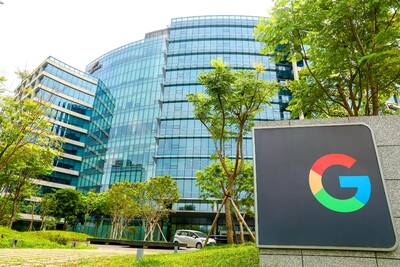
The government yesterday approved applications by Alphabet Inc’s Google to invest NT$27.08 billion (US$859.98 million) in Taiwan, the Ministry of Economic Affairs said in a statement. The Department of Investment Review approved two investments proposed by Google, with much of the funds to be used for data processing and electronic information supply services, as well as inventory procurement businesses in the semiconductor field, the ministry said. It marks the second consecutive year that Google has applied to increase its investment in Taiwan. Google plans to infuse NT$25.34 billion into Charter Investments Ltd (特許投資顧問) through its Singapore-based subsidiary Fructan Holdings Singapore Pte Ltd, and

JET JUICE: The war on Iran’s secondary effects have seen fuel prices skyrocket, knocking flight schedules down to earth in return as airlines struggle with costs Airline passengers should brace for more irritation in the next few months as carriers worldwide cancel flights and ground planes to cope with stratospheric increases in jet-fuel prices. Dutch flag carrier KLM is the latest company to cut its schedule, saying on Thursday that it would scrap 80 return flights at Amsterdam’s Schiphol Airport in the coming month. That puts it in the same league as United Airlines Holdings Inc, Deutsche Lufthansa AG and Cathay Pacific Airways Ltd, which have all pruned itineraries to mitigate costs. Global capacity for next month has been reduced by about 3 percentage points, with all

Micron Technology Inc is a driving force pushing the US Congress to pass legislation that would put new export restrictions on equipment its Chinese competitors use to make their chips, according to people familiar with the matter. A US House of Representatives panel yesterday was to vote on the “MATCH Act,” a bill designed to close gaps in restrictions on chipmaking equipment. It would also pressure foreign companies that sell equipment to Chinese chipmaking facilities to align with export curbs on US companies like Lam Research Corp and Applied Materials Inc. The bill targets facilities operated by China’s ChangXin Memory Technologies Inc


 RSS
RSS