

MACAU
Virus curbs eased
The territory’s government yesterday said that people could enter the neighboring mainland Chinese city of Zhuhai without quarantine, a further relaxation of stringent COVID-19 policies as the world’s biggest gambling hub seeks a return to normalcy. Authorities reopened public services and entertainment facilities in the territory on Tuesday. People leaving Macau for Zhuhai must have a certificate that shows a negative COVID-19 test within the past 24 hours and take a further two tests within three days of arriving in the Chinese city.
BANGLADESH
Dhaka seeks US$2bn loan
The country is seeking US$2 billion from the World Bank and the Asian Development Bank amid efforts to bolster its foreign exchange reserves, Bloomberg reported. The country’s US$416 billion economy has been one of the fastest-growing in the world for years, but rising energy and food prices because of the Russia-Ukraine war have inflated its import bill and the current account deficit. The government wrote letters to the two lenders seeking US$1 billion each, the report said, citing people familiar with the matter.
TURKEY
Inflation stabilizes near 80%
The country’s annual inflation rate last month stabilized at just under 80 percent, official data showed yesterday, helping support President Recep Tayyip Erdogan’s pledges that runaway prices increases would soon stop. The official annual rate of consumer price increases reached 79.6 percent last month, compared with 78.6 percent in June. The country plunged into a fresh economic crisis when Erdogan set off on an unusual economic experiment nearly a year ago that attempted to bring down chronically high inflation by slashing interest rates.
BANKING
Lender outlines targets
Societe Generale SA outlined new revenue targets and pledged higher profitability as rising interest rates and a global trading rally provide a tailwind to outgoing chief executive officer Frederic Oudea. The Paris-based lender yesterday set a goal for average annual top-line growth of at least 3 percent over the next three years, after second-quarter revenue and operating profit beat analyst estimates.
RETAIL
Starbucks profit falls
Starbucks Corp on Tuesday reported lower quarterly profits, despite higher sales, as strong demand and price increases in North America mitigated the hit from Chinese COVID-19 lockdowns. The US coffee giant said North American comparable sales in the latest quarter jumped 9 percent, while China’s slumped 44 percent. Profit for the quarter ending June 27 was US$912.9 million, down 21 percent from a year earlier. Meanwhile, revenue jumped 9 percent to US$8.2 billion.
TECHNOLOGY
Uber revenue beats forecast
Uber Technologies Inc reported better-than-expected revenue on Tuesday, fueled by demand for its ride-hailing and food delivery services that have drawn a surge in drivers looking to offset inflation’s bite. Revenue more than doubled to US$8.1 billion in the three months through June, a 105 percent increase, at a time when many tech companies are struggling to navigate global economic turbulence. Still, the firm posted a net loss of US$2.6 billion, but investors shrugged it off and the shares closed up about 19 percent.

Luxury powerhouses including Hermes and Cartier are suffering steeper slumps in China, in a sign that a spending pullback by the country’s wealthy consumers is hitting even the most resilient brands. Sales at the brands in mainland China fell as much as double-digits in August and last month compared to the same period a year ago, two research firms surveyed by Bloomberg that track industry data said. The drop is significant as Hermes International SCA and Cie Financiere Richemont SA’s Cartier had been relatively unaffected in the country as a broader slowdown in luxury consumption took hold in June, the firms’
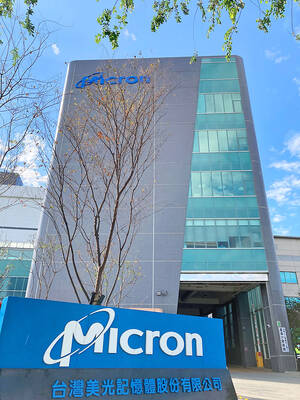
STOCK, CASH: Quarterly profit-sharing bonuses would supplement payments under the Incentive Pay Plan, offering ‘transparency’ and ‘predictability,’ an executive said Micron Memory Taiwan Co (台灣美光) yesterday unveiled a new profit-sharing program and structural wage hikes as part of its efforts to build a predictable and transparent compensation framework in response to feedback from unions. The memorychip maker, a subsidiary of US-based Micron Technology Inc, announced the major compensation structural overhaul during an online news conference following a milestone agreement with the union representing more than 10,000 workers at its Taichung facility. Under the new framework, quarterly profit-sharing bonuses would supplement payments under the Incentive Pay Plan (IPP), the company said. The IPP formula has also been substantially enhanced, it said. “Profit-sharing mechanisms are common
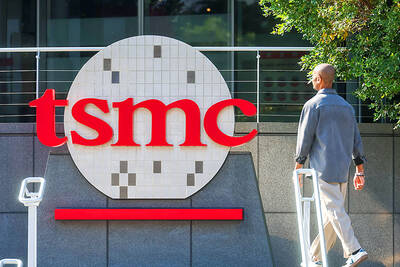
Taiwan Semiconductor Manufacturing Co (TSMC, 台積電) is exploring alternatives to rare earth components in factory equipment, three people familiar with the matter said, aiming to reduce the risk that Beijing’s export controls could disrupt operations at plants that make the world’s most advanced chips. The move underscores how China’s grip on rare earths has become a vulnerability for the global semiconductor industry after the country last year put some rare earth materials, magnets and related processing technology under export controls, requiring licences. Rare earth magnets are commonly used in motors that power moving parts in industrial equipment, including machinery in highly automated

The US Department of the Treasury proposed a rule on Thursday to crack down on US high-tech investments such as supercomputing and artificial intelligence (AI) in China, Russia, North Korea and other “countries of concern.” The US government has been working for years to deny China and other adversaries investments that could help them boost their military power. That program began in 2023 when then-US president Joe Biden signed an executive order putting restrictions on outbound US investments in sectors such as semiconductors, quantum computing and AI going into China. The Treasury later established the Outbound Investment Security Program. In December last year,


 RSS