


Interest rates for new loans at the nation’s five major state-run banks last month edged up 0.005 percentage points to 1.44 percent on average, as lenders raised borrowing costs to support monetary tightening in a joint bid to curb inflation, the central bank said yesterday.
The rate hike came after the central bank last month raised the rediscount rate by 0.125 percentage points for the second time this year to mitigate inflationary pressures.
Bank of Taiwan (臺灣銀行), Land Bank of Taiwan (土地銀行), Taiwan Cooperative Bank (合作金庫銀行), Hua Nan Commercial Bank (華南銀行) and First Commercial Bank (第一銀行) followed suit, hiking interest rates for mortgages, consumer and capital loans.
Interest rates for new mortgages climbed to 1.614 percent last month, the seventh straight month of increases to the highest in two-and-a-half years, and should rise further this month as lenders have not fully reflected the latest rate hike, the central bank said.
New mortgage operations softened by NT$7.88 billion (US$263.4 million) to NT$60.7 billion as interest rate hikes and other unfavorable factors cooled buying interest, the central bank said, adding that lenders also exercised caution and tamed mortgage operations.
That is partly why housing transactions in the nation’s six special municipalities last month shrank 14.88 percent from a year earlier, it said.
Interest rates for capital funding gained 0.347 percentage points to 1.905 percent, while interest rates for consumer loans picked up 0.165 percentage points, the central bank said.
Consumer lending dropped by NT$2.15 billion mainly because demand for student loans weakened, which was consistent with seasonality, it said.

STRONG INTEREST: Analysts have pointed to optimism in TSMC’s growth prospects in the artificial intelligence era as the cause of the rising number of shareholders The number of people holding shares of chipmaker Taiwan Semiconductor Manufacturing Co (TSMC, 台積電) hit a new high last week despite a decline in its stock price, the Taiwan Depository and Clearing Corp (TDCC, 台灣集保) said. The number of TSMC shareholders rose to 2.46 million as of Friday, up 75,536 from a week earlier, TDCC data showed. The stock price fell 1.34 percent during the same week to close at NT$1,840 (US$57.55). The decline in TSMC’s share price resulted from volatility in global tech stocks, driven by rising international crude oil prices as the war against Iran continues. Dealers said
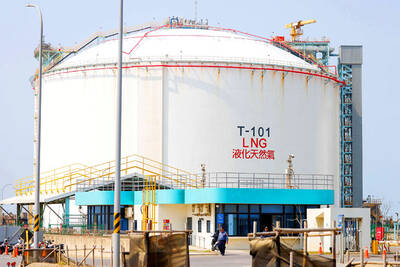
Taiwan’s natural gas supply remains stable through the end of May, despite rising concerns about potential disruptions to Qatari liquefied natural gas (LNG) supplies due to escalating conflicts in the Middle East, the Ministry of Economic Affairs said yesterday. The ministry in a statement said that Taiwan has completed preparations for natural gas supply and shipping schedules through the end of May. It has also made plans to increase natural gas imports from regions outside the Middle East in June to ensure a stable supply, it added. Taiwan sources natural gas from 14 countries and is not solely dependent on the Middle East,

China is clamping down on fertilizer exports to protect its domestic market, industry sources said, putting an additional strain on global markets that were already grappling with shortages caused by the US-Israeli war on Iran. China is among the largest fertilizer exporters — shipping more than US$13 billion of it last year — and it has a history of controlling exports to keep prices low for farmers. Shipments through the war-blocked Strait of Hormuz account for about one-third of the sea-borne supply. This month, Beijing banned exports of nitrogen-potassium fertilizer blends and certain phosphate varieties, sources said. The ban, which has not

Grab Holdings Ltd agreed to buy Delivery Hero SE’s Foodpanda operations in Taiwan for US$600 million, a deal that marks its first foray outside of its Southeast Asian base. The cash acquisition will allow Grab to expand into 21 cities across Taiwan, the Singapore-based ride-hailing and delivery company said in a statement yesterday. Grab expects the transaction to be completed in the second half, subject to regulatory approvals. The purchase will give Grab a presence on the island of about 23 million people, helping it to expand beyond its intensely competitive home market. Grab has seen growth slow dramatically as it takes


 RSS
RSS