


A political crisis in inflation-ravaged Argentina that was sparked by the economy minister’s resignation has spooked markets and generated fears resulting in panic buying and hasty price hikes, as the informal exchange rate soars.
“Every day it’s like going out to hunt a lion,” Luis Sacco told reporters in front of his electronics store in the capital, Buenos Aires.
Since Monday, prices have risen dramatically at shops and businesses across the country.

Photo: AFP
On Saturday last week, economy minister Martin Guzman resigned following months of pressure from inside Argentine President Alberto Fernandez’s center-left Frente de Todos (Everyone’s Front) governing coalition.
Guzman was the chief negotiator in Argentina’s haggling with the IMF to restructure a US$44 billion debt.
However, he was collateral damage in a power struggle between Fernandez and his vice president, the former Argentine president Cristina Kirchner.
Opposition to Guzman’s fiscal policies from the former president’s influential faction within the coalition resulted in him quitting and being replaced by Kirchner loyalist Silvina Batakis.
She is the one who must now steer agricultural powerhouse Argentina through its years-long economic crisis.
Inflation, which surpassed 60 percent in the past 12 months, is hurting ordinary Argentinians, who have been gripped by the political soap opera.
“It was the longest Sunday of my life,” said Sacco, the electronics store owner who spent an anxious weekend “not knowing whether or not to lift the shutters, [and] a Monday thinking about catastrophe.”
The black market peso briefly dropped from 239 to the US dollar to 280 on Monday before stabilizing at 250. The official exchange rate is 132.
However, amid the uncertainty and panic, sales actually soared for many businesses, with consumers afraid prices would soon increase.
That is a major concern in a country struggling with years of high inflation.
“There was no earthquake. There are sales, more than ever,” Sacco said.
However, “people are also buying because they know that if they wait, the price will increase. It’s the time to sell stock.”
He pushed up his prices by 15 percent a few weeks ago, with another 5 percent increase this week, while he has hiked prices on his imported goods by 30 percent.
Fernando Agote, who owns a hardware store, says “things are calming down” after some initial panic buying, despite little change in prices.
However, conversely, many suppliers have suspended their sales, waiting to see what happens to prices before taking new orders, so they do not get left short-changed.
“There was a lot of anxiety, a lot of speculation. No one knows where the real prices are, they’re not set by costs,” Agote said.
Luckily for him, only one of his suppliers suspended their sales on Monday.
At a paint shop in the Floresta neighborhood, prices were pushed up 20 percent with no drop in sales volume.
“Everything was sold,” the manager, Leo, said.
However, supplies were not replenished.
“Only one company delivered,” he said.
Leo expects that next week suppliers “will change all their price and payment conditions.”
After 20 years in the business, Leo has lived through several economic crises in Argentina.
“This is unusual because people have money, they are consuming, these days we’ve been selling like crazy, online orders have exploded,” he added.
The change in government comes at a time when workers are receiving a biyearly salary bonus, leaving them flush with cash.
Even so, “you have to be cautious and not change things more than they are so you don’t spark an unnecessary inflation snowball. We’ve already had enough of those,” said Alberto Sorrentino, 60, who runs a construction materials company.
He expects prices of “domestic products will rise between 6 and 10 percent, and imports between 10 and 20 percent.”
The biggest price hikes have been in the food industry.
“What comes from abroad like banana, papaya and melon increased 30 percent since Monday,” said John Quinteros, who runs a fruit and vegetable shop in Floresta. “People are still buying, but less.”
In the Villa Crespo neighborhood, a shop selling natural products has a sign informing customers it had not pushed up prices.
“We’ve decided to maintain them for as long as we can,” Liliana de los Santos said, admitting that “it’s a risk.”
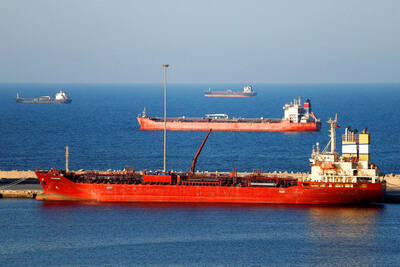
HORMUZ ISSUE: The US president said he expected crude prices to drop at the end of the war, which he called a ‘minor excursion’ that could continue ‘for a little while’ The United Arab Emirates (UAE) and Kuwait started reducing oil production, as the near-closure of the crucial Strait of Hormuz ripples through energy markets and affects global supply. Abu Dhabi National Oil Co (ADNOC) is “managing offshore production levels to address storage requirements,” the company said in a statement, without giving details. Kuwait Petroleum Corp said it was lowering production at its oil fields and refineries after “Iranian threats against safe passage of ships through the Strait of Hormuz.” The war in the Middle East has all but closed Hormuz, the narrow waterway linking the Persian Gulf to the open seas,

RATIONING: The proposal would give the Trump administration ample leverage to negotiate investments in the US as it decides how many chips to give each country US officials are debating a new regulatory framework for exporting artificial intelligence (AI) chips and are considering requiring foreign nations to invest in US AI data centers or security guarantees as a condition for granting exports of 200,000 chips or more, according to a document seen by Reuters. The rules are not yet final and could change. They would be the first attempt to regulate the flow of AI chips to US allies and partners since US President Donald Trump’s administration said it rescinded its predecessor’s so-called AI diffusion rules. Those rules sought to keep a significant amount of AI

Apple Inc increased iPhone production in India by about 53 percent last year and now makes a quarter of its marquee devices there, reflecting the US company’s efforts to avoid tariffs on China. The company assembled about 55 million iPhones in India last year, up from 36 million a year earlier, people familiar with the matter said, asking not to be named because the numbers aren’t public. Apple makes about 220 million to 230 million iPhones a year globally, with India’s share of the total increasing rapidly. Apple has accelerated its expansion in the world’s most populous country in recent years, bolstered

HEADWINDS: The company said it expects its computer business, as well as consumer electronics and communications segments to see revenue declines due to seasonality Pegatron Corp (和碩) yesterday said it aims to grow its artificial intelligence (AI) server revenue more than 10-fold this year from last year, driven by orders from neocloud solutions clients and large cloud service providers. The electronics manufacturing service provider said AI server revenue growth would be driven primarily by the Nvidia Corp GB300 server platform. Server shipments are expected to increase each quarter this year, with the second half likely to outperform the first half, it said. The AI server market is expected to broaden this year as more inference applications emerge, which would drive demand for system-on-chip, application-specific integrated circuits


 RSS
RSS