


Samsung Electronics Co expects operating profit in the second quarter to rise 11.4 percent despite ongoing global supply chain woes, the South Korean tech giant said in a statement yesterday.
The world’s largest smartphone maker forecast second-quarter operating profits of about 14 trillion won ($10.76 billion), up from 12.6 trillion won in the same quarter last year.
Sales in the period from April to last month are expected to have increased by 21 percent year-on-year to 77 trillion won, Samsung said.
Photo: AFP
The figure would represent a downgrade from its first-quarter sales of 77.8 trillion won.
Analysts said Samsung was helped by its continued strong performances in the memorychip business, making up for declines in smartphone sales over the period.
“Samsung’s smartphone shipments for the second quarter are expected to be just over 60 million units, which is worse than expected,” Cape Investment & Securities analyst Park Sung-soon said.
Samsung shipped 74.5 million smartphones in the first quarter, research firm Counterpoint said.
That number tops the global shipments market with 23 percent, trailed by Apple Inc’s 18 percent.
With memory chips now used in a wide-ranging array of devices and cloud servers — essential for remote working in the pandemic era — the sector has become less dependent on seasonally driven demand for gadgets such as smartphones and laptops.
However, concerns are growing regarding uncertainty in the global economic outlook due to Russia’s ongoing war in Ukraine and mounting fears of recession driven by inflationary pressure.
Under such circumstances, it could be “hard for consumer demand for IT gadgets to improve in the coming months,” Park said.
The world’s largest memorychip maker, Samsung Electronics has aggressively stepped up investment in its semiconductor business as the world battles chip shortages that have affected supplies of vehicles, home appliances, smartphones and gaming consoles.
The company last week became the world’s first chipmaker to mass-produce advanced 3-nanometer microchips as it seeks to match and eventually outpace Taiwan Semiconductor Manufacturing Co (TSMC, 台積電) in the race to manufacture the most advanced microchips.
The news came after its May announcement of a 450 trillion won investment spanning the next five years to “bring forward the mass production of chips based on the 3-nanometer process.”
Samsung is the market leader in memory chips, but it has been scrambling to catch up with TSMC in the advanced foundry business.
The results from Samsung — among the first major tech firms to report earnings after a pivotal quarter — helped drive a rally in Asian stocks yesterday. While concerns linger about the long-term impact of a potential global recession, investors seized on Samsung’s top-line expansion as a sign that chip stocks might have been oversold.
Samsung gained 3.2 percent in Seoul, while fellow memorychip maker SK Hynix Inc rose 2 percent. TSMC jumped 5 percent and smaller rival United Microelectronics Corp (聯電) surged 7.3 percent in Taipei. TSMC is to report its monthly sales today.
The four Asian chipmakers collectively gained about US$30 billion of market value. Despite that rally, they remain down for the year, reflecting uncertainty about the longer term.
“The results were less bad than expected,” HI Investment & Securities Co analyst Song Myung-sup said. “There were huge worries and earnings estimates were getting lowered, but the results came within the boundary of expectations.”
US rival Micron Technology Inc, the third biggest DRAM maker, last week gave a grim outlook for the current quarter with lowered expectations for tech spending.
Additional reporting by Bloomberg
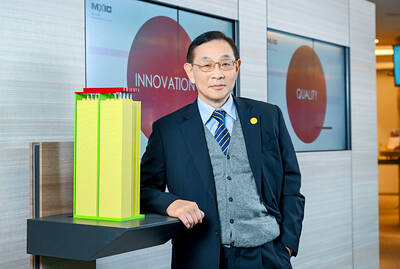
Macronix International Co (旺宏), the world’s biggest NOR flash memory supplier, yesterday said it would spend NT$22 billion (US$699.1 million) on capacity expansion this year to increase its production of mid-to-low-density memory chips as the world’s major memorychip suppliers are phasing out the market. The company said its planned capital expenditures are about 11 times higher than the NT$1.8 billion it spent on new facilities and equipment last year. A majority of this year’s outlay would be allocated to step up capacity of multi-level cell (MLC) NAND flash memory chips, which are used in embedded multimedia cards (eMMC), a managed

CULPRITS: Factors that affected the slip included falling global crude oil prices, wait-and-see consumer attitudes due to US tariffs and a different Lunar New Year holiday schedule Taiwan’s retail sales ended a nine-year growth streak last year, slipping 0.2 percent from a year earlier as uncertainty over US tariff policies affected demand for durable goods, data released on Friday by the Ministry of Economic Affairs showed. Last year’s retail sales totaled NT$4.84 trillion (US$153.27 billion), down about NT$9.5 billion, or 0.2 percent, from 2024. Despite the decline, the figure was still the second-highest annual sales total on record. Ministry statistics department deputy head Chen Yu-fang (陳玉芳) said sales of cars, motorcycles and related products, which accounted for 17.4 percent of total retail rales last year, fell NT$68.1 billion, or

In the wake of strong global demand for AI applications, Taiwan’s export-oriented economy accelerated with the composite index of economic indicators flashing the first “red” light in December for one year, indicating the economy is in booming mode, the National Development Council (NDC) said yesterday. Moreover, the index of leading indicators, which gauges the potential state of the economy over the next six months, also moved higher in December amid growing optimism over the outlook, the NDC said. In December, the index of economic indicators rose one point from a month earlier to 38, at the lower end of the “red” light.

MediaTek Inc (聯發科) shares yesterday notched their best two-day rally on record, as investors flock to the Taiwanese chip designer on excitement over its tie-up with Google. The Taipei-listed stock jumped 8.59 percent, capping a two-session surge of 19 percent and closing at a fresh all-time high of NT$1,770. That extended a two-month rally on growing awareness of MediaTek’s work on Google’s tensor processing units (TPUs), which are chips used in artificial intelligence (AI) applications. It also highlights how fund managers faced with single-stock limits on their holding of market titan Taiwan Semiconductor Manufacturing Co (TSMC, 台積電) are diversifying into other AI-related firms.


 RSS
RSS