


Ryanair Holdings PLC took a cautious view on the pace of the travel rebound, saying it will cut prices to stimulate demand this quarter while more countries consider removing COVID-19 travel restrictions.
Though bookings are improving, most are still last-minute, and investors should expect further disruption before Europe is through the pandemic, the region’s biggest discount airline said yesterday. The Irish company said it is in “growth mode,” but that the timing of the recovery remains unpredictable.
“It’s correct to be cautious for the remainder of this financial year as there may be another twist in COVID,” chief financial officer Neil Sorahan said in an interview. “It has taken us by surprise a couple of times. But we’re well placed to capitalize on the massive opportunities that exist.”
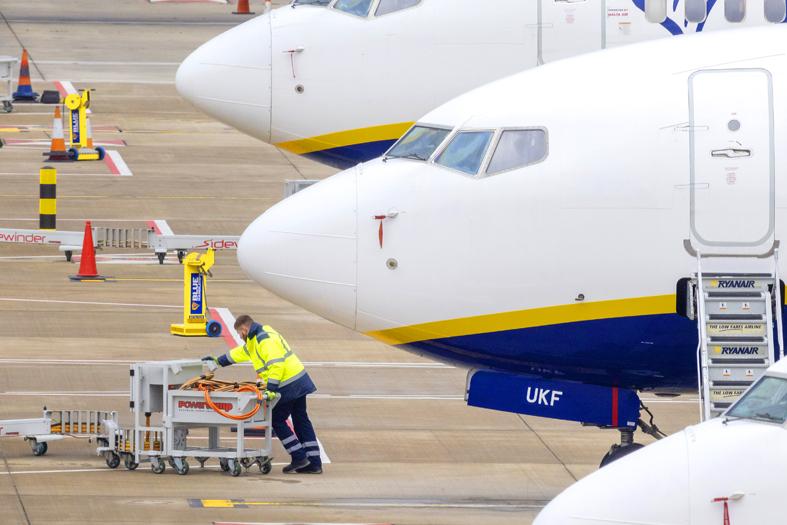
Photo: Bloomberg
Ryanair has set plans for an aggressive expansion as travel returns, with 720 new routes and 15 new bases announced for the fiscal year beginning in April.
The company posted a 96 million euro (US$107 million) loss for the December quarter after analysts had predicted a smaller deficit, and stuck with the more negative forecast for the year through March that it issued last month as the Omicron variant of SARS-CoV-2 wiped out the Christmas and New Year travel peak.
Ryanair said it is hopeful that EU nations will follow the British lead in scrapping testing for vaccinated travelers in time to restore consumer confidence well in advance of Easter, which falls in April.
Sorahan told Bloomberg Television that he is seeing progress toward relaxed rules in Germany, Italy and Austria.
He said that currently low ticket prices may strengthen once the rebound gets going, given the amount of capacity that has exited the market during the crisis, making for “a relatively good summer.”
Dublin-based Ryanair said it has taken delivery of 41 new Boeing Co 737 MAX jets with plans to add another 24 in time for summer, helping it to offer 14 percent more seating than in the peak period of 2019.
The carrier reiterated that it is targeting an increase in passengers to 225 million a year by 2026 and said it now expects to create 6,000 more jobs over that period, up from 5,000 previously.
Ryanair will also work over the next two years to pare net debt that has risen to more than 2 billion euros. Bonds maturing next year and in 2024 will be repaid at least partly through the company’s own cash generation, Sorahan said.

Cairo’s new monorail slices across the city skyline, running above the familiar chaos of blaring horns and aging buses’ exhaust fumes that mark rush hour below. The US$4.5 billion monorail, opened this month, is among Egypt’s most prominent new transport projects, part of a debt-funded infrastructure drive criticized for sapping state finances while bringing limited benefits to most of the country’s 109 million people. “It feels like you’re in a different country,” said Ramy Sayed, a restaurant manager, aboard a driverless Innovia 300 train. “No noise, no traffic, we’re not used to this.” The eastern line runs 56km from the bustling middle-class
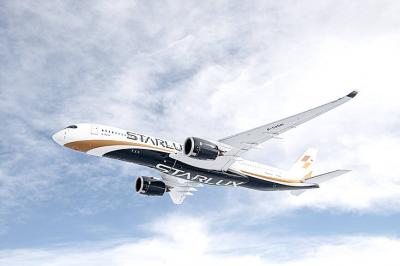
Starlux Airlines Co (星宇航空) today unveiled a long-haul network expansion plan at a shareholders’ meeting in Taipei, including direct flights to Barcelona, Spain, and Zurich, Switzerland, as well as a service connecting Taipei, Sydney and New Zealand. Starlux is to become the first Taiwanese carrier to offer non-stop services to the two European cities, while the inaugural oceanic route is expected to expand transit opportunities within the Australia-New Zealand market, Starlux said. Flight services to Chicago, Dallas, Washington and New York are under evaluation, the airline added. Prior to the shareholders’ meeting, the airline earlier this year announced that it would be

Taiwanese prosecutors suspect that three people successfully smuggled at least one shipment of Nvidia Corp artificial intelligence (AI) chips to China after first exporting them to Japan, people familiar with the matter said. The trio was detained last week by the Keelung District Prosecutors’ Office for allegedly falsifying documents related to exports of Super Micro Computer Inc servers containing advanced Nvidia chips, which the US has barred from sale to China without a license from Washington. The move marked Taiwan’s first public crackdown on AI chip diversion after years of pressure from the US to take a more active role in curtailing
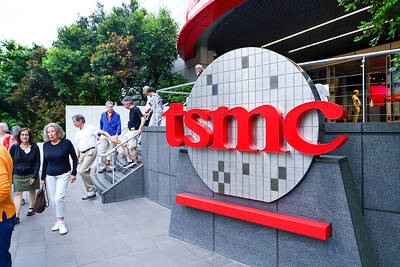
Taiwan Semiconductor Manufacturing Co (TSMC, 台積電) employee bonuses are likely to grow more than 30 percent this year, in line with the past few years as the company’s profits continue to set new records, an anonymous source cited TSMC chairman C.C. Wei (魏哲家) as saying yesterday. TSMC, the world’s largest contract chipmaker, is committed to taking care of its workers, the source said, citing Wei’s meeting with employees yesterday morning. Wei also expressed gratitude to employees for their contribution to the company’s improving bottom line, the source added. Since 2023, TSMC’s employee bonuses have grown at an annual rate of


 RSS
RSS