


Hon Hai Precision Industry Co’s (鴻海精密) decision to reduce its stake in Fitipower Integrated Technology Inc (天鈺科技) by selling 9.09 million shares yesterday sparked a plunge in the integrated circuit designer’s stock.
Fitipower shares dropped 7.87 percent to NT$216.5 in Taipei trading, the lowest since Dec. 8 last year. They have declined 23.23 percent so far this year amid net selling by domestic proprietary traders and investment trust firms.
Hon Hai shares ended yesterday flat at NT$104.5. They have edged up 0.48 percent since the beginning of this year.
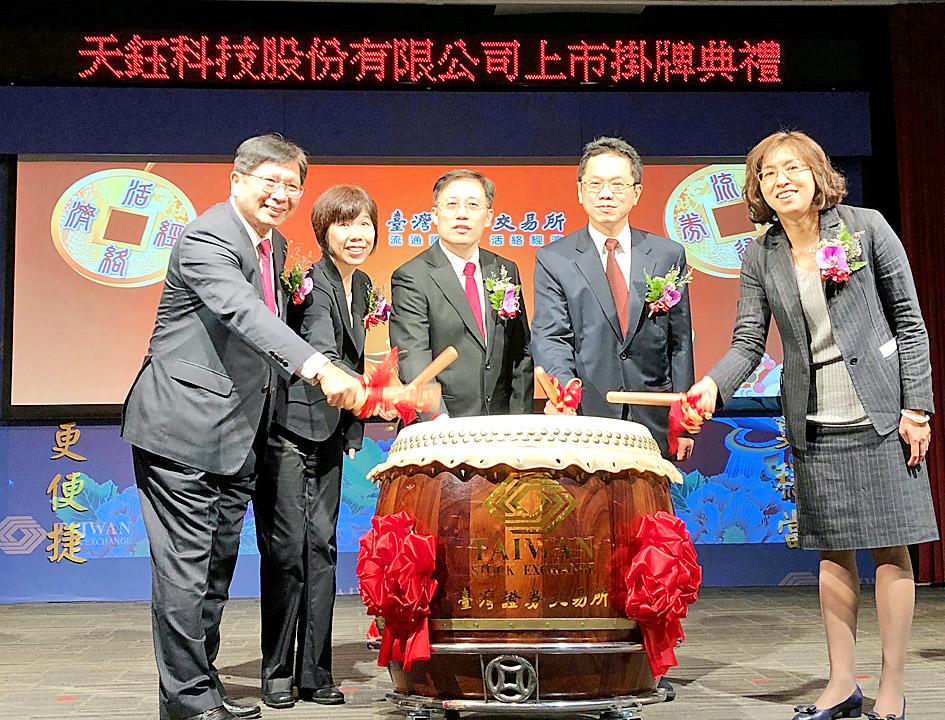
Photo: Vanessa Cho, Taipei Times
The deal has attracted market attention at a time when Hon Hai is extending its reach into the semiconductor business.
The iPhone assembler in August last year purchased a 6-inch wafer fab in the Hsinchu Science Park (新竹科學園區) from memorychip maker Macronix International Co (旺宏電子), and announced in November that it planned to establish a semiconductor design center in New Taipei City’s Baogao Science and Intellectual Park (寶高智慧產業園區).
The Fitipower share sale also came five months after Hon Hai disposed of all its 7.62 million shares in radio frequency chipmaker Microelectronics Technology Inc (台揚科技) to realize capital gains.
In a regulatory filing issued on Tuesday, Hon Hai said it planned to sell a 4.8 percent stake in Fitipower through one of its investment units, Hon Yuan International Investment Co (鴻元國際投資).
Hon Hai said it made the move to realize investment gains and would make public the average sale price per share after the transaction is completed.
The company in December 2011 purchased through a private placement 45 million Fitipower shares at NT$13 each via its four investment units: Hon Yuan International Investment, Pao Shin International Investment Co (寶鑫國際投資), Hyield Venture Capital Co (鴻揚創投) and Hon Chi International Investment Co (鴻棋國際投資).
Despite the share disposal, Hon Hai still maintains a sizeable stake in Fitipower of about 21 percent, while its flat-panel subsidiary, Innolux Corp (群創), also retains a 5.3 percent stake in the IC designer, the companies’ previous regulatory filings showed.
Fitipower’s business focuses on display driver ICs used in ultra-high-definition TVs and gaming notebook computers, as well as power management ICs and touch controllers with display driver integration.
Thanks to robust market demand, the company reported record revenue of NT$22.87 billion (US$826.59 million) for last year, up 110.09 percent from 2020.

The domestic unit of the Chinese-owned, Dutch-headquartered chipmaker Nexperia BV will soon be able to produce semiconductors locally within China, according to two company sources. Nexperia is at the center of a global tug-of-war over critical semiconductor technology, with a Dutch court in February ordering a probe into alleged mismanagement at the company. The geopolitical tussle has disrupted supply chains, with some carmakers reportedly forced to cut production due to chip shortages. Local production would allow Nexperia’s domestic arm, Nexperia Semiconductors (China) Ltd (安世半導體中國), to bypass restrictions in place since October on the supply of silicon wafers — etched with tiny components to

Singapore-based ride-hailing and delivery giant Grab Holdings Ltd has applied for regulatory approval to acquire the Taiwan operations of Germany-based Delivery Hero SE's Foodpanda in a deal valued at about US$600 million. Grab submitted the filing to the Fair Trade Commission on Friday last week, with the transaction subject to regulatory review and approval, the company said in a statement yesterday. Its independent governance structure would help foster a healthy and competitive market in Taiwan if the deal is approved, Grab said. Grab, which is listed on the NASDAQ, said in the filing that US-based Uber Technologies Inc holds about 13 percent of
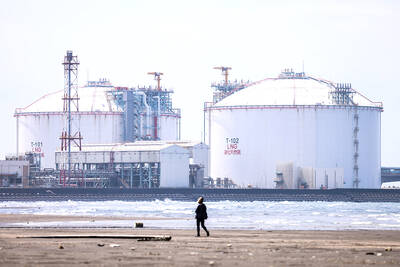
Taiwan is open to joining a global liquefied natural gas (LNG) program if one is created, but on the condition that countries provide delivery even in a scenario where there is a conflict with China, an energy department official said yesterday. While Taiwan’s priority is to have enough LNG at home, the nation is open to exploring potential strategic reserves in other countries such as Japan or South Korea, Energy Administration Deputy Director-General Chen Chung-hsien (陳崇憲) said. While the LNG market does not have a global reserve for emergencies like that of oil, the concept has been raised a few times —

Taiwan Semiconductor Manufacturing Co (TSMC, 台積電) yesterday received government approval to deploy its advanced 3-nanometer (3nm) process at its second fab currently under construction in Japan, the Ministry of Economic Affairs said in a news release. The ministry green-lit the plan for the facility in Kumamoto, which is scheduled to start installing equipment and come online in 2028 with a monthly production capacity of 15,000 12-inch wafers, the ministry said. The Department of Investment Review in June 2024 authorized a US$5.26 billion investment for the facility, slated to manufacture 6- to 12nm chips, significantly less advanced than 3nm process. At a meeting with


 RSS
RSS