


The US dollar on Friday rose as investors sought safe havens after Austria said it would be the first country in Western Europe to reimpose a full lockdown amid surging COVID-19 infections and Germany said it might follow suit, sending the euro lower.
The US dollar index, which tracks the greenback against a basket of six major currencies, was up 0.489 percent at 96.029, close to the 16-month high of 96.266 hit on Wednesday. For the week, the dollar was up 0.96 percent.
The euro, which has been on its back foot all week, hit a 16-month low amid a COVID-19 surge in Europe and as expectations have grown that interest rates would be hiked faster elsewhere, particularly in the US.
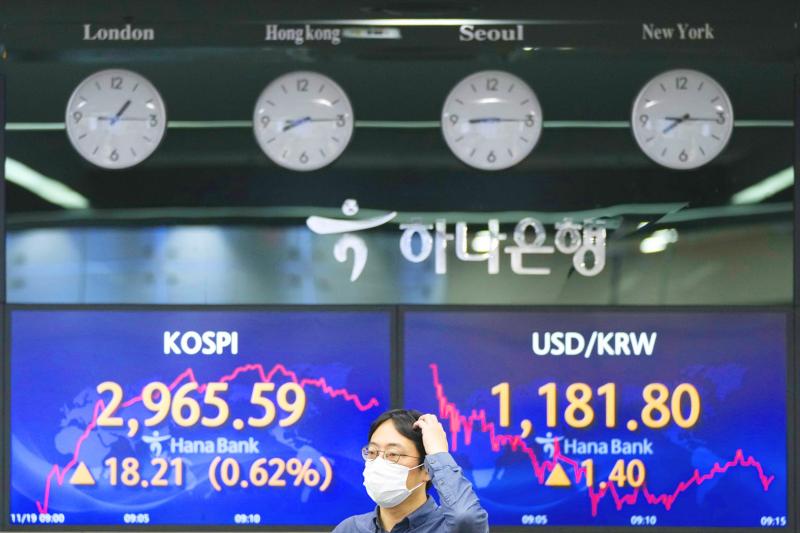
Photo: AP
US Federal Reserve Governor Christopher Waller said the US central bank should speed up the pace of tapering its bond purchases to give more leeway to raise interest rates from their near-zero level sooner than it expects if high inflation and the strength of job gains persists.
At a separate event, Fed Vice Chairman Richard Clarida said that it “may very well be appropriate” to discuss speeding up the Fed’s asset purchase wind-down when it next meets on Dec. 14 and 15.
“The greenback right now is certainly benefiting from signs of a strengthening US economy and from safe-haven flows due to renewed worries about the virus,” Western Union Business Solutions senior market analyst Joe Manimbo said.
In Taipei, the New Taiwan dollar rose against the greenback, gaining NT$0.008 to close at NT$27.795, up 0.15 percent from a week earlier.
Commodity-linked currencies, such as the Australian, New Zealand and Canadian dollars, often seen as risky, all declined.
The euro fell more than 1 percent this week versus the US dollar and was down 0.74 percent on the day at US$1.12895, having earlier touched US$1.1248, its weakest level since July last year.
European Central Bank President Christine Lagarde doubled down on her cautious position, saying that the ECB should not tighten policy as that could undermine recovery.
The Australian dollar was down 0.58 percent at US$0.72335, while the New Zealand dollar was 0.72 percent lower at US$0.69945.
The Canadian dollar slid 0.42 percent to C$1.2652.
The Japanese yen, also considered a safe-haven currency, improved after Austria’s lockdown announcement, and was up 0.22 percent versus the dollar at ¥113.99.
Sterling shed some of its recent gains and was down 0.39 percent at about US$1.3448.
Additional reporting by CNA, with staff writer
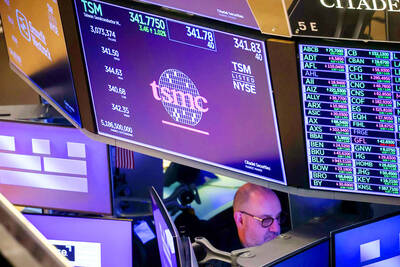
STRONG INTEREST: Analysts have pointed to optimism in TSMC’s growth prospects in the artificial intelligence era as the cause of the rising number of shareholders The number of people holding shares of chipmaker Taiwan Semiconductor Manufacturing Co (TSMC, 台積電) hit a new high last week despite a decline in its stock price, the Taiwan Depository and Clearing Corp (TDCC, 台灣集保) said. The number of TSMC shareholders rose to 2.46 million as of Friday, up 75,536 from a week earlier, TDCC data showed. The stock price fell 1.34 percent during the same week to close at NT$1,840 (US$57.55). The decline in TSMC’s share price resulted from volatility in global tech stocks, driven by rising international crude oil prices as the war against Iran continues. Dealers said
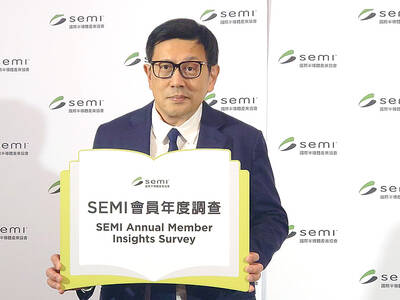
PRICE HIKES: The war in the Middle East would not significantly disrupt supply in the short term, but semiconductor companies are facing price surges for materials Taiwan’s semiconductor companies are not facing imminent supply disruptions of essential chemicals or raw materials due to the war in the Middle East, but surges in material costs loom large, industry association SEMI Taiwan said yesterday. The association’s comments came amid growing concerns that supplies of helium and other key raw materials used in semiconductor production could become a choke point after Qatar shut down its liquefied natural gas (LNG) production and helium output earlier this month due to the conflict. Qatar is the second-largest LNG supplier in the world and accounts for about 33 percent of global helium output. Helium is
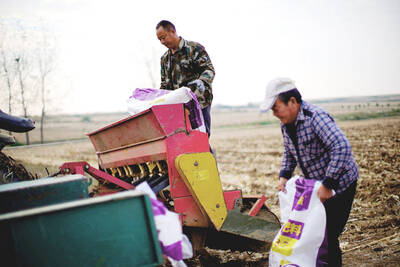
China is clamping down on fertilizer exports to protect its domestic market, industry sources said, putting an additional strain on global markets that were already grappling with shortages caused by the US-Israeli war on Iran. China is among the largest fertilizer exporters — shipping more than US$13 billion of it last year — and it has a history of controlling exports to keep prices low for farmers. Shipments through the war-blocked Strait of Hormuz account for about one-third of the sea-borne supply. This month, Beijing banned exports of nitrogen-potassium fertilizer blends and certain phosphate varieties, sources said. The ban, which has not
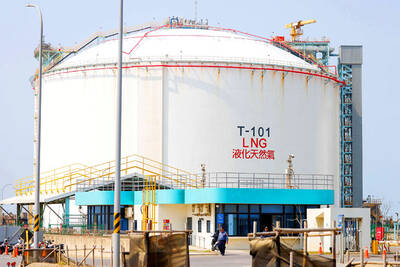
Taiwan’s natural gas supply remains stable through the end of May, despite rising concerns about potential disruptions to Qatari liquefied natural gas (LNG) supplies due to escalating conflicts in the Middle East, the Ministry of Economic Affairs said yesterday. The ministry in a statement said that Taiwan has completed preparations for natural gas supply and shipping schedules through the end of May. It has also made plans to increase natural gas imports from regions outside the Middle East in June to ensure a stable supply, it added. Taiwan sources natural gas from 14 countries and is not solely dependent on the Middle East,


 RSS
RSS