


Shares of Universal Music Group (UMG), whose lineup features The Beatles and Taylor Swift, soared on the label’s stock market debut yesterday, bolstering confidence in one of the largest initial public offerings (IPOs) in the past few years.
The music giant was floated by its owner, French media giant Vivendi SA, with shares jumping from a debut price of 18.50 euros to more than 25 euros on the Euronext Amsterdam index.
The world’s biggest label, with a catalogue of 4 million titles, was valued at US$39 billion on the eve of its market introduction.
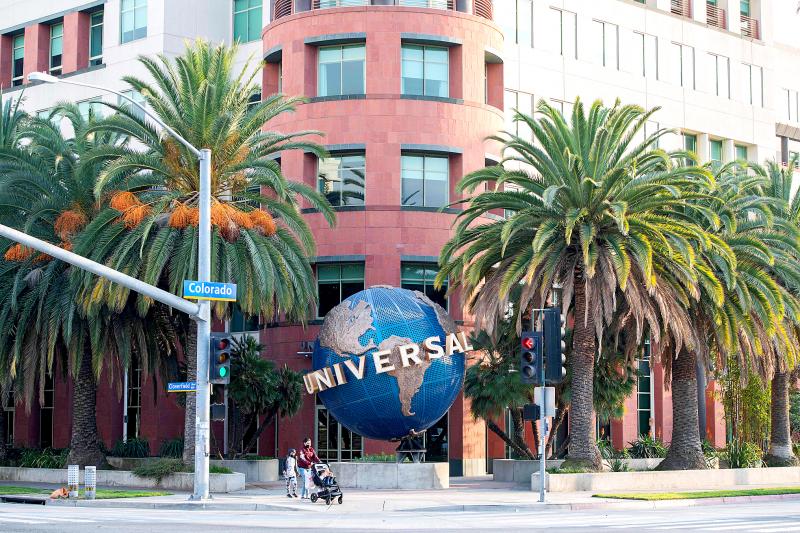
Photo: AFP
Shares of Vivendi, by contrast, sank by more than 15 percent on the Paris CAC 40 stock exchange as the media company offloaded a majority stake of its crown jewel.
Vivendi is owned by French billionaire Vincent Bollore.
Although Vivendi retained a chunk of Universal Music, it is looking to focus more on TV, advertising and publishing. Universal Music, like its rivals Warner Music Group Corp and Sony Music Entertainment, was once threatened by music piracy, but profits have soared in the age of streaming.
It is home to many of the world’s biggest music stars, from Lady Gaga to Kanye West to Metallica.
Last year, the group bought Bob Dylan’s entire song catalogue for US$300 million, one of the biggest acquisitions in music history.
Based in Santa Monica, California, UMG has been a cash cow for Vivendi’s media empire, with a turnover of 7.4 billion euros (US$8.7 billion) last year, accounting for 46 percent of the parent company’s revenue.
However, as it pivoted toward other areas, Vivendi sold off a 20 percent stake of Universal to Chinese tech firm Tencent Holdings Ltd (騰訊) and 10 percent to US financier Bill Ackman.
“We are creating the conditions so that the valuation of Vivendi as a whole is greater than the sum of the parts that compose it,” Vivendi chief executive Arnaud de Puyfontaine said.
Aware that shedding its No. 1 asset might be a risky move, Vivendi has taken steps — described as “quite extraordinary” by one activist shareholder — to protect its own share price.
It secured agreement from its investors for a massive buyback of up to half its shares following the UMG flotation, but that did not stop them from falling yesterday.
The goal was to give the firm the means to protect itself from a hostile takeover bid should its share price fall after the sale.
Yesterday’s operation involved Vivendi distributing 60 percent of UMG shares to its investors, while the French company kept 10 percent and maintained a joint management agreement with Tencent.
Bollore is to remain a powerful figure at UMG, taking 18 percent of the floated stock, worth before the floatation at about 6 billion euros, and a seat on its new board.
A prospectus for the IPO said UMG’s three main operating businesses are recorded music, music publishing and advertising, but that it is also expanding into areas such as live events, livestreaming, film, television and podcasts.
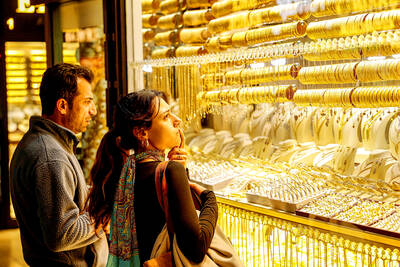
In Italy’s storied gold-making hubs, jewelers are reworking their designs to trim gold content as they race to blunt the effect of record prices and appeal to shoppers watching their budgets. Gold prices hit a record high on Thursday, surging near US$5,600 an ounce, more than double a year ago as geopolitical concerns and jitters over trade pushed investors toward the safe-haven asset. The rally is putting undue pressure on small artisans as they face mounting demands from customers, including international brands, to produce cheaper items, from signature pieces to wedding rings, according to interviews with four independent jewelers in Italy’s main

Japanese Prime Minister Sanae Takaichi has talked up the benefits of a weaker yen in a campaign speech, adopting a tone at odds with her finance ministry, which has refused to rule out any options to counter excessive foreign exchange volatility. Takaichi later softened her stance, saying she did not have a preference for the yen’s direction. “People say the weak yen is bad right now, but for export industries, it’s a major opportunity,” Takaichi said on Saturday at a rally for Liberal Democratic Party candidate Daishiro Yamagiwa in Kanagawa Prefecture ahead of a snap election on Sunday. “Whether it’s selling food or

CONCERNS: Tech companies investing in AI businesses that purchase their products have raised questions among investors that they are artificially propping up demand Nvidia Corp chief executive officer Jensen Huang (黃仁勳) on Saturday said that the company would be participating in OpenAI’s latest funding round, describing it as potentially “the largest investment we’ve ever made.” “We will invest a great deal of money,” Huang told reporters while visiting Taipei. “I believe in OpenAI. The work that they do is incredible. They’re one of the most consequential companies of our time.” Huang did not say exactly how much Nvidia might contribute, but described the investment as “huge.” “Let Sam announce how much he’s going to raise — it’s for him to decide,” Huang said, referring to OpenAI
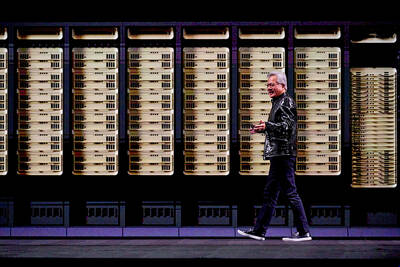
The global server market is expected to grow 12.8 percent annually this year, with artificial intelligence (AI) servers projected to account for 16.5 percent, driven by continued investment in AI infrastructure by major cloud service providers (CSPs), market researcher TrendForce Corp (集邦科技) said yesterday. Global AI server shipments this year are expected to increase 28 percent year-on-year to more than 2.7 million units, driven by sustained demand from CSPs and government sovereign cloud projects, TrendForce analyst Frank Kung (龔明德) told the Taipei Times. Demand for GPU-based AI servers, including Nvidia Corp’s GB and Vera Rubin rack systems, is expected to remain high,


 RSS
RSS