


Presale housing projects are expected to soar 64.5 percent year-on-year to NT$269.03 billion (US$9.71 billion) in northern Taiwan in the autumn sales season from Sept. 28 through next month, as local cases of COVID-19 and social distancing rules prompted developers to push back launches, the Chinese-language My Housing Monthly said on Thursday last week.
The volume, which would be the largest in history, is projected because a level 3 COVID-19 alert from May to July virtually froze consumer activity, My Housing Monthly research manager Ho Shih-chang (何世昌) said.
Developers and builders regained some confidence after locally transmitted infections dropped to low single-digit numbers, Ho said, adding that a relatively low base last year was also a factor.
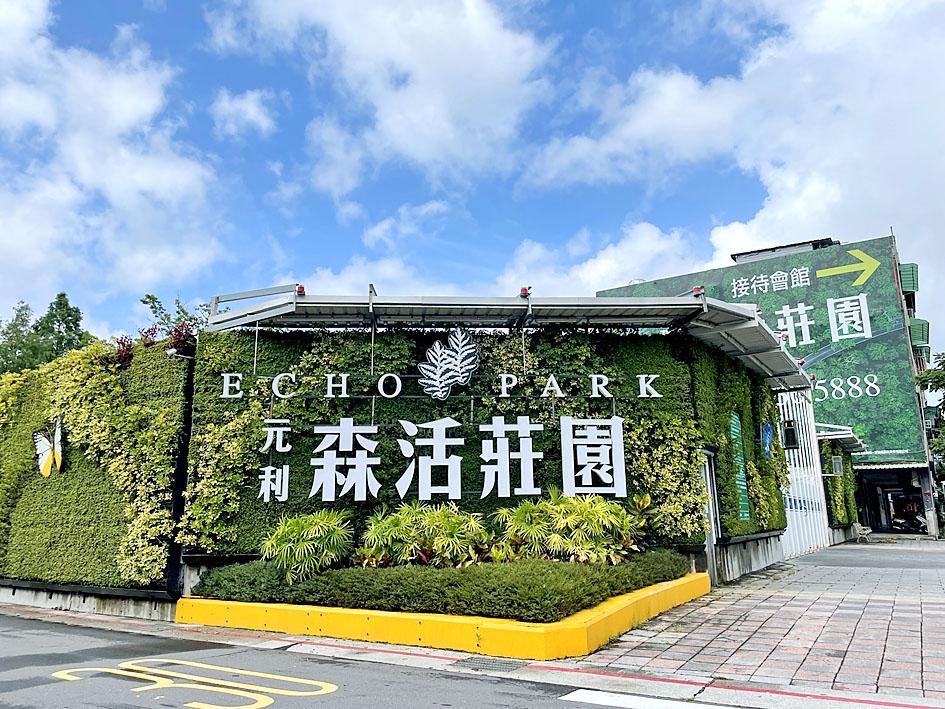
Photo: Hsu Yi-ping, Taipei Times
Taipei and New Taipei City account for NT$84.7 billion, or 31.48 percent, with apartments featuring low entry requirements dominating the market in New Taipei City, the magazine said.
New Taipei City’s Banciao (板橋), Sindian (新店), Tamsui (淡水) and Sinjhuang (新莊) districts are each expected to have new residential projects that generate NT$10 billion in sales, it said, adding that the apartments generally have two or three bedrooms to attract people with real demand, especially first-time home buyers.
Taipei has also reported an increase in new apartments of less than 30 ping (99m2), as few people want large homes, Ho said.
New housing projects in Taoyuan total more than NT$50 billion, mostly concentrated in Jhongli (中壢) and Cingpu (青埔) districts with asking prices approaching NT$500,000 per ping, the magazine said.
The market in Hsinchu is quiet, with new projects of a little more than NT$10 billion as developers adopt a low-key approach that might lead to a shortage of homes, it said.
Yilan County reported the lowest value for expected new housing projects in northern Taiwan at NT$2.7 billion, it said.
Major developers such as the Yuanlih Group (元利建設), Chong Hong Construction Co (長虹建設), Hong Pu Real Estate Development Co (宏普建設), Kindom Construction Corp (冠德建設) and Cathay Real Estate Development Co (國泰建設) are selling projects, a sign that the market might be emerging from a slowdown, despite the spread of the Delta variant of SARS-CoV-2, Ho said.

Singapore-based ride-hailing and delivery giant Grab Holdings Ltd has applied for regulatory approval to acquire the Taiwan operations of Germany-based Delivery Hero SE's Foodpanda in a deal valued at about US$600 million. Grab submitted the filing to the Fair Trade Commission on Friday last week, with the transaction subject to regulatory review and approval, the company said in a statement yesterday. Its independent governance structure would help foster a healthy and competitive market in Taiwan if the deal is approved, Grab said. Grab, which is listed on the NASDAQ, said in the filing that US-based Uber Technologies Inc holds about 13 percent of

The domestic unit of the Chinese-owned, Dutch-headquartered chipmaker Nexperia BV will soon be able to produce semiconductors locally within China, according to two company sources. Nexperia is at the center of a global tug-of-war over critical semiconductor technology, with a Dutch court in February ordering a probe into alleged mismanagement at the company. The geopolitical tussle has disrupted supply chains, with some carmakers reportedly forced to cut production due to chip shortages. Local production would allow Nexperia’s domestic arm, Nexperia Semiconductors (China) Ltd (安世半導體中國), to bypass restrictions in place since October on the supply of silicon wafers — etched with tiny components to

Taiwan Semiconductor Manufacturing Co (TSMC, 台積電) yesterday received government approval to deploy its advanced 3-nanometer (3nm) process at its second fab currently under construction in Japan, the Ministry of Economic Affairs said in a news release. The ministry green-lit the plan for the facility in Kumamoto, which is scheduled to start installing equipment and come online in 2028 with a monthly production capacity of 15,000 12-inch wafers, the ministry said. The Department of Investment Review in June 2024 authorized a US$5.26 billion investment for the facility, slated to manufacture 6- to 12nm chips, significantly less advanced than 3nm process. At a meeting with

Taiwan’s food delivery market could undergo a major shift if Singapore-based Grab Holdings Ltd completes its planned acquisition of Delivery Hero SE’s Foodpanda business in Taiwan, industry experts said. Grab on Monday last week announced it would acquire Foodpanda’s Taiwan operations for US$600 million. The deal is expected to be finalized in the second half of this year, with Grab aiming to complete user migration to its platform by the first half of next year. A duopoly between Uber Eats and Foodpanda dominates Taiwan’s delivery market, a structure that has remained intact since the Fair Trade Commission (FTC) blocked Uber Technologies Inc’s


 RSS
RSS