


Government officials, lawmakers and industry representatives yesterday attended a plaque unveiling ceremony at the Nantze Export Processing Zone (楠梓加工出口區) in Kaohsiung to rename the zone as a technology industrial park.
Officials from the export processing zones in Kaohsiung, Taichung and Pingtung County videoconferenced as they renamed the zones as technology industrial parks, marking the end of export processing zones in Taiwan after 55 years.
The renaming complies with last year’s amendment to the Statute for the Establishment and Administration of Export Processing Zones (加工出口區設置管理條例), the Export Processing Zone Administration (EPZA) said in a statement posted on the Ministry of Economic Affairs’ Web site.
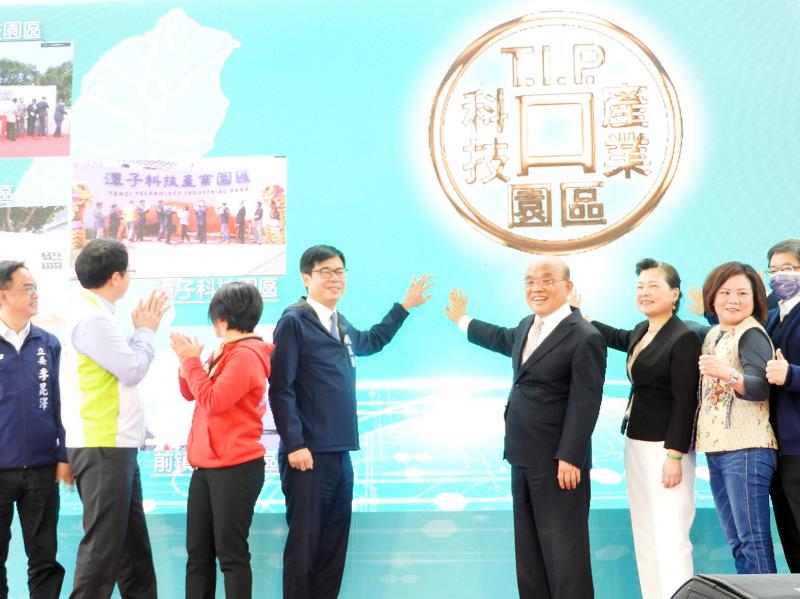
Photo: Ge Yu-hao, Taipei Times
The ministry, since launching the zones in 1966, has established 10 zones over 530.3 hectares in Kaohsiung, Taichung and Pingtung County.
The zones that were renamed technology industrial parks are to target smart manufacturing, equipment upgrades and advanced material research, with the aim of developing into important high-end manufacturing centers in Taiwan, the administration said.
Speaking at the ceremony, Premier Su Tseng-chang (蘇貞昌) praised the role that export processing zones played in launching the nation’s economic development.
“The renaming is not to deny what these export processing zones have accomplished in the past, but to affirm the success that they have helped to achieve in transforming the nation’s technology industry over the past 55 years,” Su said.
There are more technology companies than traditional manufacturers at the new industrial parks — tech firms account for 60 percent, while just the tech firms at the Nantze park represent 80 percent of that total, EPZA Director-General Yang Po-keng (楊伯耕) said.
The industrial parks in Taichung host mainly optical, electronics, flat-panel display, software and digital content companies; the industrial parks in Kaohsiung host mainly semiconductor, optoelectronics, logistics, software and digital content companies; and the industrial parks in Pingtung County host mainly water treatment companies and electric motor manufacturers.
Investment in zones last year increased 435 percent year-on-year to NT$46.2 billion (US$1.62 billion), EPZA data showed.
This shows that development in the zones has focused on technology, Yang said.
Minister of Economic Affairs Wang Mei-hua (王美花) agreed with Yang’s assessment, saying that the export processing zones reported steady growth in sales, investment and trade last year, despite the fallout of the COVID-19 pandemic.
Kaohsiung Mayor Chen Chi-mai (陳其邁) said that the zones have turned into high-end manufacturing bases, with NT$300 billion in annual production and more than 10,000 job opportunities.
The EPZA said that it is aiming for a 5 percent increase in production this year at each of the new technology industrial parks, and seeking NT$100 million from the central government for expansion and development.
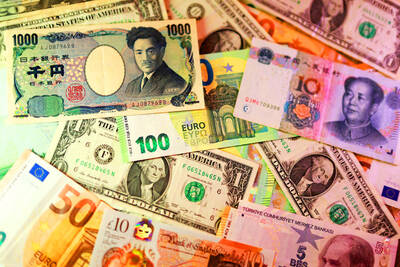
Taiwan’s foreign exchange reserves fell below the US$600 billion mark at the end of last month, with the central bank reporting a total of US$596.89 billion — a decline of US$8.6 billion from February — ending a three-month streak of increases. The central bank attributed the drop to a combination of factors such as outflows by foreign institutional investors, currency fluctuations and its own market interventions. “The large-scale outflows disrupted the balance of supply and demand in the foreign exchange market, prompting the central bank to intervene repeatedly by selling US dollars to stabilize the local currency,” Department of Foreign
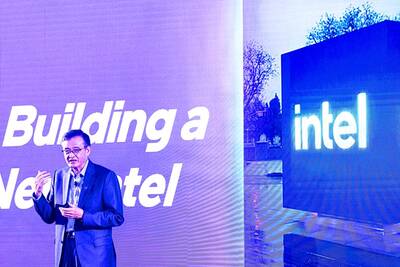
Intel Corp is joining Elon Musk’s long-shot effort to develop semiconductors for Tesla Inc, Space Exploration Technologies Corp and xAI, marking a surprising twist in the chipmaker’s comeback bid. Intel would help the Terafab project “refactor” the technology in a chip factory, the company said on Tuesday in a post on X, Musk’s social media platform. That is a stage in the development process that typically helps make chips more powerful or reliable. The chipmaker’s shares jumped 4.2 percent to US$52.91 in New York trading on Tuesday. The Terafab project is a grand plan by Musk to eventually manufacture his own chips for
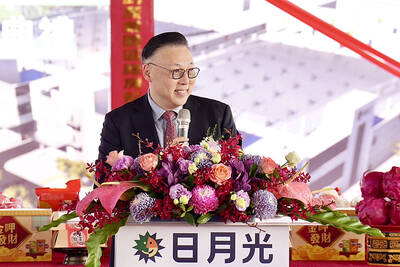
ENERGY ISSUES: The TSIA urged the government to increase natural gas and helium reserves to reduce the impact of the Middle East war on semiconductor supply stability Chip testing and packaging service provider ASE Technology Holding Co (日月光投控) yesterday said it planned to invest more than NT$100 billion (US$3.15 billion) in building a new advanced chip testing facility in Kaohsiung to keep up with customer demand driven by the artificial intelligence (AI) boom. That would be included in the company’s capital expenditure budget next year, ASE said. There is also room to raise this year’s capital spending budget from a record-high US$7 billion estimated three months ago, it added. ASE would have six factories under construction this year, another record-breaking number, ASE chief operating officer Tien Wu

For weeks now, the global tech industry has been waiting for a major artificial intelligence (AI) launch from DeepSeek (深度求索), seen as a benchmark for China’s progress in the fast-moving field. More than a year has passed since the start-up put Chinese AI on the map in early last year with a low-cost chatbot that performed at a similar level to US rivals. However, despite reports and rumors about its imminent release, DeepSeek’s next-generation “V4” model is nowhere in sight. Speculation is also swirling over the geopolitical implications of which computer chips were chosen to train and power the new


 RSS
RSS