


FOORWEAR
Sports Gear seeks listing
Sports Gear Co Ltd (志強國際) is applying for a listing on the nation’s main board, the Taiwan Stock Exchange said yesterday. The Cayman Islands-registered company mainly produces athletic footwear, casual shoes and balls, the exchange said. With a paid-in capital of NT$1.74 billion (US$60.7 million), the company reported earnings per share (EPS) of NT$0.94 in the first three quarters of this year. Its EPS in the past three years were NT$6.02 last year, NT$8.09 in 2018 and NT$12.37 in 2017, the exchange said. Separately, the exchange approved a listing application by Acer Inc (宏碁) subsidiary Weblink International Inc (展碁國際), which provides marketing and membership management software services, it said. The company reported EPS of NT$1.94 in the first three quarters, up 70 percent from the same period last year.
REAL ESTATE
Hiyes revenue soars 15.8%
Hiyes International Co Ltd (海悅國際開發), the nation’s largest housing broker, yesterday reported that revenue last month grew 15.8 percent month-on-month and 40.84 percent year-on-year to NT$439 million, a monthly record for the company. The firm attributed the growth to launches of new housing projects by developers across the nation. It has risen on the tide of a booming market through various strategies, it said. In the first 11 months of the year, cumulative revenue surged 134.34 percent from a year earlier to NT$3.13 billion, the company said.
TECHNOLOGY
Adata revenue grows 8%
Adata Technology Co (威剛科技), the world’s second-largest memory module supplier, yesterday said its revenue last month increased 8.06 percent to NT$3.12 billion from October, benefiting from a steady demand for memory products. On an annual basis, last month’s revenue rose 23.4 percent and hit the second-highest level this year, it said. In the first 11 months, Adata saw revenue total NT$29.28 billion, up 26.43 percent from the same period last year.
ECONOMY
Vouchers expire this month
Nearly 3 percent of people who are eligible to purchase Triple Stimulus Vouchers, have not yet done so, the Ministry of Economic Affairs said on Wednesday, adding that the vouchers can only be used until Dec. 31. The government launched the voucher program on July 15 to encourage consumption amid the COVID-19 pandemic. In a statement, the ministry said that more than 23 million people, or more than 97 percent of those eligible, have bought the vouchers.
FINANCE
Vanguard loses mandate
Vanguard Group Inc lost a mandate to run at least US$590 million in Taiwanese government pension and insurance assets due to its weak performance. Assets managed by Vanguard under an Asia-Pacific mixed index mandate were redeemed prematurely due to long-term underperformance, the Bureau of Labor Funds said on its Web site on Tuesday in its October update. The Vanguard funds returned about 13 percent since inception in August 2016, about half the benchmark’s 26 percent gain, according to the previous month’s statement. With the ouster of Vanguard, New York-based BlackRock Inc is now the main manager of Taiwan’s Asia-Pacific stock mandate, the bureau said. It oversaw more than US$700 million as of Oct. 31, the statements showed.
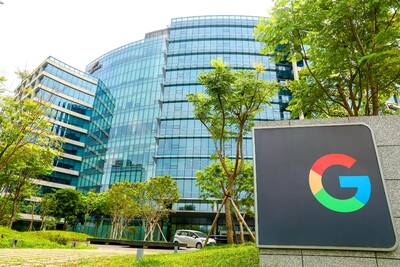
The government yesterday approved applications by Alphabet Inc’s Google to invest NT$27.08 billion (US$859.98 million) in Taiwan, the Ministry of Economic Affairs said in a statement. The Department of Investment Review approved two investments proposed by Google, with much of the funds to be used for data processing and electronic information supply services, as well as inventory procurement businesses in the semiconductor field, the ministry said. It marks the second consecutive year that Google has applied to increase its investment in Taiwan. Google plans to infuse NT$25.34 billion into Charter Investments Ltd (特許投資顧問) through its Singapore-based subsidiary Fructan Holdings Singapore Pte Ltd, and

Micron Technology Inc is a driving force pushing the US Congress to pass legislation that would put new export restrictions on equipment its Chinese competitors use to make their chips, according to people familiar with the matter. A US House of Representatives panel yesterday was to vote on the “MATCH Act,” a bill designed to close gaps in restrictions on chipmaking equipment. It would also pressure foreign companies that sell equipment to Chinese chipmaking facilities to align with export curbs on US companies like Lam Research Corp and Applied Materials Inc. The bill targets facilities operated by China’s ChangXin Memory Technologies Inc

Singapore-based ride-hailing and delivery giant Grab Holdings’ planned acquisition of Foodpanda’s Taiwan operations has yet to enter the formal review stage, as regulators await supplementary documents, the Fair Trade Commission (FTC) said yesterday. Acting FTC Chairman Chen Chih-min (陳志民) told the legislature’s Economics Committee that although Grab submitted its application on March 27, the case has not been officially accepted because required materials remain incomplete. Once the filing is finalized, the FTC would launch a formal probe into the deal, focusing on issues such as cross-shareholding and potential restrictions on market competition, Chen told lawmakers. Grab last month announced that it would acquire

SECOND-RATE: Models distilled from US products do not perform the same as the original and undo measures that ensure the systems are neutral, the US’ cable said The US Department of State has ordered a global push to bring attention to what it said are widespread efforts by Chinese companies, including artificial intelligence (AI) start-up DeepSeek (深度求索), to steal intellectual property from US AI labs, according to a diplomatic cable. The cable, dated Friday and sent to diplomatic and consular posts around the world, instructs diplomatic staff to speak to their foreign counterparts about “concerns over adversaries’ extraction and distillation of US AI models.” Distillation is the process of training smaller AI models using output from larger, more expensive ones to lower the costs of training a powerful new


 RSS
RSS