


CaixaBank SA agreed to take over Bankia SA in a deal that values the state-controlled lender at about 3.8 billion euros (US$4.5 billion) and creates the biggest bank operating in Spain.
Bankia investors would receive 0.6845 shares in CaixaBank for each one they hold in Bankia, the lenders said in separate statements yesterday.
That represents a premium of 20 percent based on Bankia’s share price on Sept. 3, the day before a potential deal was reported.
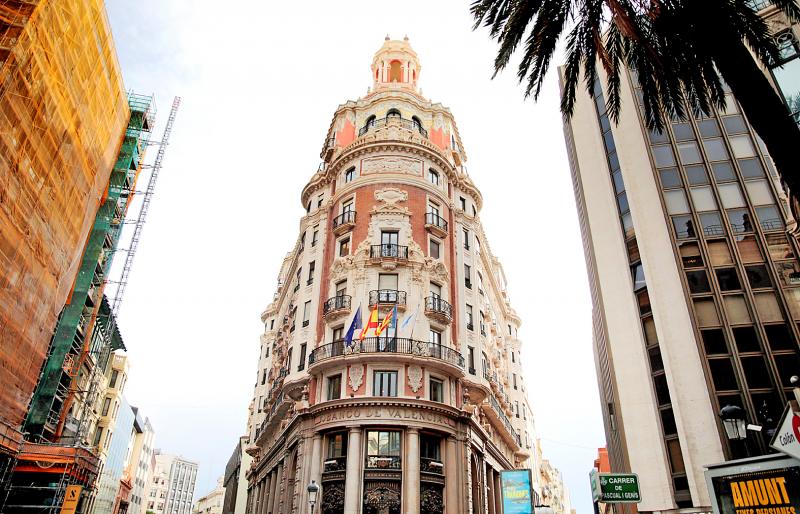
Photo: EPA-EFE
The biggest Spanish banking deal in two decades adds to signs that long-awaited financial industry consolidation in Europe is beginning.
Italy’s Intesa Sanpaolo SA is taking over domestic rival Unione di Banche Italiane SpA to be in a stronger position for cross-border deals, and Spain’s Banco de Sabadell SA is exploring strategic options including a sale or merger, or buying a smaller competitor.
Bankia chairman Jose Ignacio Goirigolzarri would be executive chairman of the combined bank and CaixaBank CEO Gonzalo Gortazar would remain in that role, overseeing a 15-member board.
The acquisition is expected to be approved by the shareholders of the two banks in November, with the merger completing in the first quarter of next year.
“With this operation, we will form the principal Spanish franchise at a moment when it’s more necessary than ever to create entities with a critical size,” Goirigolzarri said in a statement.
Spain’s mostly retail-focused banks have been looking for ways to streamline their businesses as years of low interest rates and now the COVID-19 crisis erode profitability. Spain’s economy has been one of the hardest hit by the pandemic, with its tourism industry especially affected.
The main shareholder in the new entity would be the Caixa Foundation via its holding company Criteria Caixa SA, with a 30 percent stake. The government, which is the majority shareholder in Bankia, would hold a stake of about 16 percent in the combined business.
The Spanish government obtained a majority holding in Bankia in a 2012 rescue aimed at averting a collapse of the country’s financial system. Pulling off a strategic operation that strengthens the banking sector while diluting the state’s ownership in Bankia is a rare bright spot for the government of Spanish Prime Minister Pedro Sanchez.
The accord creates a lender with a combined market value of about 16.8 billion euros, based on Thursday’s share prices. It would be Spain’s biggest bank by loans, assets and deposits, creating economies of scale that might allow it to undercut competitors in prices.
Banco Santander SA and Banco Bilbao Vizcaya Argentaria SA remain the country’s largest by market value, with large operations outside of Spain.
CaixaBank said that it expects the acquisition to generate about 770 million euros of cost synergies per year and annual revenues of about 290 million euros.
Its earnings per share are expected to increase by 28 percent, compared with market estimates for 2022. The combined bank is expected to have a CET1 ratio of 11.6 percent.
Barcelona-based CaixaBank, with a market value of 12.4 billion euros, operates a large insurance unit and asset management business, and has 3,846 branches and more than 35,000 employees in Spain.
Bankia specializes in mortgages, and has 2,267 branches and a workforce of almost 16,000. Its market value is about 4.4 billion euros.

The domestic unit of the Chinese-owned, Dutch-headquartered chipmaker Nexperia BV will soon be able to produce semiconductors locally within China, according to two company sources. Nexperia is at the center of a global tug-of-war over critical semiconductor technology, with a Dutch court in February ordering a probe into alleged mismanagement at the company. The geopolitical tussle has disrupted supply chains, with some carmakers reportedly forced to cut production due to chip shortages. Local production would allow Nexperia’s domestic arm, Nexperia Semiconductors (China) Ltd (安世半導體中國), to bypass restrictions in place since October on the supply of silicon wafers — etched with tiny components to

Singapore-based ride-hailing and delivery giant Grab Holdings Ltd has applied for regulatory approval to acquire the Taiwan operations of Germany-based Delivery Hero SE's Foodpanda in a deal valued at about US$600 million. Grab submitted the filing to the Fair Trade Commission on Friday last week, with the transaction subject to regulatory review and approval, the company said in a statement yesterday. Its independent governance structure would help foster a healthy and competitive market in Taiwan if the deal is approved, Grab said. Grab, which is listed on the NASDAQ, said in the filing that US-based Uber Technologies Inc holds about 13 percent of
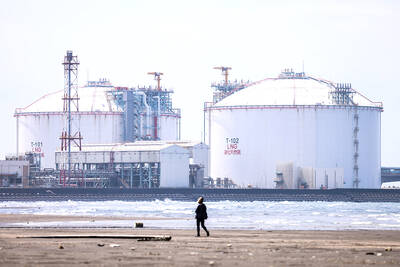
Taiwan is open to joining a global liquefied natural gas (LNG) program if one is created, but on the condition that countries provide delivery even in a scenario where there is a conflict with China, an energy department official said yesterday. While Taiwan’s priority is to have enough LNG at home, the nation is open to exploring potential strategic reserves in other countries such as Japan or South Korea, Energy Administration Deputy Director-General Chen Chung-hsien (陳崇憲) said. While the LNG market does not have a global reserve for emergencies like that of oil, the concept has been raised a few times —
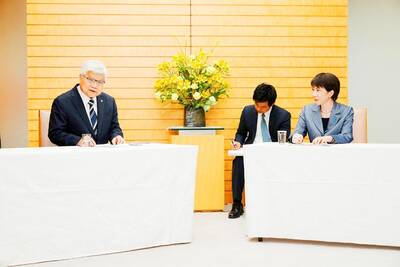
Taiwan Semiconductor Manufacturing Co (TSMC, 台積電) yesterday received government approval to deploy its advanced 3-nanometer (3nm) process at its second fab currently under construction in Japan, the Ministry of Economic Affairs said in a news release. The ministry green-lit the plan for the facility in Kumamoto, which is scheduled to start installing equipment and come online in 2028 with a monthly production capacity of 15,000 12-inch wafers, the ministry said. The Department of Investment Review in June 2024 authorized a US$5.26 billion investment for the facility, slated to manufacture 6- to 12nm chips, significantly less advanced than 3nm process. At a meeting with


 RSS
RSS