


The official manufacturing purchasing managers’ index (PMI) last month tumbled to 47.6, falling at the fastest pace in the survey’s history, as the COVID-19 pandemic diminished economic activity, but biotech and electronics suppliers benefited, the Chung-Hua Institution for Economic Research (CIER, 中華經濟研究院) said yesterday.
Last month’s figure ended six straight months of increases and signaled a substantial deterioration in the health of the nation’s manufacturing sector, with companies unprecedentedly anxious about the future, it said.
PMI readings aim to capture the pulse of manufacturing activity, with values larger than 50 indicating an expansion and those lower than the threshold suggesting a contraction.
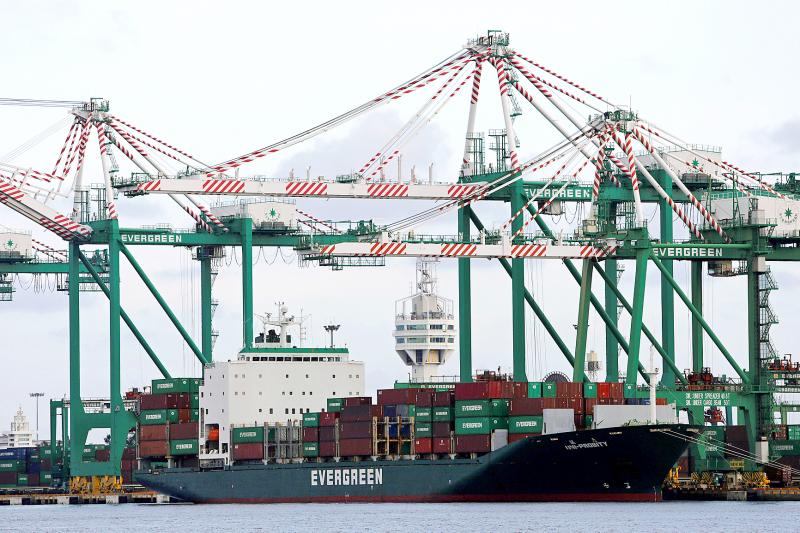
Photo: Tyrone Siu, Reuters
“The industry has emerged from concerns over supply chain disruptions after China resumed manufacturing activity, but fears loom over languid demand, if the eurozone, the US and some Asian markets remain closed to combat the virus,” CIER vice president Wang Jiann-chyuan (王健全) told an online news conference.
Should the pandemic persist in the second half of the year, it would deal a serious blow to Taiwan’s economy, which is heavily dependent on exports of electronics used in smartphones, laptops, tablets and other consumer gadgets.
The sub-index on new business orders shed 13 points to 37.1, while the industrial output gauge lost 9.3 points to 40.2, both slumping at the fastest rate since the survey’s launch in July 2017.
Firms reduced headcounts to cope with business declines, driving the employment measure down another 2.7 points to 46.5, the survey showed.
The sub-index on customers’ inventory rose 7.1 points to an overly high of 50.5, adding pressure to adjustment needs, CIER researcher Chen Shin-hui (陳馨蕙) said.
Fears of supply chain disruptions had prompted clients to build up inventory in previous months, he added.
In the meantime, the reading on delivery time stayed high at 63.8, as travel bans worldwide upset sea and air shipments, Chen said.
Firms’ forecasts are bleak, dragging the six-month outlook to a record low of 25.7, the survey found.
Not all sectors are suffering, as companies involved in the supply of healthcare and electronic products saw strong demand for personal protection equipment, as well as laptops and tablets, to accommodate remote learning and working, Supply Management Institute in Taiwan (中華採購與供應管理協會) executive director Steve Lai (賴樹鑫) said.
Academia Sinica Institute of Economics director Kamhon Kan (簡錦漢) said that the height of the pandemic is likely over in Europe and the US, but nations might not return to normalcy before a vaccine is developed.
“People will keep some degree of social distancing, limiting the pace of economic recovery,” Kan said.
The situation is particularly unfavorable for service-focused companies.
The non-manufacturing PMI floundered low at 42.5 last month, with the six-month outlook printing 17.8.

Poland is betting on a flood of investments and technology transfers from Taiwanese companies to reengineer its US$1 trillion economy. Polish Prime Minister Donald Tusk said yesterday that Poland will no longer be “just an assembly hub” as it pursues further investments from the likes of Foxconn Technology Group (富士康). The firm, whose full name is Hon Hai Precision Industry Co (鴻海精密), last month agreed to build electric vehicles (EVs) in the European Union nation and now could be a partner in a semiconductor venture, he said. The government’s aim is to boost manufacturing and the country’s high-tech chops in an era
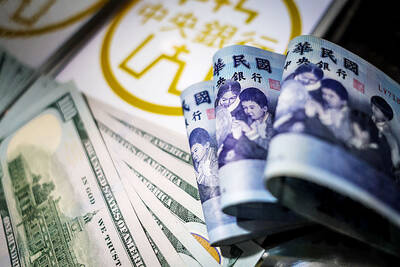
Taiwan remained the sixth-largest net creditor nation in the world last year, despite a fall of more than 10 percent in its net international investment position (NIIP) over the year, the central bank said yesterday. The NIIP is the difference between a country’s external financial assets and its external financial liabilities. Taiwan’s external financial assets hit US$3.27 trillion at the end of last year, up US$275.75 billion or 9.2 percent from a year earlier, the central bank said in its annual NIIP report. The growth largely reflected an increase in holdings of overseas marketable securities by residents in Taiwan, as well as a
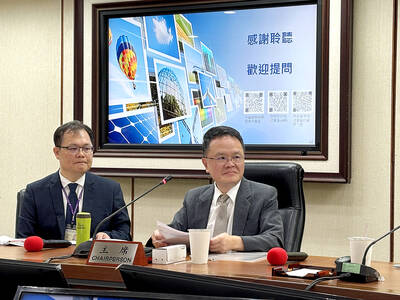
BAD FAITH LITIGATION? The two companies, owned by a California-based private equity firm, could be seeking licensing fees or a settlement payout with the suit Taiwan Intellectual Property Office (TIPO) Director-General Liao Cheng-wei (廖承威) said yesterday he suspected that two firms suing contract chipmaker Taiwan Semiconductor Manufacturing Co (TSMC, 台積電) for patent infringement are “patent trolls.” A patent troll refers to a company that buys patents not for manufacturing products, but to sue other companies for compensation, accusing them of using its patents. Patent trolls, formally called Non-Practicing Entities or Patent Assertion Entities, were responsible for more than 50 percent of lawsuits in the US last year, costing targeted businesses tens of billions of US dollars a year, according to the US-based LegalCharity Web site. Asked whether

RESTRICTION BREACH: ASML said that it denies ‘unfounded rumors regarding non-compliance with export controls concerning China,’ and enforces controls strictly US Secretary of Commerce Howard Lutnick in a series of recent meetings outlined concerns to Dutch chip-equipment giant ASML Holding NV’s senior leaders that one of its top-of-the-line machines might have made its way into China, in violation of US-led export restrictions. In the meetings, Lutnick expressed concern to ASML executives over the company’s extreme ultraviolet lithography (EUV) machines, people familiar with the talks said. EUV systems are used by firms such as Taiwan Semiconductor Manufacturing Co (台積電) to manufacture processors for the likes of Nvidia Corp and Apple Inc. ASML has never been allowed to ship them to China because of curbs


 RSS
RSS