


The New Taiwan dollar on Friday gained against the US dollar, rising NT$0.049 to close at NT$30.103, an increase of 0.68 percent from NT$30.308 a week earlier.
Turnover totaled US$638 million during the trading session.
The greenback opened at the day’s high of NT$30.130 and moved to a low of NT$30.055 before rebounding.
Elsewhere on Friday, the US dollar was on course for a weekly loss as the US Federal Reserve’s massive new lending program for small companies and signs of a slowdown in COVID-19 infections reduced safe-haven demand.
The British pound pulled ahead against the US dollar and the euro as markets breathed a sigh of relief after British Prime Minister Boris Johnson left intensive care following his hospitalization for COVID-19 symptoms.
Oil-producing countries’ currencies also held onto gains against the US currency, but the outlook was uncertain due to doubts that a deal between OPEC and its allies for a record oil supply cut would be enough to offset the collapse in global fuel demand.
Risk sentiment steadily improved this week on tentative signs that the COVID-19 pandemic is slowing in US and European hot spots, but some analysts remain cautious given that so little is known about the virus and as many nations continue to grapple with the massive economic damage caused by the outbreak.
“The Fed has taken a lot of different measures, but the end result is a large increase in the supply of dollars,” IG Securities Ltd senior foreign exchange strategist Junichi Ishikawa said in Tokyo.
“Positive news about the virus reduces the kind of panicked repatriation into [US] dollars that we saw earlier this year. The end result is gradual [US] dollar weakness,” Ishikawa said.
Against the euro, the US dollar last stood at US$1.0941, on course for a 1.3 percent weekly decline.
The US dollar traded at 0.9657 Swiss francs, down 1.1 percent for the week.
Trading was largely subdued in Asian hours as financial markets in Australia, Hong Kong, Singapore, Britain and the US were closed for Good Friday.
The Fed on Thursday announced a US$2.3 trillion program to offer loans to local governments and small and medium-sized businesses, the latest step to backstop the US economy as the country battles the coronavirus crisis.
The Fed has also slashed interest rates to zero, restarted quantitative easing and increased US dollar liquidity to combat a shortage in money markets, leaving the greenback in the grip of bears in the spot market.
New York, the US state most afflicted by the coronavirus, offered fresh evidence that the arc of the disease caused by the virus was flattening.
The greenback last traded at ¥108.41, unchanged for the week as concern about an increase in coronavirus infections and the declaration of a state of emergency in Japan offset US dollar selling.
In China, the yuan headed for a 0.8 percent weekly gain against the US dollar as China continues to report a decline in new coronavirus cases.
The Australian dollar, which is highly sensitive to risk sentiment because of Australia’s dependence on China and the global commodities trade, jumped by 6 percent against the greenback this week, highlighting easing stress in global markets.
The pound held steady at US$1.2465 and headed for a 1.6 percent gain this week. Against the euro, sterling was on course for its third consecutive weekly gain.
Johnson on Sunday last week became the first world leader to be hospitalized for persistent symptoms of COVID-19. This initially raised concerns about a leadership vacuum, but his condition has gradually improved.
The Canadian dollar, the Norwegian crown and the Russian ruble were all higher against the US dollar for the week, but further gains are in doubt.
Taiwan Semiconductor Manufacturing Co (TSMC, 台積電) yesterday reported record revenue of NT$416.975 billion (US$13.17 billion) for last month, putting the world’s largest contract chipmaker on track to set a record for quarterly revenue. Last month’s figure surpassed March’s record NT$415.19 billion and represented increases of 1.5 percent from April and 30.1 percent from a year earlier. For the first five months of the year, TSMC generated NT$1.96 trillion in revenue, up 30 percent year-on-year, it said in a statement. TSMC has forecast second-quarter revenue of between US$39 billion and US$40.2 billion, representing sequential growth of about 10 percent and year-on-year growth of about

Infineon Technologies AG is preparing to open its largest single investment, a 5 billion euro (US$5.8 billion) semiconductor factory built with the help of EU subsidies, as the bloc seeks to boost chip production. The power chip fab, which is an extension of the German company’s Dresden campus, is scheduled to open on July 2, Infineon chief operating officer Alexander Gorski said this week at the site. The project is a major recipient of EU Chips Act funds, receiving about 1 billion euros in subsidies. The new plant represents a rare success for the bloc’s flagship semiconductor law, which was drawn up during
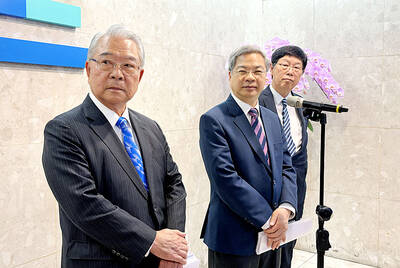
PATENT PROBE: US lawmakers called for a ban on imports of chips made by TSMC if they are found to infringe on US patents, with a preliminary ruling expected soon Minister of Economic Affairs Kung Ming-hsin (龔明鑫) yesterday expressed confidence in Taiwan Semiconductor Manufacturing Co’s (TSMC, 台積電) compliance with patent regulations after reports linked the company to a patent infringement lawsuit in the US. US Representative Ryan Zinke, and US senators Tim Sheehy, Roger Marshall and Bernie Moreno urged the US International Trade Commission in a May 22 letter to ban imports of chips made by TSMC if they are found to infringe on US patents, Axios reported on Wednesday. An administrative law judge is expected to issue a preliminary ruling this month, with the commission potentially making a final decision in
Taiwan remained the sixth-largest net creditor nation in the world last year, despite a fall of more than 10 percent in its net international investment position (NIIP) over the year, the central bank said yesterday. The NIIP is the difference between a country’s external financial assets and its external financial liabilities. Taiwan’s external financial assets hit US$3.27 trillion at the end of last year, up US$275.75 billion or 9.2 percent from a year earlier, the central bank said in its annual NIIP report. The growth largely reflected an increase in holdings of overseas marketable securities by residents in Taiwan, as well as a


 RSS
RSS