


A total of 3,245 employees in the nation’s financial sector were told to work from home for two weeks beginning yesterday as companies took precautionary measures against the spread of COVID-19.
The move came after health authorities urged people who visited one of 11 tourist spots over the Tomb Sweeping Day long weekend to self-quarantine for 14 days, work from home if possible, wear masks and practice social distancing to avoid possible further infection.
On Sunday, some financial firms asked employees who visited the 11 sites over the four-day weekend to work from home for the next 10 working days.
Fubon Financial Holding Co (富邦金控) said 1,100 of its employees began working from home yesterday, Cathay Financial Holding Co (國泰金控) said 1,200 of its staff began teleworking, CTBC Financial Holding Co (中信金控) said 500 of its employees were working remotely and China Development Financial Holding Corp (中華開發金控) said 330 of its employees were doing so, too.
Nan Shan Life Insurance Co (南山人壽) said that 115 of its employees who visited the tourist spots, or whose family members did so, began telecommuting from yesterday.
The 11 spots were those cited by the Central Epidemic Command Center (CECC) in text messages it sent on Saturday, including Kenting (墾丁) and Hengchun Old Street (恆春老街) in Pingtung County; Dongdamen Night Market (東大門夜市) in Hualien County; Guanzihling (關子嶺) in Tainan; and the Alishan National Scenic Area.
Those working offsite would be paid normally, even those who worked in bank branches, the companies said.
“Employees at the bank branches would be required to stay at home and offer virtual assistance if needed,” CTBC Financial said in a release. “Almost all of the work can be done from home, so we are not worried that this will affect our operations.”
“For example, salespeople can introduce policies by telephone or via messaging apps,” Cathay Life Insurance Co (國泰人壽) spokesman Lin Chao-ting (林昭廷) said by telephone.
China Development Financial said it would consider punishing employees who lied about whether they had been to the tourist spots, even dismissing them.

Cairo’s new monorail slices across the city skyline, running above the familiar chaos of blaring horns and aging buses’ exhaust fumes that mark rush hour below. The US$4.5 billion monorail, opened this month, is among Egypt’s most prominent new transport projects, part of a debt-funded infrastructure drive criticized for sapping state finances while bringing limited benefits to most of the country’s 109 million people. “It feels like you’re in a different country,” said Ramy Sayed, a restaurant manager, aboard a driverless Innovia 300 train. “No noise, no traffic, we’re not used to this.” The eastern line runs 56km from the bustling middle-class
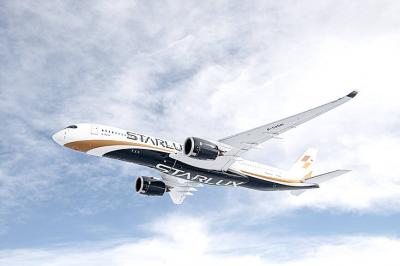
Starlux Airlines Co (星宇航空) today unveiled a long-haul network expansion plan at a shareholders’ meeting in Taipei, including direct flights to Barcelona, Spain, and Zurich, Switzerland, as well as a service connecting Taipei, Sydney and New Zealand. Starlux is to become the first Taiwanese carrier to offer non-stop services to the two European cities, while the inaugural oceanic route is expected to expand transit opportunities within the Australia-New Zealand market, Starlux said. Flight services to Chicago, Dallas, Washington and New York are under evaluation, the airline added. Prior to the shareholders’ meeting, the airline earlier this year announced that it would be

Taiwanese prosecutors suspect that three people successfully smuggled at least one shipment of Nvidia Corp artificial intelligence (AI) chips to China after first exporting them to Japan, people familiar with the matter said. The trio was detained last week by the Keelung District Prosecutors’ Office for allegedly falsifying documents related to exports of Super Micro Computer Inc servers containing advanced Nvidia chips, which the US has barred from sale to China without a license from Washington. The move marked Taiwan’s first public crackdown on AI chip diversion after years of pressure from the US to take a more active role in curtailing
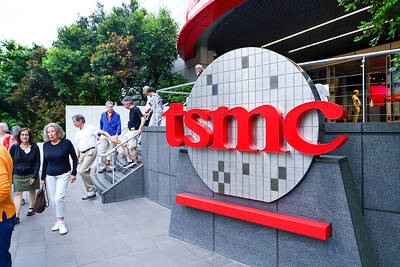
Taiwan Semiconductor Manufacturing Co (TSMC, 台積電) employee bonuses are likely to grow more than 30 percent this year, in line with the past few years as the company’s profits continue to set new records, an anonymous source cited TSMC chairman C.C. Wei (魏哲家) as saying yesterday. TSMC, the world’s largest contract chipmaker, is committed to taking care of its workers, the source said, citing Wei’s meeting with employees yesterday morning. Wei also expressed gratitude to employees for their contribution to the company’s improving bottom line, the source added. Since 2023, TSMC’s employee bonuses have grown at an annual rate of


 RSS
RSS