


Taipei 101, one of the nation’s leading shopping centers, is planning to reduce its business hours due to decreased demand amid the COVID-19 pandemic.
Taipei 101 is to open daily at noon and close at 9pm from April 6, building management said in a statement on Monday.
The shopping center has been opening at 11am and closing at 9:30pm from Sunday to Thursday, while closing at 10pm on Friday and Saturday.
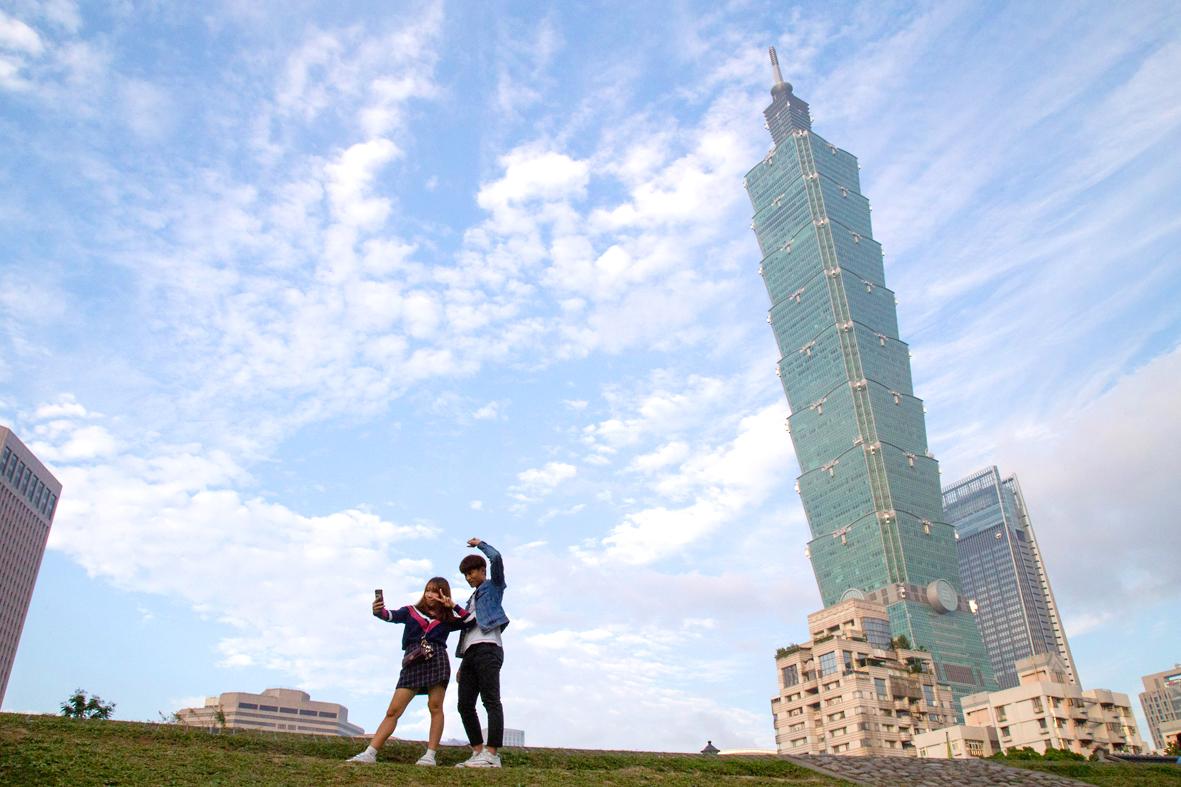
Photo: Bloomberg
The restaurants in the food court — on the basement level — would adjust their business hours as necessary, but the supermarket would continue to open at 9am daily, management said.
The shopping mall is the nation’s first to cut back operations due to the pandemic, which has heavily affected business in Taipei’s Xinyi District (信義).
Taipei 101 has since February implemented measures to prevent the spread of the coronavirus, such as checking the temperature of shoppers and denying entry to those with a reading of 37.5°C or higher.
Management said that it has improved the building’s ventilation system and more frequently disinfects elevators, escalators and restrooms.
The new business hours would allow mall enterprises and brand stores to spread out employee shifts to lower the risk of COVID-19 infection, management said.
Meanwhile, other major shopping centers, such as the Far Eastern Sogo Department Store (遠東Sogo百貨) chain, the Shin Kong Mitsukoshi Department Store (新光三越百貨) chain and the Breeze Group (微風集團), said that they have no plans to reduce their business hours.
Separately, 17 Michelin-starred restaurants in Taipei that earlier this year were found to have breached sanitary regulations have all passed a second inspection, the city’s Department of Health said on Monday.
The department inspected 51 Michelin-starred restaurants in Taipei from January to March, and found that 17 of the restaurants had contravened sanitary regulations, the department said in a statement.
Inspectors found dirty equipment or ingredients on the floor, while some restaurants failed to provide the results of employee health examinations, the department said.
A second inspection showed that the offending conditions had been corrected, it said.
The restaurants with offenses were Golden Formosa (金蓬萊遵古台菜), The Restaurant (三二行館), Indulge Bistro (實驗創新餐酒館), Leputing (樂埔町), RAW, Nihonryori RyuGin (祥雲龍吟), Le Palais (頤宮中餐廳), Chi Chia Chuang (雞家莊), Tainan Tan Tsu Mien Seafood Restaurant (台南擔仔麵海鮮餐廳), Sushi Ryu (隆鮨), JE Kitchen, Sushi Amamoto (鮨天本), Shing Peng Lai (興蓬萊), Tairroir (態芮), Tien Yuan Seafood (田園海鮮), Yu Kapo (彧割烹) and Peng Lai (蓬萊), the statement said.

Cairo’s new monorail slices across the city skyline, running above the familiar chaos of blaring horns and aging buses’ exhaust fumes that mark rush hour below. The US$4.5 billion monorail, opened this month, is among Egypt’s most prominent new transport projects, part of a debt-funded infrastructure drive criticized for sapping state finances while bringing limited benefits to most of the country’s 109 million people. “It feels like you’re in a different country,” said Ramy Sayed, a restaurant manager, aboard a driverless Innovia 300 train. “No noise, no traffic, we’re not used to this.” The eastern line runs 56km from the bustling middle-class
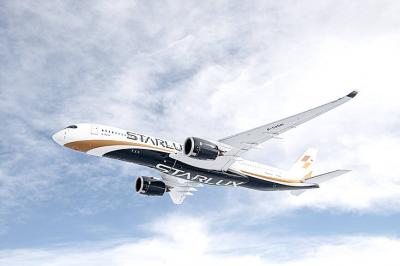
Starlux Airlines Co (星宇航空) today unveiled a long-haul network expansion plan at a shareholders’ meeting in Taipei, including direct flights to Barcelona, Spain, and Zurich, Switzerland, as well as a service connecting Taipei, Sydney and New Zealand. Starlux is to become the first Taiwanese carrier to offer non-stop services to the two European cities, while the inaugural oceanic route is expected to expand transit opportunities within the Australia-New Zealand market, Starlux said. Flight services to Chicago, Dallas, Washington and New York are under evaluation, the airline added. Prior to the shareholders’ meeting, the airline earlier this year announced that it would be

Taiwanese prosecutors suspect that three people successfully smuggled at least one shipment of Nvidia Corp artificial intelligence (AI) chips to China after first exporting them to Japan, people familiar with the matter said. The trio was detained last week by the Keelung District Prosecutors’ Office for allegedly falsifying documents related to exports of Super Micro Computer Inc servers containing advanced Nvidia chips, which the US has barred from sale to China without a license from Washington. The move marked Taiwan’s first public crackdown on AI chip diversion after years of pressure from the US to take a more active role in curtailing
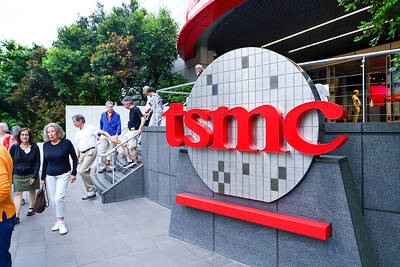
Taiwan Semiconductor Manufacturing Co (TSMC, 台積電) employee bonuses are likely to grow more than 30 percent this year, in line with the past few years as the company’s profits continue to set new records, an anonymous source cited TSMC chairman C.C. Wei (魏哲家) as saying yesterday. TSMC, the world’s largest contract chipmaker, is committed to taking care of its workers, the source said, citing Wei’s meeting with employees yesterday morning. Wei also expressed gratitude to employees for their contribution to the company’s improving bottom line, the source added. Since 2023, TSMC’s employee bonuses have grown at an annual rate of


 RSS
RSS