


FocalTech Systems Co (敦泰電子), which designs driver and touch controller ICs used in flat panels, yesterday said net income grew last quarter for a second consecutive quarter, thanks to rebounding market share and strong demand for integrated driver and controller (IDC) chips.
The company said it expected to further recoup lost market share this quarter as customers are increasing the adoption of its IDC chips for mobile phones.
IDC chips contributed 50 percent to the company’s overall revenue last quarter.
However, FocalTech said it is conservative about its business this quarter in light of the COVID-19 outbreak in China and a low-season effect for the smartphone industry.
“This adds great uncertainties to our smartphone business. Therefore, we are conservative about our business in the first quarter,” FocalTech chairman Genda Hu (胡正大) said in a statement.
The company reported that net income for last quarter plummeted 30 percent to NT$51 million (US$1.7 million), from NT$73 million in the previous quarter, with earnings per share declining from NT$0.29 to NT$0.2. It reported losses per share of NT$2.65 billion a year earlier.
Revenue expanded 9 percent quarterly and 37 percent annually to NT$2.81 billion last quarter, as the company increased the number of wafer suppliers to avoid the supply constraints incurred in 2018 and 2017.
Gross margin fell to 20.04 percent last quarter, from 23.18 percent in the previous quarter, due to intensive price competition for IDC chips, FocalTech said, adding that on an annual basis, gross margin improved from minus-8.35 percent.
The company said gross margin would improve gradually this year, buoyed by increasing adoption of next-generation IDC chips.
Last year as a whole, FocalTech posted a net loss of NT$206 million, compared with a net loss of NT$2.49 billion in 2018 and the third consecutive year of losses, which the company attributed to a wafer shortage.
Revenue slipped 8 percent to NT$9.16 billion last year from 2018, it said.

SECOND-RATE: Models distilled from US products do not perform the same as the original and undo measures that ensure the systems are neutral, the US’ cable said The US Department of State has ordered a global push to bring attention to what it said are widespread efforts by Chinese companies, including artificial intelligence (AI) start-up DeepSeek (深度求索), to steal intellectual property from US AI labs, according to a diplomatic cable. The cable, dated Friday and sent to diplomatic and consular posts around the world, instructs diplomatic staff to speak to their foreign counterparts about “concerns over adversaries’ extraction and distillation of US AI models.” Distillation is the process of training smaller AI models using output from larger, more expensive ones to lower the costs of training a powerful new

Micron Technology Inc is a driving force pushing the US Congress to pass legislation that would put new export restrictions on equipment its Chinese competitors use to make their chips, according to people familiar with the matter. A US House of Representatives panel yesterday was to vote on the “MATCH Act,” a bill designed to close gaps in restrictions on chipmaking equipment. It would also pressure foreign companies that sell equipment to Chinese chipmaking facilities to align with export curbs on US companies like Lam Research Corp and Applied Materials Inc. The bill targets facilities operated by China’s ChangXin Memory Technologies Inc

Singapore-based ride-hailing and delivery giant Grab Holdings’ planned acquisition of Foodpanda’s Taiwan operations has yet to enter the formal review stage, as regulators await supplementary documents, the Fair Trade Commission (FTC) said yesterday. Acting FTC Chairman Chen Chih-min (陳志民) told the legislature’s Economics Committee that although Grab submitted its application on March 27, the case has not been officially accepted because required materials remain incomplete. Once the filing is finalized, the FTC would launch a formal probe into the deal, focusing on issues such as cross-shareholding and potential restrictions on market competition, Chen told lawmakers. Grab last month announced that it would acquire
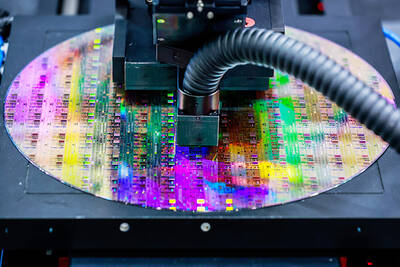
The artificial intelligence (AI) boom has triggered a seismic reshuffling of global equity markets, with Taiwan and South Korea muscling past European nations one by one. With its stock market now valued at nearly US$4.3 trillion, Taiwan surpassed the UK, Europe’s biggest market, earlier this month, data compiled by Bloomberg showed. South Korea is about US$140 billion away from doing the same. The tech-heavy Asian markets have shot past Germany and France in the past seven months. The shift is largely down to massive gains in shares of three companies that provide essential hardware for AI: Taiwan Semiconductor Manufacturing Co (TSMC, 台積電),


 RSS
RSS