


Zimbabweans are relying on Tesla Inc to help them pay their bills.
Amid power outages of as long as 18 hours a day, Econet Wireless Ltd, Zimbabwe’s biggest mobile-phone operator, is turning to the Palo Alto, California-based automaker and storable-energy company for batteries that can keep its base stations running.
The southern African country faces chronic shortages of physical cash, so almost all transactions are done digitally, and many via mobile phones.
“Telecommunications have become the lifeblood of the economy,” said Norman Moyo, the chief executive of Distributed Power Africa, which installs the batteries for Econet. “If the telecom network is down in Zimbabwe, you can’t do any transactions.”
The installation of 520 Powerwall batteries, with two going into each base station, is the largest telecommunications project in which Tesla has participated to date, Moyo said.
With Econet having about 1,300 base stations in the country and two other mobile-phone companies operating there, Distributed Power intends to install more batteries and could eventually roll the project out to other power-starved countries in Africa, such as Zambia, Lesotho and the Democratic Republic of the Congo, he said.
Base stations in Zimbabwe often use diesel generators as backup, but fuel is also scarce in the country.
The Powerwalls, which cost US$6,500 each, will step in when solar panels are not generating enough electricity at night or when it is heavily overcast.
The lithium-ion batteries, which are charged by the sun, can power a station for as long as 10 hours, Econet said.
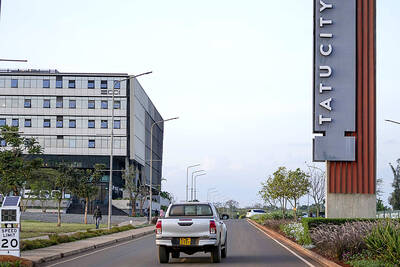
To many, Tatu City on the outskirts of Nairobi looks like a success. The first city entirely built by a private company to be operational in east Africa, with about 25,000 people living and working there, it accounts for about two-thirds of all foreign investment in Kenya. Its low-tax status has attracted more than 100 businesses including Heineken, coffee brand Dormans, and the biggest call-center and cold-chain transport firms in the region. However, to some local politicians, Tatu City has looked more like a target for extortion. A parade of governors have demanded land worth millions of dollars in exchange

An Indonesian animated movie is smashing regional box office records and could be set for wider success as it prepares to open beyond the Southeast Asian archipelago’s silver screens. Jumbo — a film based on the adventures of main character, Don, a large orphaned Indonesian boy facing bullying at school — last month became the highest-grossing Southeast Asian animated film, raking in more than US$8 million. Released at the end of March to coincide with the Eid holidays after the Islamic fasting month of Ramadan, the movie has hit 8 million ticket sales, the third-highest in Indonesian cinema history, Film
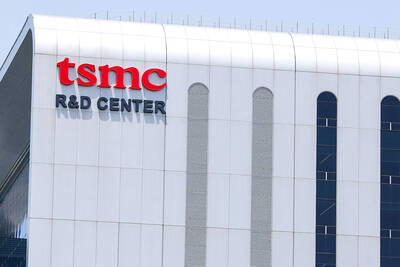
BIG BUCKS: Chairman Wei is expected to receive NT$34.12 million on a proposed NT$5 cash dividend plan, while the National Development Fund would get NT$8.27 billion Taiwan Semiconductor Manufacturing Co (TSMC, 台積電), the world’s largest contract chipmaker, yesterday announced that its board of directors approved US$15.25 billion in capital appropriations for long-term expansion to meet growing demand. The funds are to be used for installing advanced technology and packaging capacity, expanding mature and specialty technology, and constructing fabs with facility systems, TSMC said in a statement. The board also approved a proposal to distribute a NT$5 cash dividend per share, based on first-quarter earnings per share of NT$13.94, it said. That surpasses the NT$4.50 dividend for the fourth quarter of last year. TSMC has said that while it is eager

‘IMMENSE SWAY’: The top 50 companies, based on market cap, shape everything from technology to consumer trends, advisory firm Visual Capitalist said Taiwan Semiconductor Manufacturing Co (TSMC, 台積電) was ranked the 10th-most valuable company globally this year, market information advisory firm Visual Capitalist said. TSMC sat on a market cap of about US$915 billion as of Monday last week, making it the 10th-most valuable company in the world and No. 1 in Asia, the publisher said in its “50 Most Valuable Companies in the World” list. Visual Capitalist described TSMC as the world’s largest dedicated semiconductor foundry operator that rolls out chips for major tech names such as US consumer electronics brand Apple Inc, and artificial intelligence (AI) chip designers Nvidia Corp and Advanced


 RSS
RSS