


The Tainan City Government wants to use “secret diners” to provide feedback on service at English-friendly eateries in the city this summer, the Tainan Office of English as the Second Official Language (OEASOL) said yesterday.
Under the program to be launched next month, 100 foreign nationals living in Taiwan would be given NT$2,000 each to fund their meals at Tainan restaurants and then report back to the city government with their impressions and suggestions, OEASOL Director Lee Hsien-wei (李賢衛) said.
The feedback should cover the restaurants’ bilingual language service, menus and brochures, Lee said.
Registration for the program is to open next month, with the assessments to be conducted from next month through the end of August, OEASOL Deputy Director Sabrina Tien (田玲瑚) said.
Building on a previous initiative to help the city’s businesses foster English-friendly environments, OEASOL is shifting its focus to help with marketing efforts, Lee said.
This includes helping distribute restaurants’ bilingual coupons and vouchers to foreign students in Tainan to promote local food, he said.
The three-year-old OEASOL has been striving to “provide English resources to both foreigners and citizens, and to establish an environment that is friendly to both English speakers and English learners,” the office says on its Web site.
With OEASOL’s efforts, Tainan now has more than 500 English-friendly shops, and the office also helps correct inaccurate or confusing translations in shops and restaurants, Lee said.
As an example of the problems encountered on English-language menus, an American who attended college in the city said that one eatery translated its chicken nuggets as “McDonald’s best friend,” while another translated the name for a vegetable dish as “I can’t find it on Google, but it is delicious.”
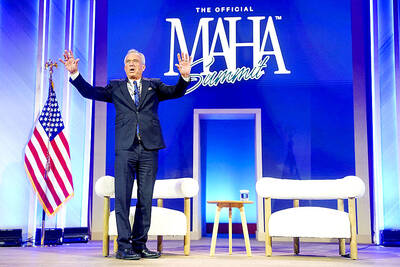
Sweeping policy changes under US Secretary of Health and Human Services Robert F. Kennedy Jr are having a chilling effect on vaccine makers as anti-vaccine rhetoric has turned into concrete changes in inoculation schedules and recommendations, investors and executives said. The administration of US President Donald Trump has in the past year upended vaccine recommendations, with the country last month ending its longstanding guidance that all children receive inoculations against flu, hepatitis A and other diseases. The unprecedented changes have led to diminished vaccine usage, hurt the investment case for some biotechs, and created a drag that would likely dent revenues and

Macronix International Co (旺宏), the world’s biggest NOR flash memory supplier, yesterday said it would spend NT$22 billion (US$699.1 million) on capacity expansion this year to increase its production of mid-to-low-density memory chips as the world’s major memorychip suppliers are phasing out the market. The company said its planned capital expenditures are about 11 times higher than the NT$1.8 billion it spent on new facilities and equipment last year. A majority of this year’s outlay would be allocated to step up capacity of multi-level cell (MLC) NAND flash memory chips, which are used in embedded multimedia cards (eMMC), a managed
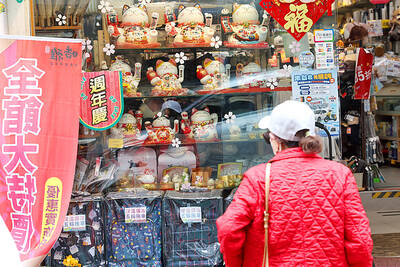
CULPRITS: Factors that affected the slip included falling global crude oil prices, wait-and-see consumer attitudes due to US tariffs and a different Lunar New Year holiday schedule Taiwan’s retail sales ended a nine-year growth streak last year, slipping 0.2 percent from a year earlier as uncertainty over US tariff policies affected demand for durable goods, data released on Friday by the Ministry of Economic Affairs showed. Last year’s retail sales totaled NT$4.84 trillion (US$153.27 billion), down about NT$9.5 billion, or 0.2 percent, from 2024. Despite the decline, the figure was still the second-highest annual sales total on record. Ministry statistics department deputy head Chen Yu-fang (陳玉芳) said sales of cars, motorcycles and related products, which accounted for 17.4 percent of total retail rales last year, fell NT$68.1 billion, or

In the wake of strong global demand for AI applications, Taiwan’s export-oriented economy accelerated with the composite index of economic indicators flashing the first “red” light in December for one year, indicating the economy is in booming mode, the National Development Council (NDC) said yesterday. Moreover, the index of leading indicators, which gauges the potential state of the economy over the next six months, also moved higher in December amid growing optimism over the outlook, the NDC said. In December, the index of economic indicators rose one point from a month earlier to 38, at the lower end of the “red” light.


 RSS
RSS