


Taipei’s Ximending (西門町) commercial district is to see new hotels in the coming years as developers and government agencies join forces to turn old buildings into lodging facilities and retail space.
“More hotels are to enter the district, which has gained popularity among young individual travelers due to relatively affordable room rates and government efforts to revive this part of the city,” Sinyi Global Management Co (信義全球資產) manager Michael Wang (王維宏) said by telephone.
The district refers to areas west of Taipei Railway Station and in the vicinity of Taipei’s Ximen MRT Station, Wang said.
Kee Tai Properties Co (基泰建設) is constructing a mixed-use building on Zhongxiao E Road with partial floors to be set aside as hotel space while the Taipei Post Office at the intersection of Boai Road and Zhongxiao W Road is seeking partners to turn its building into a complex with a hotel and creative retail space.
Image Taiwan Hotel Group (印象台灣飯店集團) has inked a deal with Taiwan Life Insurance Co (台灣人壽保險) to turn an old office building into a hotel.
Urban renewal projects drive the entry of new hotels, since the district is not fit for the development of residential complexes, Wang said, adding that office buildings might go through drastic changes amid a digitalization trend.
Huang Hsiang Construction Co (皇翔建設) has teamed up with Marriott International Inc to open a new hotel under the Renaissance brand on the former site of the Taipei Bus Station.
With the field growing increasingly competitive, tourism authorities are seeking to help by asking local hotels to support the nation’s own hotel rating system to boost their appeal.
The nation in 2009 adopted its own hotel rating system modeled after the AAA system in the US and about 500 lodging facilities have come on board since then.
The system aims to serve as a travel guide and help quality hotels attract guests, Tourism Bureau officials said, adding that the bureau’s policy goal this year is to expand membership and win international recognition.
Toward that end, the bureau is working with major travel agencies, such as Lion Travel Service Co (雄獅旅行社) and Star Travel Corp (燦星旅遊), as well as Taiwanese credit card issuers to promote visits to different parts of the nation.
The bureau has relied mainly on celebrities to promote the rating system and opted for a strategy change this year to boost efficiency, officials said.
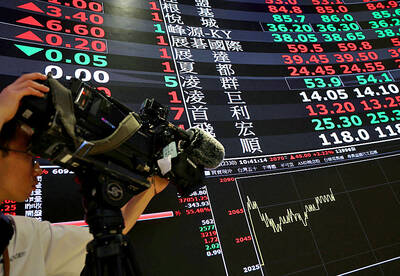
After several years flying high as Asia’s best Nvidia Corp proxy, Taiwan Semiconductor Manufacturing Co (TSMC, 台積電) is increasingly vying with other artificial intelligence (AI) stocks for investor attention. Stock traders are chasing a wider array of beneficiaries as mainstream usage of AI creates demand for hardware beyond the most-advanced chips TSMC makes for Nvidia. Subthemes from the deepening memory crunch to advances in robotics are also luring bids. At the same time, investment caps on single stocks are pushing funds to diversify, while retail investors long familiar with TSMC through its US depositary receipts are being offered a broader set of
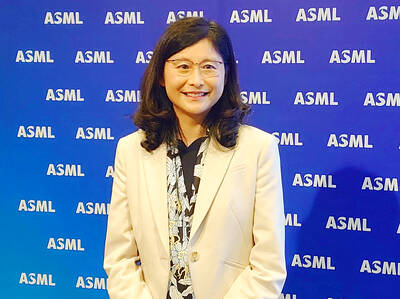
Netherlands-based semiconductor equipment supplier ASML Holding NV yesterday said that it is planning to hire an additional 1,000 people in Taiwan this year in response to growing demand from clients. ASML had previously planned to recruit 600 people this year, but that the plan has been adjusted upward, ASML vice president and ASML Taiwan general manager Grace Wang (汪佳慧) told reporters. ASML has a workforce of more than 4,500 in Taiwan, accounting for about 10 percent of its global total, Wang said. This year’s recruitment campaign would focus on adding people in the customer support, manufacturing and supply chain domains to assist ASML

UNDER MICROSCOPE: Taiwan detained three people who allegedly conspired to buy servers in Taiwan and export them using fraudulent documentation, prosecutors said Nvidia Corp chief executive officer Jensen Huang (黃仁勳) on Saturday urged Super Micro Computer Inc to tighten up on compliance after Taiwan detained three people this week for allegedly making fraudulent declarations about artificial intelligence (AI) servers made by its US partner. The development marked the nation’s first crackdown on semiconductor smuggling, which grew after the US slapped restrictions on exports of high-end chips such as Nvidia AI accelerators to China. Nvidia is “rigorous” in explaining regulations to all of its partners, Huang told reporters after arriving in Taipei. “Ultimately Super Micro has to run their own company,” he said in response to
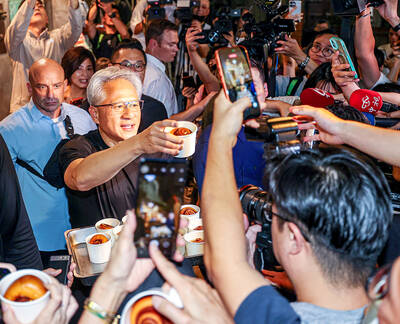
Nvidia Corp yesterday announced that CEO Jensen Huang (黃仁勳) would attend an employee meeting in Taipei tomorrow to celebrate the launch of the company’s Taiwan headquarters project. Huang would attend a gathering at the site of Nvidia’s planned headquarters in Beitou Shilin Technology Park (北投士林科技園區), the company said in a statement. After arriving in Taiwan on Saturday last week, Huang told reporters that he plans to meet with Quanta Computer Inc (廣達) chairman Barry Lam (林百里) and Taiwan Semiconductor Manufacturing Co (TSMC, 台積電) chairman C.C. Wei (魏哲家), and would attend the groundbreaking ceremony for Nvidia’s Taiwan headquarters tomorrow. Nvidia has not yet applied


 RSS
RSS