


The Financial Supervisory Commission yesterday fined Union Insurance Co (旺旺友聯) a total of NT$4.8 million (US$151,324) for three infractions, including failure to comply with anti-money laundering regulations.
The commission said that Union Insurance did not have adequate internal controls in place, which would make it difficult for the company to detect money laundering activities, for which it was fined NT$1.2 million.
“Typically, life insurers are more vulnerable to money laundering activities, through methods such as canceling or altering the terms of a large volume of life insurance policies, or by changing the products’ beneficiaries,” Insurance Bureau Deputy Director-General Shih Chiung-hwa (施瓊華) told a press conference.
Union Insurance was also fined NT$3 million for engaging in unfair price competition and NT$600,000 for failing to fulfill payouts to reimburse alternative transportation expenditures as stipulated in its auto insurance products, the commission said.
In related news, the commission said that Nan Shan Life Insurance Co (南山人壽) had violated the Personal Information Protection Act (個人資料保護法) after the firm leaked more than 100 clients’ data.
“We have begun investigating the insurer to find out whether the leak was caused by inadequate internal controls,” Shih said.
“Our initial findings suggest that the mishap was caused by a computer system glitch or bad database management, which occurred as the company sent out routine policy renewal offers,” Shih added.
The insurer may be fined between NT$600,000 and NT$6 million depending on the severity of the internal control lapses, Shih said.
She said that the data leak was partial and that customers’ names were matched to critical account information or national identification numbers.
The commission was tipped off about the violation by the Nan Shan Life sales union, it said.
Irate clients had lodged complaints with their sales representatives after they received renewal offers that contained other people’s insurance policy details, which prompted the union to notify the commission, it said.
Last month, Nan Shan Life was ordered to redress within 10 days a lapse in protecting clients’ personal information in the company’s e-mail marketing campaign.
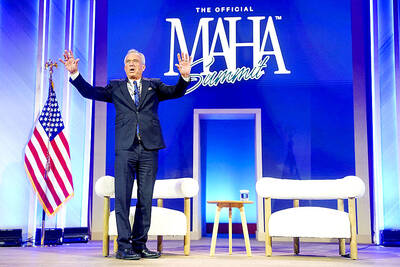
Sweeping policy changes under US Secretary of Health and Human Services Robert F. Kennedy Jr are having a chilling effect on vaccine makers as anti-vaccine rhetoric has turned into concrete changes in inoculation schedules and recommendations, investors and executives said. The administration of US President Donald Trump has in the past year upended vaccine recommendations, with the country last month ending its longstanding guidance that all children receive inoculations against flu, hepatitis A and other diseases. The unprecedented changes have led to diminished vaccine usage, hurt the investment case for some biotechs, and created a drag that would likely dent revenues and

Macronix International Co (旺宏), the world’s biggest NOR flash memory supplier, yesterday said it would spend NT$22 billion (US$699.1 million) on capacity expansion this year to increase its production of mid-to-low-density memory chips as the world’s major memorychip suppliers are phasing out the market. The company said its planned capital expenditures are about 11 times higher than the NT$1.8 billion it spent on new facilities and equipment last year. A majority of this year’s outlay would be allocated to step up capacity of multi-level cell (MLC) NAND flash memory chips, which are used in embedded multimedia cards (eMMC), a managed

CULPRITS: Factors that affected the slip included falling global crude oil prices, wait-and-see consumer attitudes due to US tariffs and a different Lunar New Year holiday schedule Taiwan’s retail sales ended a nine-year growth streak last year, slipping 0.2 percent from a year earlier as uncertainty over US tariff policies affected demand for durable goods, data released on Friday by the Ministry of Economic Affairs showed. Last year’s retail sales totaled NT$4.84 trillion (US$153.27 billion), down about NT$9.5 billion, or 0.2 percent, from 2024. Despite the decline, the figure was still the second-highest annual sales total on record. Ministry statistics department deputy head Chen Yu-fang (陳玉芳) said sales of cars, motorcycles and related products, which accounted for 17.4 percent of total retail rales last year, fell NT$68.1 billion, or

In the wake of strong global demand for AI applications, Taiwan’s export-oriented economy accelerated with the composite index of economic indicators flashing the first “red” light in December for one year, indicating the economy is in booming mode, the National Development Council (NDC) said yesterday. Moreover, the index of leading indicators, which gauges the potential state of the economy over the next six months, also moved higher in December amid growing optimism over the outlook, the NDC said. In December, the index of economic indicators rose one point from a month earlier to 38, at the lower end of the “red” light.


 RSS
RSS