


The government of South Sudan, whose economy has been ravaged by years of war, has adopted an ambitious budget for the 2016 to 2017 fiscal year of about US$1 billion, three times as big as the previous year’s.
“The purpose of this budget is to implement the peace agreement,” South Sudanese Minister for Parliamentary Affairs Michael Makuei Lueth told reporters on Friday, referring to a deal signed in August last year.
The budget proposal has yet to be approved by parliament, but it is likely to be accepted, as most of the nation’s lawmakers are loyal to South Sudanese President Salva Kiir’s government.
Adopted on Thursday by the government, the 30 billion South Sudanese pound (US$494 million) draft was delayed earlier this summer by a spike in violence, the latest upsurge in two-and-a-half years of war.
However, it is not yet clear where South Sudan will find the funds it would need to finance the budget, as fighting continues in parts of the country, leaving key trading routes to the capital blocked.
Asked about the possible sources of funding, Lueth told reporters: “We know where we will get the money. You need not to know where we can get the money.”
Lueth added: “The budget is higher than that of last year simply because last year there was no agreement on implementation” of a peace deal.
South Sudan’s economy, ravaged by a civil war that erupted in 2013, was further damaged by a wave of clashes in July that pitted President Kiir’s troops against former South Sudanese vice president Riek Machar’s forces in the capital Juba.
On the street, the South Sudanese pound’s value has plummeted dramatically, with the exchange rate at 70 South Sudanese pounds to the US dollar — nearly two and a half times the official rate.
Oil production too, which at the time of independence five years ago contributed 98 percent of the national budget, has sunk to just under 150,000 barrels per day.
Inflation is soaring at 600 percent per year, leading to a massive hike in the prices of basic goods.

The Eurovision Song Contest has seen a surge in punter interest at the bookmakers, becoming a major betting event, experts said ahead of last night’s giant glamfest in Basel. “Eurovision has quietly become one of the biggest betting events of the year,” said Tomi Huttunen, senior manager of the Online Computer Finland (OCS) betting and casino platform. Betting sites have long been used to gauge which way voters might be leaning ahead of the world’s biggest televised live music event. However, bookmakers highlight a huge increase in engagement in recent years — and this year in particular. “We’ve already passed 2023’s total activity and

Nvidia Corp CEO Jensen Huang (黃仁勳) today announced that his company has selected "Beitou Shilin" in Taipei for its new Taiwan office, called Nvidia Constellation, putting an end to months of speculation. Industry sources have said that the tech giant has been eyeing the Beitou Shilin Science Park as the site of its new overseas headquarters, and speculated that the new headquarters would be built on two plots of land designated as "T17" and "T18," which span 3.89 hectares in the park. "I think it's time for us to reveal one of the largest products we've ever built," Huang said near the
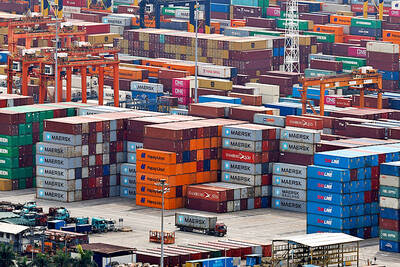
China yesterday announced anti-dumping duties as high as 74.9 percent on imports of polyoxymethylene (POM) copolymers, a type of engineering plastic, from Taiwan, the US, the EU and Japan. The Chinese Ministry of Commerce’s findings conclude a probe launched in May last year, shortly after the US sharply increased tariffs on Chinese electric vehicles, computer chips and other imports. POM copolymers can partially replace metals such as copper and zinc, and have various applications, including in auto parts, electronics and medical equipment, the Chinese ministry has said. In January, it said initial investigations had determined that dumping was taking place, and implemented preliminary
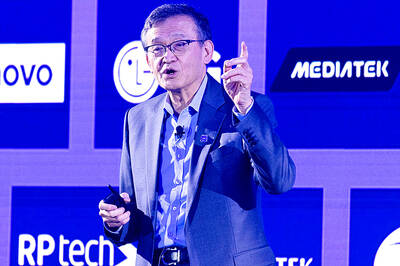
Intel Corp yesterday reinforced its determination to strengthen its partnerships with Taiwan’s ecosystem partners including original-electronic-manufacturing (OEM) companies such as Hon Hai Precision Industry Co (鴻海精密) and chipmaker United Microelectronics Corp (UMC, 聯電). “Tonight marks a new beginning. We renew our new partnership with Taiwan ecosystem,” Intel new chief executive officer Tan Lip-bu (陳立武) said at a dinner with representatives from the company’s local partners, celebrating the 40th anniversary of the US chip giant’s presence in Taiwan. Tan took the reins at Intel six weeks ago aiming to reform the chipmaker and revive its past glory. This is the first time Tan


 RSS
RSS