


Adecco SA, the world’s largest provider of temporary workers, reported first-quarter revenue that beat analysts’ estimates as accelerating European economic growth prompted companies to hire.
Sales rose 5 percent to 5.33 billion euros (US$6.06 billion) from 5.08 billion euros a year earlier, Glattbrugg, Switzerland-based Adecco said in a statement yesterday.
That beat the 5.28 billion-euro average of six analyst estimates compiled by Bloomberg.
Earnings before interest, taxes and amortization (EBITA) fell 4 percent to 228 million euros. Revenue from France, Adecco’s biggest market, rose 7 percent to 1.1 billion euros.
“France is slowly recovering,” chief executive officer Alain Dehaze, who took over the role in September last year, said on Bloomberg TV. “It’s not an explosive recovery, it’s a continuous recovery.”
Adecco is a bellwether for the global economy, as companies use recruitment services to bring in temporary staff when business prospects are rising.
A renewed drop in consumer prices in April overshadowed the eurozone’s fastest economic growth in a year and prompted warnings from the European Central Bank about its effect on wages.
As unemployment declined in March to the lowest since 2011, the European Commission told the 19-nation bloc’s largest economies to reduce debt and modernize labor markets.
The company completed its acquisition of Penna Consulting PLC, announced in March in an attempt to expand in the UK market. First-quarter revenue from the UK and Ireland, which make up Adecco’s third-largest market, were unchanged at 545 million euros. The acquisition came as the UK debates the merits of being part of the EU ahead of a June 23 referendum.
Adecco has fallen 10 percent this year in Zurich trading, slightly beating the benchmark Swiss Market Index, which has declined 11 percent in the period. Earlier this year, the stock was at its cheapest since 2008 relative to the main Swiss equity gauge. It is now trading 11.3 times its estimated earnings as the gap has been narrowing.
First-quarter net income fell 10 percent, to 144 million euros. Adecco reiterated its target for EBITA margin of an average of 4.5 percent to 5 percent through 2020, after cutting it at the start of this year. In the first three months, it narrowed to 4.3 percent of revenue from 4.6 percent.

DIVIDED VIEWS: Although the Fed agreed on holding rates steady, some officials see no rate cuts for this year, while 10 policymakers foresee two or more cuts There are a lot of unknowns about the outlook for the economy and interest rates, but US Federal Reserve Chair Jerome Powell signaled at least one thing seems certain: Higher prices are coming. Fed policymakers voted unanimously to hold interest rates steady at a range of 4.25 percent to 4.50 percent for a fourth straight meeting on Wednesday, as they await clarity on whether tariffs would leave a one-time or more lasting mark on inflation. Powell said it is still unclear how much of the bill would fall on the shoulders of consumers, but he expects to learn more about tariffs

NOT JUSTIFIED: The bank’s governor said there would only be a rate cut if inflation falls below 1.5% and economic conditions deteriorate, which have not been detected The central bank yesterday kept its key interest rates unchanged for a fifth consecutive quarter, aligning with market expectations, while slightly lowering its inflation outlook amid signs of cooling price pressures. The move came after the US Federal Reserve held rates steady overnight, despite pressure from US President Donald Trump to cut borrowing costs. Central bank board members unanimously voted to maintain the discount rate at 2 percent, the secured loan rate at 2.375 percent and the overnight lending rate at 4.25 percent. “We consider the policy decision appropriate, although it suggests tightening leaning after factoring in slackening inflation and stable GDP growth,”
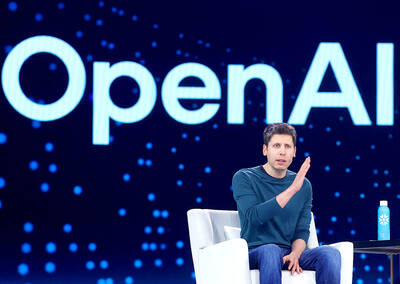
Meta Platforms Inc offered US$100 million bonuses to OpenAI employees in an unsuccessful bid to poach the ChatGPT maker’s talent and strengthen its own generative artificial intelligence (AI) teams, OpenAI CEO Sam Altman has said. Facebook’s parent company — a competitor of OpenAI — also offered “giant” annual salaries exceeding US$100 million to OpenAI staffers, Altman said in an interview on the Uncapped with Jack Altman podcast released on Tuesday. “It is crazy,” Sam Altman told his brother Jack in the interview. “I’m really happy that at least so far none of our best people have decided to take them
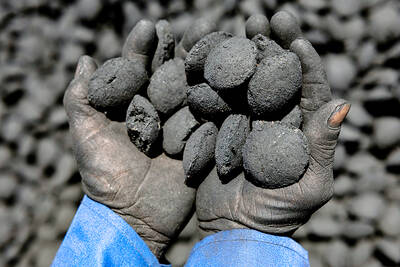
As they zigzagged from one machine to another in the searing African sun, the workers were covered in black soot. However, the charcoal they were making is known as “green,” and backers hope it can save impoverished Chad from rampant deforestation. Chad, a vast, landlocked country of 19 million people perched at the crossroads of north and central Africa, is steadily turning to desert. It has lost more than 90 percent of its forest cover since the 1970s, hit by climate change and overexploitation of trees for household uses such as cooking, officials say. “Green charcoal” aims to protect what


 RSS
RSS